7 Stunning European Destinations You've Probably Never Heard Of
Forget Barcelona and Prague—these seven European gems offer all the beauty with none of the crowds.

Ever scrolled through Instagram and felt like you've seen the same ten European destinations on repeat? Barcelona's Park Güell. Prague's Charles Bridge. That blue-domed church in Santorini everyone seems contractually obliged to photograph.
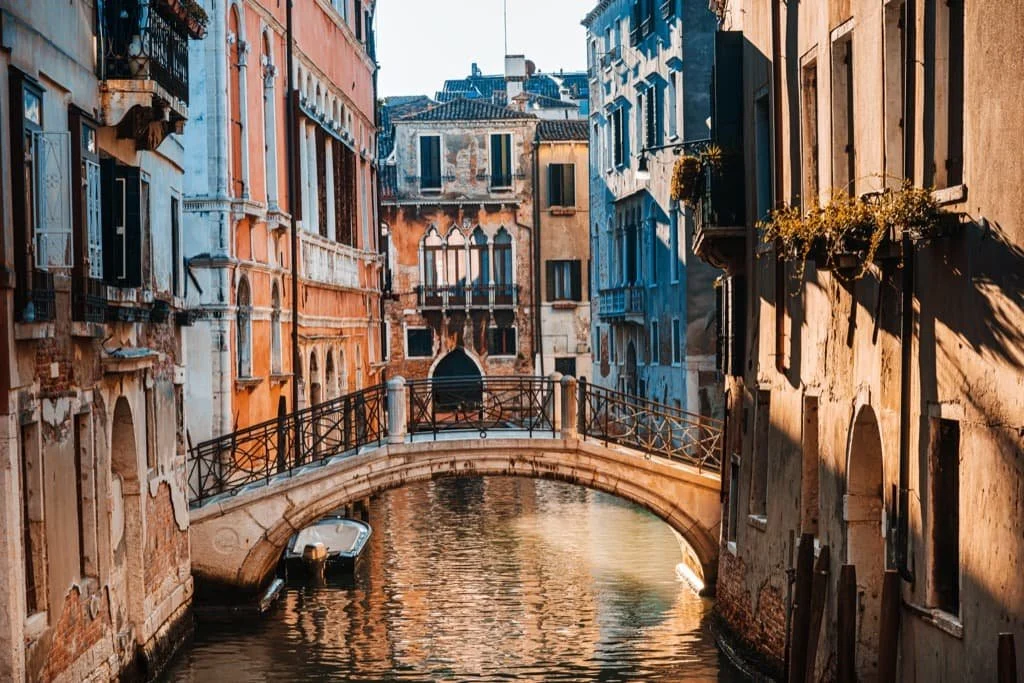
There's something deeply strange about modern travel. We're more connected than ever, yet we all end up visiting the exact same places. Venice is quite literally sinking under the weight of tourists, Santorini's infrastructure creaks under ten times its actual population each summer, and getting a decent photo at Iceland's Blue Lagoon without strangers in the background requires arriving at approximately 4am.
It seems we’re happy to just follow the crowd and try to fit in, rather than taking a risk and going somewhere that might not be as popular, but probably leads to a better overall experience.
But here's the good news: Europe is gigantic, and absolutely stuffed with places that are every bit as impressive – just without the queues and the sea of selfie sticks.
Giethoorn, Netherlands
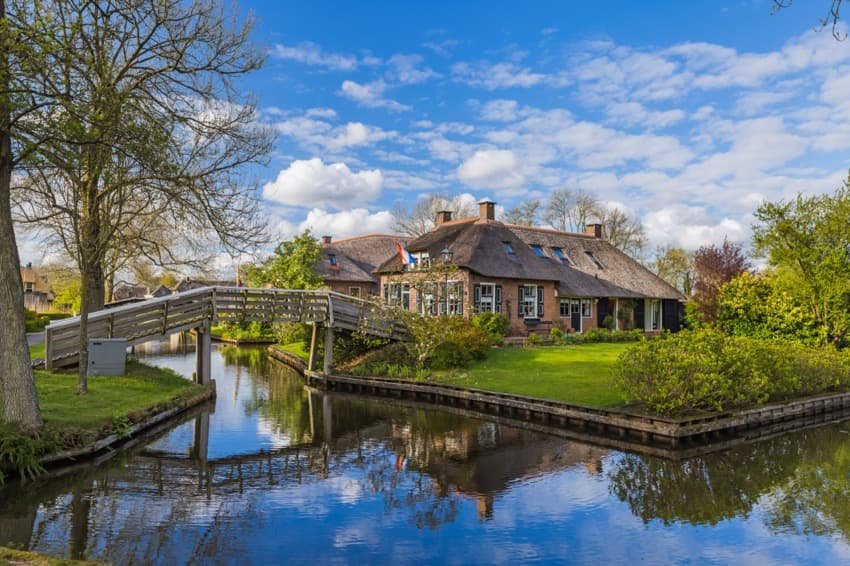
The best part about visiting Giethoorn? No roads. No cars. Just canals, bridges, and the occasional quack of a duck.
The car-free part isn’t just a quaint quirk either – it’s literally built on water. Back in the 13th century, peat diggers carved out the landscape, creating a maze of canals and lakes. What emerged is a village connected by 176 wooden bridges, where the only way to navigate the old centre is by boat or on foot.
Locals use "whisper boats"—electric-powered vessels that glide silently through the waterways—to do their shopping, visit neighbours, and generally go about their business. It's proper living history too, not ‘staged’ history like Venice’s tourist trap gondolas.
The 18th-century thatched farmhouses aren't museum pieces either. People actually live in them, maintaining gardens that tumble right down to the water's edge. Everyone calls Giethoorn "Dutch Venice," which does it a bit of a disservice. It's far quieter and considerably more pleasant than Venice!
Early morning or late evening visits mean you'll dodge the day-trippers entirely and have those fairy-tale canals largely to yourself.
Sibiu, Romania
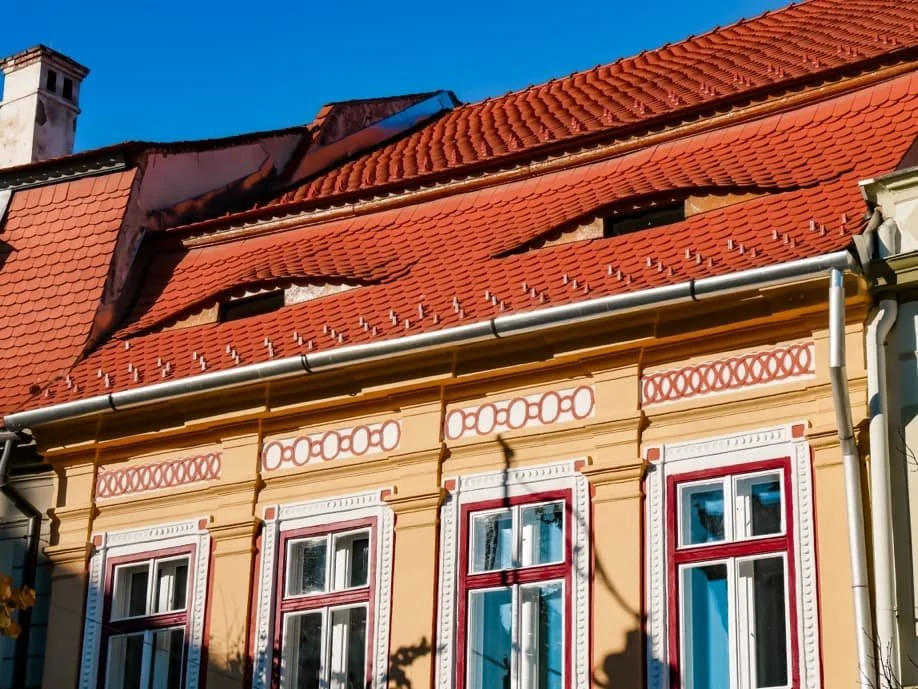
A brisk walk through Sibiu's main square can be slightly unnerving: the buildings are watching you.
Rows of narrow dormer windows in the rooftops look uncannily like half-closed eyes, giving the entire old town a vaguely sentient quality. They're called the "Eyes of Sibiu”, and there are over 7,300 of them scattered across the city. Originally designed as attic ventilation (the Baroque period was big on practical solutions disguised as decoration), they've become the city's signature feature and earned it nicknames like "The City Where Houses Don't Sleep."
Founded by Saxon settlers in the 12th century, Sibiu served as Transylvania's capital for a century and was one of medieval Europe's wealthiest trading centres. The merchant guilds amassed serious fortunes, which you can still see in the pastel-coloured houses, imposing fortifications, and the Brukenthal Palace, home to Romania's first museum, which opened in 1790, three years before the Louvre.
In 2007, Sibiu was named European Capital of Culture, and the city's been punching well above its weight ever since. There are multiple theatres, art galleries, an international film festival, and a food scene that's genuinely worth your time. The Christmas market rivals anything in Germany or Austria, minus the shoulder-to-shoulder crowds and inflated prices.
A Sibiu must is a climb to the top of the Lutheran Cathedral's bell tower for views over those watching rooftops, and you'll understand why this place has such an odd, compelling atmosphere. It's medieval, slightly Gothic, and massively underrated.
Visby, Sweden
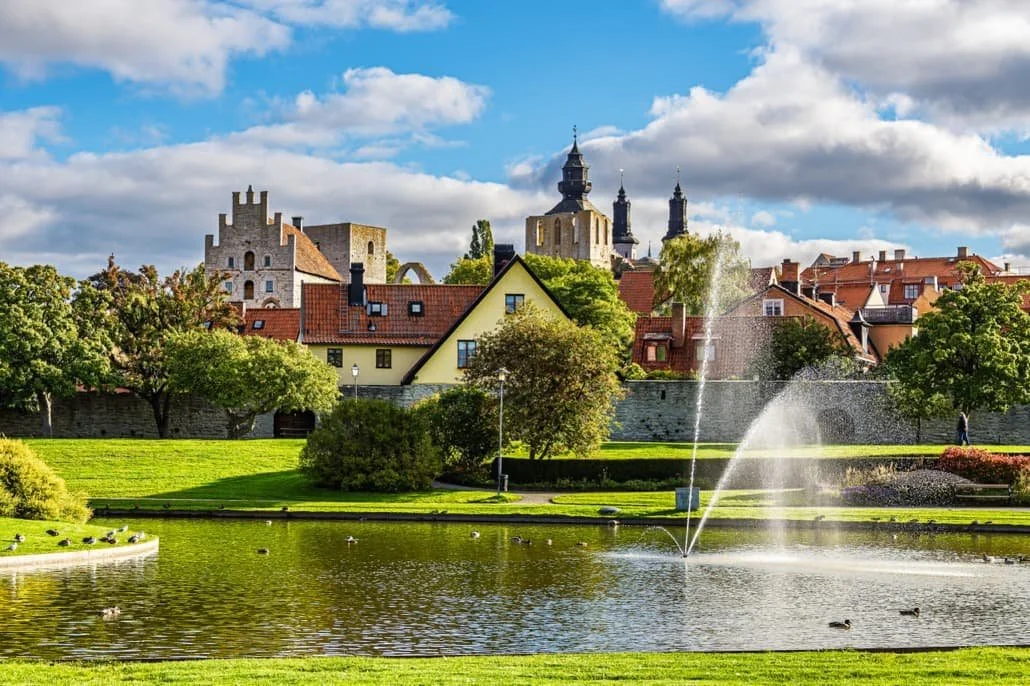
Although most people have never heard of this medieval town on the island of Gotland, VIsby was once the Baltic's most powerful city. During its peak as a Hanseatic trading hub, it controlled commerce across Northern Europe.
The 3.4-kilometre stone wall built in the 13th century still encircles the town, and over 200 medieval buildings remain standing, making this not just a pretty place to visit, but heaven for history buffs.
What makes Visby properly special are the church ruins. Fifteen churches once stood within these walls. Today, only the Cathedral of St. Mary is still operational—the other fourteen remain as atmospheric Gothic skeletons scattered throughout the town. Stone arches frame the sky, ivy climbs crumbling walls, and in summer, wild roses bloom absolutely everywhere. Hence "The City of Roses and Ruins” moniker.
The essential Gotland Museum houses the largest silver hoard ever found in Europe, a whopping 67 kilograms of it, including over 14,000 coins. And if you grew up watching Pippi Longstocking, several scenes were filmed here. You can still visit the original Villa Villekulla just outside town, though it's been converted into a theme park, which feels slightly inevitable.
Summer is when Visby properly comes alive. The scent of roses fills the narrow streets, outdoor concerts echo off medieval walls, and the Baltic is just about warm enough for a dip. It's the sort of place that makes you question why anyone bothers with overcrowded Mediterranean beach towns.
Kotor, Montenegro
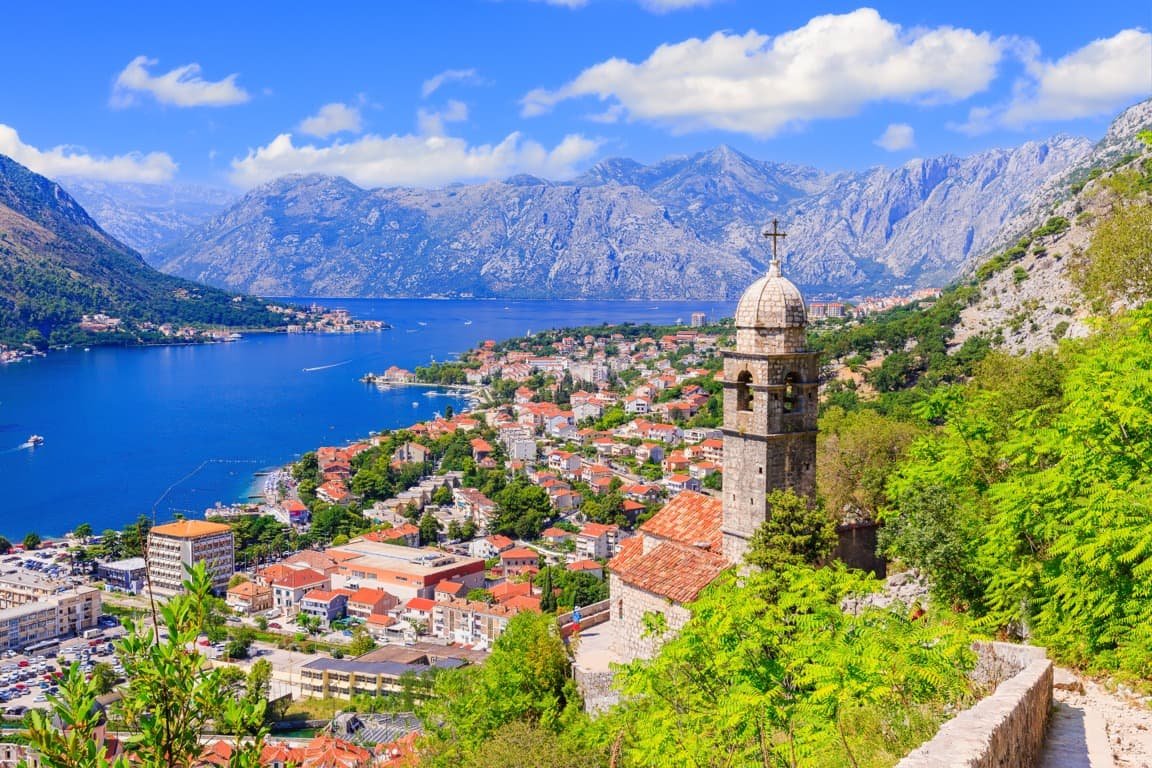
Most people heading to the Adriatic default to Croatia. Dubrovnik gets the attention — and the cruise ships to match. But slip across the border into Montenegro and you'll find Kotor, a walled medieval port that rivals anything on the Croatian coast at a fraction of the congestion.
Kotor sits at the innermost point of the Bay of Kotor, a series of interconnected inlets that look like a fjord but are technically a submerged river canyon. Mountains rise almost vertically from the water, and the town clings to a narrow strip at the base of the Lovćen massif as though it ran out of anywhere else to go.
The old town — Stari Grad — is one of the best-preserved medieval centres anywhere in the Mediterranean, UNESCO-listed since 1979. The Venetians ran Kotor from 1420 to 1797, and their fingerprints are everywhere: the winged lion of St Mark above the Sea Gate, the 4.5-kilometre defensive walls that climb the mountain behind the town. Those walls lead, via approximately 1,350 increasingly unforgiving stone steps, to the San Giovanni Fortress at 280 metres above sea level. The climb takes about an hour. The view from the top — terracotta rooftops, the bay glittering beyond, cruise ships shrunk to the size of bath toys — ranks among the finest in southern Europe.
The Cathedral of Saint Tryphon dates to 1166 and remains one of the oldest on the Adriatic coast. The Church of St Luke, built in 1195, spent several centuries functioning as both a Catholic and Orthodox church simultaneously — dual altars and all. And then there are the cats. Kotor's stray population is somewhere between a local quirk and an unofficial tourist attraction, draped across every church step and fortress wall.
Tivat Airport is just 5km away, with regular flights to London and other European hubs. The old road from Kotor to Cetinje — 25 hairpin bends with the bay unfolding below at every turn — is one of the most spectacular drives in the Balkans.
Alberobello, Italy
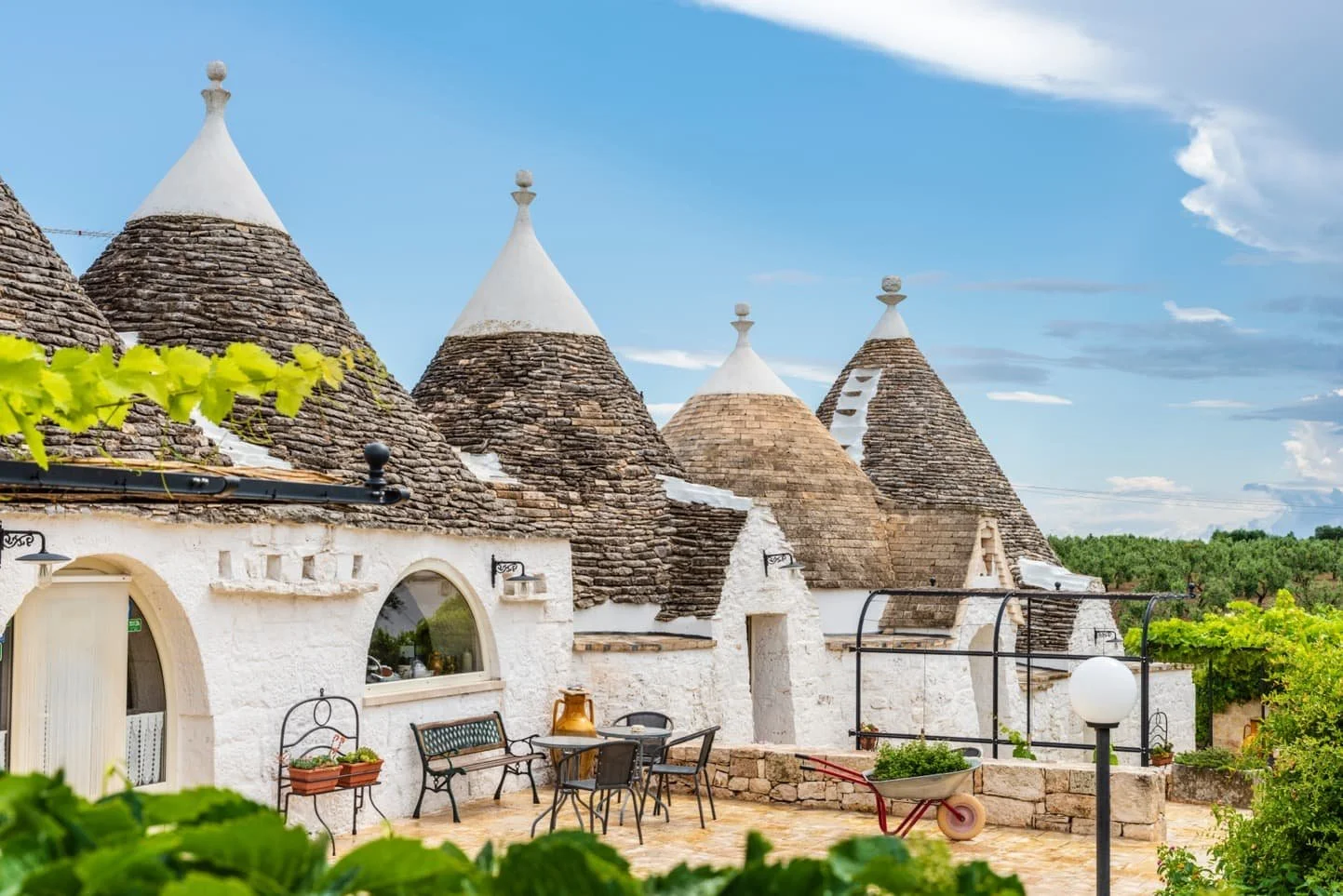
Imagine stumbling into a village that looks like it was designed by particularly ambitious Smurfs. That's Alberobello.
This small Puglian town contains over 1,500 trulli. These whitewashed stone houses are topped with conical grey roofs that make the entire place look like an exceptionally well-maintained illustration. They're not replicas or tourist constructions either, they're real homes, some dating to the 14th century and built using a prehistoric dry-stone technique that requires exactly zero mortar.
But these cute little buildings aren’t just eye candy. They were originally elaborate tax dodges. The Kingdom of Naples charged taxes on permanent settlements, so peasants built houses that could be quickly dismantled when tax collectors appeared. Pull out the keystone, the whole thing collapses into rubble. They could then be rebuilt once the inspectors left!
Keep an eye out for painted symbols on the trulli roofs (crosses, hearts, planetary signs) each supposedly offering mystical protection. Many have decorative pinnacles that served as signatures for the master builders. There's even a church built entirely as a trullo, the Church of Saint Antonio, which opened in 1927 and remains unique worldwide.
The two main districts, Rione Monti and Aia Piccola, are now a UNESCO World Heritage Site. Every corner is absurdly photogenic, every alleyway reveals another cluster of cones, and somehow it all functions as an actual living town where people go about normal lives.
Èze, France
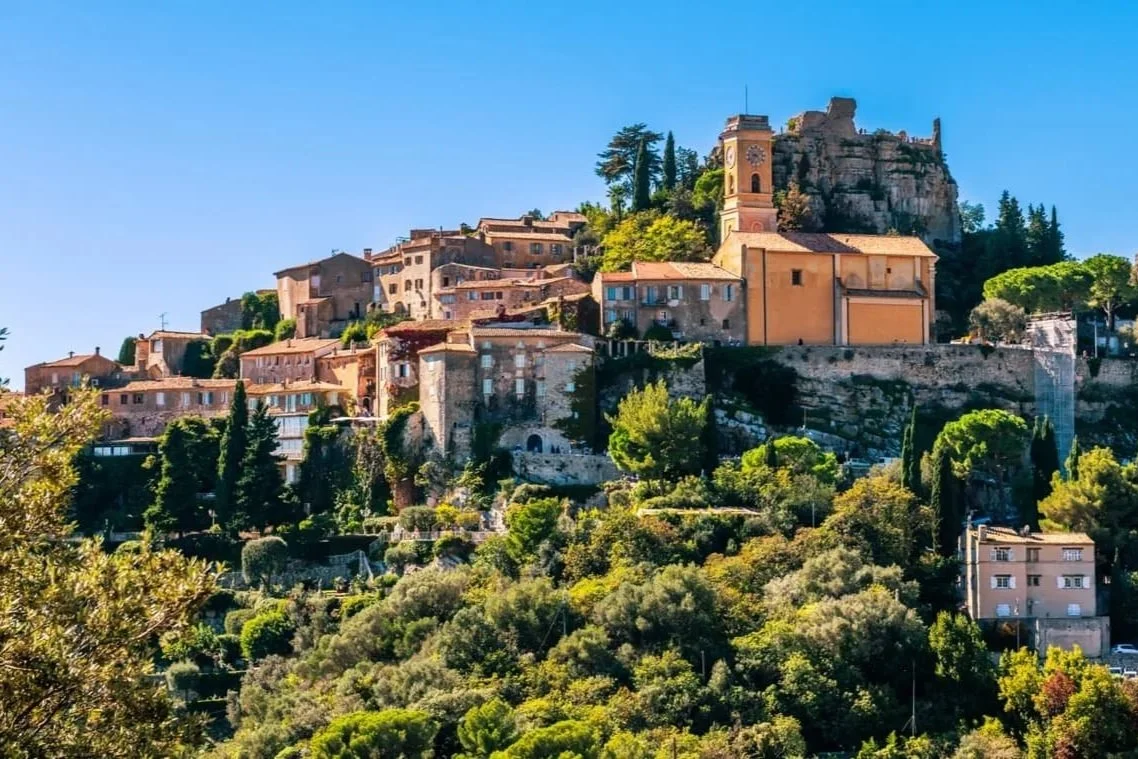
This tiny medieval village clings to the rock like it's personally affronted by gravity, and looks like a nasty wind could send everything over the edge. Perched on the clifftop road between Nice and Monaco, millions drive past it annually but relatively few stop.
Narrow cobblestone streets wind upward through stone archways and past ivy-covered walls until you reach the Jardin Exotique at the summit—a cactus garden built on the ruins of a 12th-century castle.
The garden is worth the climb, and it is properly a climb. Exotic succulents from around the world cling to rocky terraces, but the real draw is the view. On clear days, you can see from Cap Ferrat to the Esterel Mountains, with the entire Côte d'Azur glittering below.
Friedrich Nietzsche was so inspired by this spot that he conceived parts of Thus Spoke Zarathustra whilst walking the path from village to sea—a trail that still bears his name.
Èze hosts two Michelin-starred restaurants: La Chèvre d'Or and Château Eza, both serving Mediterranean cuisine with views that justify the prices. Even if you're not splashing out on fine dining, the village is dotted with perfume workshops (Fragonard and Galimard both have operations here) and artisan boutiques tucked into medieval buildings.
A quick tip: Don't confuse Èze Village with Èze-sur-Mer, the coastal town at the bottom. They' are, however, connected by the Nietzsche Path, a steep hour-long hike, should you mess up your French in the taxi on the way there.
Dinant, Belgium
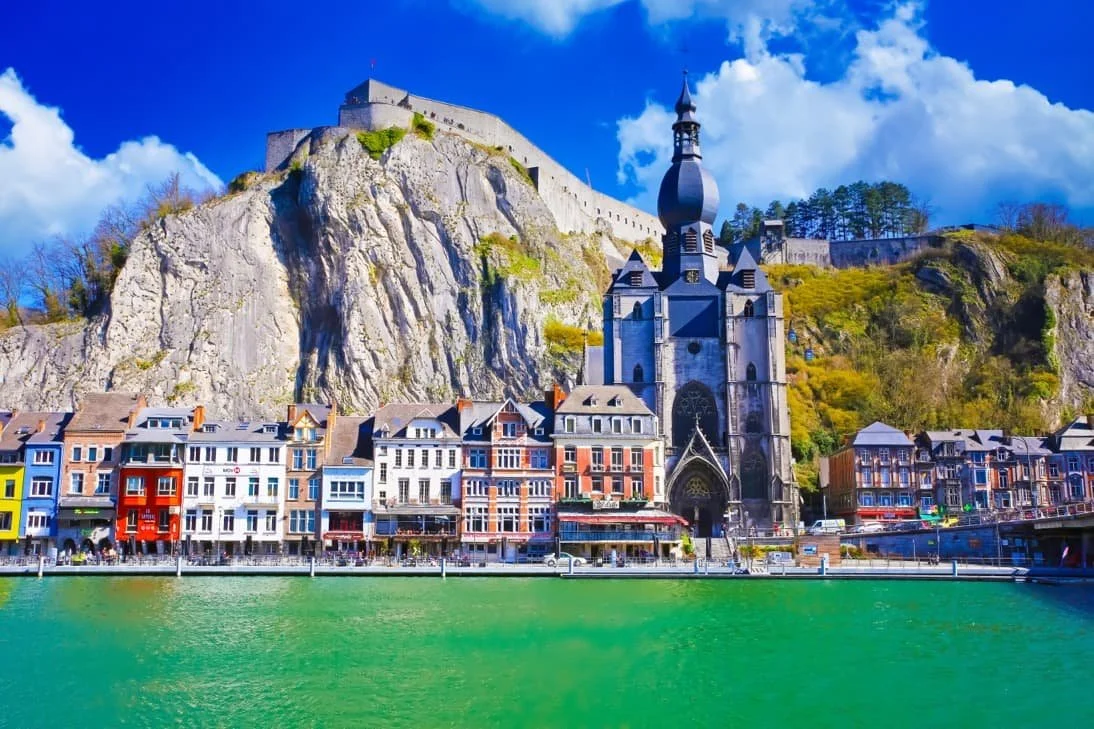
Arguably Belgium's prettiest town, wedged between a sheer cliff and the River Meuse, Dinant has managed to stay under the radar thus far.
The scene is almost absurd in its drama. The Gothic Collegiate Church of Notre-Dame, with its bulbous onion-shaped dome, sits right at the base of a vertical rock face. Directly above it, the Citadel — rebuilt in 1821 on the site of an 11th-century fortress — looms from the clifftop like something from a film set. You can reach it via 408 steps carved into the rock, or a cable car that makes the trip in about a minute.
Dinant's relationship with drama runs deep. In 1466, the Duke of Burgundy sacked it so thoroughly that 800 citizens were thrown into the Meuse. During the First World War, German troops massacred 674 civilians in a single day. A young lieutenant named Charles de Gaulle was wounded here during the fighting, and a plaque on the main bridge marks the exact spot.
That bridge is now lined with giant coloured saxophone sculptures — Dinant's other claim to fame. Adolphe Sax invented the saxophone here in 1846, and his childhood home is now a small museum. Walk a kilometre south along the river and you'll reach the Rocher Bayard, a 40-metre limestone needle split clean from its cliff. Medieval legend credits a magical horse called Bayard; in reality, Louis XIV's troops blasted through it in the 17th century. You can still drive through the narrow gap today.
Beer drinkers will already know Dinant without realising it: Leffe, one of Belgium's most recognisable abbey beers, has been brewed here since 1240. And before you leave, try a couque de Dinant — a rock-hard honey biscuit pressed into elaborate moulds and made locally for centuries. "Rock-hard" isn't an exaggeration. These things could chip a tooth.
Dinant is 90 minutes by train from Brussels, and most visitors don't stay the night — which means by early evening, the town empties out and you get this extraordinary setting almost entirely to yourself.
Read Next