We've Been Told to Visit Venice Before it's Too Late – Here's What the Future Actually Looks Like
There are no doubts that sea levels are rising – but is Venice’s destiny really set in stone?
Venice’s "sinking city" narrative has been running for decades. But Venice still hasn’t quite slipped beneath the waves, its centuries of history suddenly at the bottom of the lagoon. In reality, Venice is fighting back with engineering, science and political will combined – and facing threats that have nothing to do with the tide. It's worth understanding what that all actually means before you book your flights.
On 22 November 2022, a storm surge measured at 185 centimetres at sea bore down on the Venetian lagoon. It was the second-highest water level recorded since the catastrophic flood of 1966, when nearly two metres of water submerged the water city’s famous palazzi, churches, and archives.
If the 2022 surge had reached Venice unimpeded, the damage would have been measured in hundreds of millions of euros. Piazza San Marco, the lowest point in the city, would have disappeared under more than a metre of water. The 12th-century mosaics inside the basilica, already fragile from centuries of salt erosion, would have likely been washed away entirely. But it didn’t happen.
Beneath the surface of the lagoon, 78 steel barriers, each weighing 250 tonnes, kicked into action and rose from the seabed at three inlet points. They effectively sealed the city off from the Adriatic.
Inside the lagoon, the water came, but the most destructive surges were confined to the sea. Around St Mark's Basilica itself, a ring of transparent glass panels, installed just weeks earlier, kept the piazza's flooding to a manageable level – and the mosaics dry.
These defences are by no means ‘problem solved’, but they go to show the measures (and investment) being taken to ensure one of the world’s finest and most unique historic cities can be preserved for another 1600 years.
The Myth of the Disappearing City

There's a travel headline that has been doing the rounds, in various forms, for the better part of 30 years, usually something along the lines of ‘Visit Venice before it's too late.’ The framing is usually always the same: Venice is doomed, and the best you can do is witness its decline before the lagoon swallows it whole. Cool headline, at one point a real possibility, and a great way to ensure a constant stream of visitors. But it isn’t quite true anymore.
Before we see why, it’s important to be aware that Venice definitely still faces plenty of real and serious threats, including a major one that goes beyond rising water.
The city's resident population has fallen from a peak of 174,800 in 1951 to fewer than 48,000 in the centro storico today, a decline accelerated by unaffordable housing, limited employment outside tourism, and the conversion of residential properties into short-term holiday rentals.
Around 30 million visitors arrive each year, and at peak times the ratio of tourists to residents can reach two to one. UNESCO has been weighing whether to place Venice on its World Heritage in Danger list since 2014, and may eventually decide it’s time to call for drastic action.
On top of water levels in the Adriatic increasing year on year, along with natural subsidence, these are legitimate long-term concerns. But they describe a city under pressure and in demand, not a city in terminal decline. The distinction matters, because the doom narrative doesn't just misrepresent the evidence, it actively contributes to the problem.
Alongside the flood doom narrative, there’s a new ‘visit before tourists are banned’ narrative emerging as the city takes active steps to manage visitor numbers. Again, the fear is unwarranted, but scarcity drives ticket sales, right?
This persistent ‘visit before it's too late’ storyline encourages exactly the kind of rushed, extractive tourism that treats Venice as a spectacle, or a major FOMO (fear of missing out) driver, rather than a place where people live. It turns a complex situation into a pressurised marketing hook.
The irony is that the doom narrative has been running for so long that it has become a kind of background hum, easy to tune out. When the great flood of 1966 submerged the city under nearly two metres of water, destroying manuscripts in the Biblioteca Nazionale Marciana and leaving oil residue on frescoes that conservators are still cleaning today, the world responded with genuine alarm.
International rescue committees were formed within months. UNESCO coordinated a global appeal. Legislation followed. The Italian Special Law for the Safeguarding of Venice, passed in 1973, declared the city a site of "national interest" and mandated its protection. The crisis produced action because it was understood as a crisis, not a spectacle.
Sixty years later, the ‘sinking Venice’ headline has been repeated so often it has kind of lost its urgency. It reads more like a travel agency sales tactic than a genuine call to action. In reality, the conversation should be about what Venice is doing to secure the city’s future, and what visitors can do to help, rather than just squeeze in a ‘farewell’ visit.
Built to Last
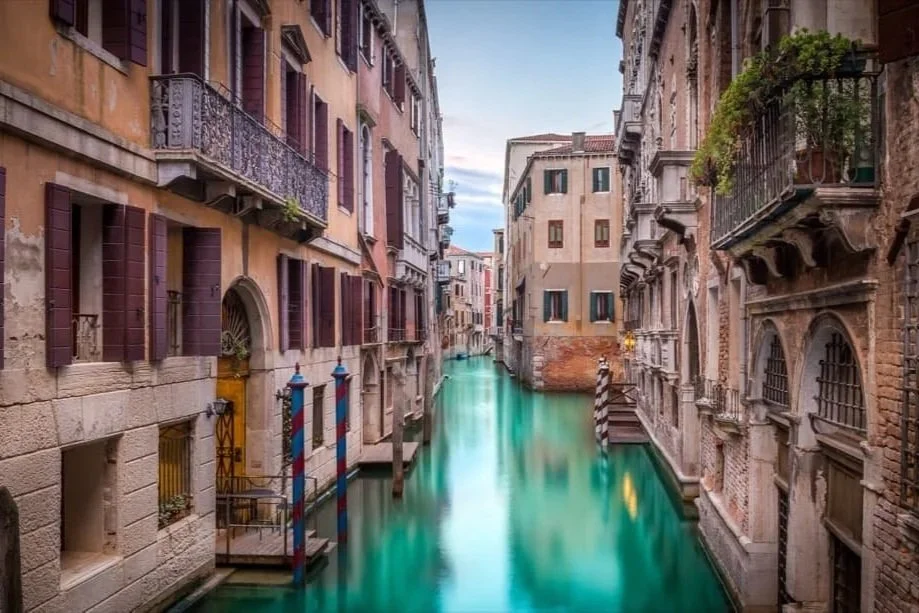
To understand why Venice isn't exactly going to vanish in the blink of an eye overnight, it helps to understand how it has already managed to stay above water for over a century and a half. Venice already has countermeasures to keep its buildings above the surface, and they have existed since day one.
The city was founded in the 5th century by mainland refugees seeking shelter from migrating populations and invading armies. The marshy islands of a shallow lagoon, which were very hard to reach, made for a great defensive position, albeit with more than a few challenges. What they built, over the following centuries, amounted to one of the most audacious engineering projects in human history. The plucky arrivals managed to create an entire city raised on millions of timber piles driven into the soft lagoon sediment.
The piles, made primarily from alder, larch, and oak, were hammered into the mud by hand so close together they touched, then sawn flat at the top to create a solid platform. Layers of Istrian limestone, a dense white stone quarried across the Adriatic in what is now Croatia, were placed above the piles to create a waterproof barrier between the wood and the brick walls above.
The stone's impermeability made it ideal for the lower courses of buildings in constant contact with salt water, and its use became so widespread that entire facades along the Grand Canal were clad in it.
The labour involved was extraordinary. Teams of pile-drivers, known as battipali, worked the hammers by hand, singing rhythmic songs to coordinate their blows. The logs were floated across the lagoon during seasonal high tides, transported via the river systems that fed into it from the mainland.
The Atlante Storico della Serenissima, a historical atlas of the Venetian Republic, describes the foundations in vivid terms: "The foundations of all of the buildings are made of very strong oak piles, which last eternally under water. These are driven firmly into the ground in dense groups, then blocked with large crosspieces and the space between them is filled with fragments of stone and cement, which solidify them into firm, stable foundations."
The numbers are remarkable. There are an estimated 12,000 timber stakes beneath the Rialto Bridge alone. Nobody is entirely sure how many millions of these supports sit beneath the city as a whole, but the phrase "upside-down forest" is used with good reason.
The buildings above were designed to accommodate the uneven, sandy and often shifting lagoon bed. Venetian architecture is notably flexible, with structures built to absorb subtle movements in the ground rather than resist them. This is why so many buildings along the canals lean at slightly different angles. The slightly jaunty angle of some of Venice’s buildings, and the worrying but perfectly fine lean of its bell towers is all part of the clever design.
What keeps the wood intact after more than a millennium is the lagoon itself. Submerged in the oxygen-poor mud below the waterline, the timber is protected from the microbial decay that would destroy it on the surface. The wood hasn’t just survived either. It has got even harder. Over centuries, mineral-rich water has slowly petrified it, turning it into something that is closer to rock than tree.
Alexander Puzrin, professor of geomechanics at ETH Zurich, has pointed out that modern concrete and steel equivalents are typically designed to last 50 years. Venice's wooden underpinnings have lasted more than 20 times that.
This is not to say they are indestructible. Research published in the journal Construction and Building Materials has shown that anaerobic bacteria can still cause slow degradation over very long periods, and the International Journal of Architectural Heritage has documented how this decay interacts with soil settlement. But the key word is slow. The substructure is monitored, studied, and maintained. It is not collapsing.
The more pressing issue in terms of ‘sinking’ is actually modern, and human-made. Between the 1930s and 1970s, industrial groundwater pumping from the Marghera zone on the mainland caused Venice to sink at an alarming rate, peaking at 14 millimetres per year in the late 1960s. The city lost roughly 12 centimetres of elevation in the 20th century, about half of it from this pumping and half from natural subsidence and sea level rise combined.
The pumping was stopped after the devastating 1966 flood prompted drastic action. Groundwater consumption in the Marghera area dropped from 500 litres per second in 1969 to 170 litres per second by 1975, according to a comprehensive review published in Natural Hazards and Earth System Sciences.
The land rebounded by about two centimetres, and by the early 2000s, a study in Geophysical Research Letters confirmed Venice's "present ground stability." The self-inflicted wound had healed slightly.
As you can see, it isn’t just rising sea levels that have formed the ‘sinking’ narrative, but also misconception that the lagoon mud will eventually swallow the city whole.
Indeed, Venice still subsides naturally, at a rate of roughly 1 to 2 millimetres per year, driven by the slow compression of sediment and the tectonic subduction of the Adriatic plate beneath the Apennine Mountains. But that's a fact of geology, not a crisis.
Combined with sea level rise of a similar magnitude, it amounts to a relative sea level increase of 2 to 4 millimetres annually. That’s serious over decades and centuries, but manageable with the right engineering, and trusting (and protecting) the wooden piles that have served Venice well so far.
MOSE: The €6 Billion Bet That Paid Off
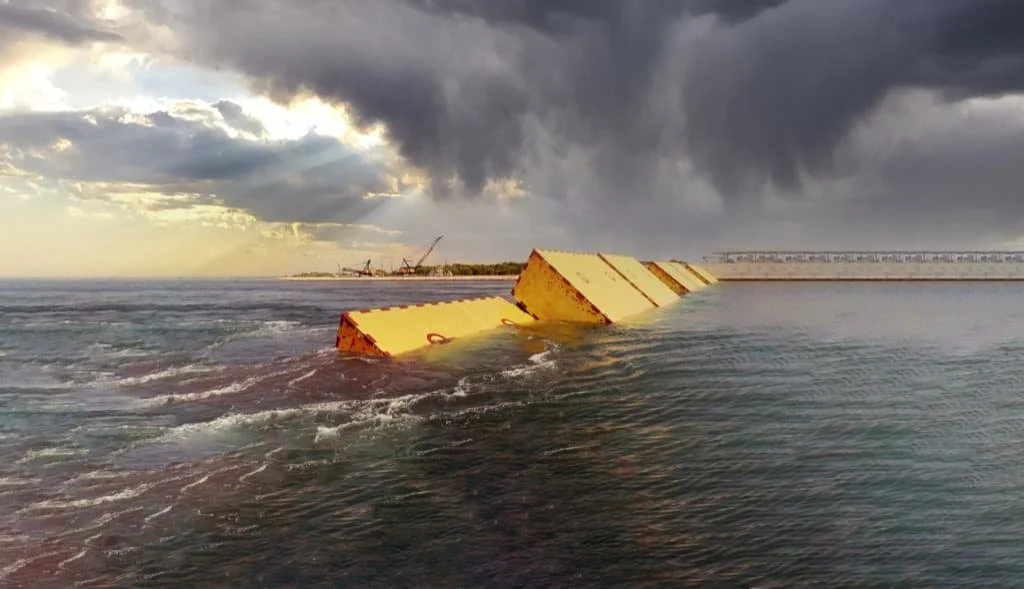
The story of MOSE (Modulo Sperimentale Elettromeccanico) is, depending on who you ask, either a tale of corruption and bureaucratic dysfunction or one of the great engineering triumphs of the 21st century. It’s actually a bit of both.
MOSE is a system of 78 hollow steel barriers installed across the three inlets where the Adriatic enters the Venetian lagoon: Bocca di Lido, Bocca di Malamocco, and Bocca di Chioggia. It was conceived in the 1980s as a direct response to the 1966 flood, and the next flood(s) that had become of serious public concern.
When not in use, the barriers lie flat on the seabed inside concrete housings, invisible and inert. When a high tide exceeding approximately 110 centimetres is forecast, compressed air is pumped into the hollow gates, expelling the water and causing them to pivot upward on their hinges. Within 30 minutes, the lagoon is effectively sealed off from the Adriatic Sea’s worst surges.
But the system doesn’t completely close Venice off from the world when the sea level rises. At the Malamocco inlet, a lock system allows ships of up to 280 metres and 12 metres of draught to pass even while the barriers are raised, maintaining some commercial port access during flood events.
The system's journey from blueprint to operation was bruising. Construction eventually began in 2003. The original completion target was 2011, but costs ballooned from an initial estimate of €5.5 billion in 2003 to €6-7 billion on completion and the entire project faced myriad problems unrelated to lagoon mud or the sea.
In 2014, a corruption investigation led to 35 arrests, including the then-mayor of Venice. The project became a byword for Italian bureaucratic excess. But, despite the bureaucratic mess and outright criminality, MOSE was finally activated for the first time on 3 October 2020 during a genuine high-tide event. A surge that would have sent water cascading through the streets was held back at the lagoon's edge. The city stayed relatively dry and Italian newspapers led with variations of the same headline: "Venice is saved."
However, the triumph came with an immediate caveat. In December 2020, operators underestimated a forecast and failed to raise the barriers in time. The city flooded. It was a humbling reminder that even the best engineering is only as good as the decisions behind it, and it prompted changes to forecasting protocols and activation thresholds.
The system now operates on a more conservative basis, with barriers typically raised when tides are forecast to exceed approximately 110 centimetres, the level at which about 12 per cent of the city begins to flood.
Since that day, the barriers have been raised close to 100 times. In 2024 alone, they were activated on 28 occasions, preventing what the Consorzio Venezia Nuova estimates as €200 to €400 million in annual economic damage.
The critical test came on 22 November 2022, when a storm surge that would have rivalled the 1966 flood was stopped at the lagoon inlets. A peer-reviewed analysis of the event, published in Coastal Engineering, confirmed both the system's structural integrity and its effectiveness under extreme conditions. A separate economic analysis by Giupponi et al., published in Regional Environmental Change in 2024, concluded that MOSE's financial benefits have already surpassed its construction costs.
The Rising Lagoon
A century of acqua alta in Venice, drawn from the official tide record at Punta della Salute.
Venice has measured its tides systematically since 1872, with the current station at Punta della Salute operating since 1923. All readings are referenced to the 1897 datum, a fixed benchmark that makes the full record directly comparable across 150 years. Between 1872 and 2018, Centro Previsioni e Segnalazioni Maree recorded 296 high-water events at or above 110 centimetres. Forty-one per cent of them happened after the year 2000.
Days the lagoon entered the city
Decadal average, events per yearAnnual frequency of tides at or above 110 cm (the official "very strong" threshold), averaged by decade. At 110 cm, sirens sound across the historic centre and roughly 12 per cent of the city begins to flood.
28
Tides above 110 cm in 2019 alone, the single highest year on record since measurements began in 1872.
3
Tides above 110 cm that have entered the historic centre across the entire 2020-2024 period, since MOSE became operational.
The five highest tides on record
Maximum tide level at Punta della Salute, since systematic records began in 1872.
- i 194CM
- ii 187CM
- iii 166CM
- iv 158CM
- v 156CM
What floods at each level
Share of the historic centre submerged at given tide heights, per Centro Previsioni e Segnalazioni Maree.
But MOSE is not a permanent or uncomplicated miracle solution. The frequency of expensive, carbon-burning activations is increasing as sea levels rise. The Campaign for a Living Venice reported in January 2025 that the number of tidal events exceeding 80cm reached 219 in 2024, more than at any point in recorded history. The average difference between high and low tide has nearly doubled in 20 years, from 23cm to 45cm. MOSE is eventually going to be activated for large chunks of the entire year, rather than during separate flood events.
Nature Italy reported in April 2024 that some scientists are concerned about the ecological consequences of increasingly frequent closures. Fabio Pranovi, professor of environmental sciences at Ca' Foscari University, has warned that water exchange times in parts of the lagoon already exceed 11 days, and that further increases could affect water quality and marine biodiversity. Unpublished projections suggest that under worst-case climate scenarios, MOSE could be activated for roughly 260 days per year by the end of the century, effectively turning the lagoon into a closed system.
But that scenario is decades away and assumes no further intervention. Pietro Teatini, associate professor of hydrology at the University of Padua and one of Italy's leading experts on Venice subsidence, has proposed an audacious complementary solution.
This involves pumping seawater into deep aquifers beneath the city to physically raise the seabed, reversing some of the 20th-century subsidence. The research team's proposals were published in Water Resources Research, and Teatini has argued in interviews with CNN that the technique could be tested almost immediately.
Andrew Whittle, the Edmund K. Turner Professor of Civil and Environmental Engineering at MIT, who served on the MOSE technical review panel from 2010 to 2013, has noted that the system's operating protocols can be refined to extend its useful life too.
MOSE is certainly not a permanent solution and it was never designed to be. But it buys Venice time, measured in decades, during which more comprehensive adaptations can be developed and implemented. In the meantime, it’s doing a great job of keeping floodwater off Piazza San Marco, and out of homes, buildings, churches, businesses and everywhere else.
San Marco’s Glass Belt
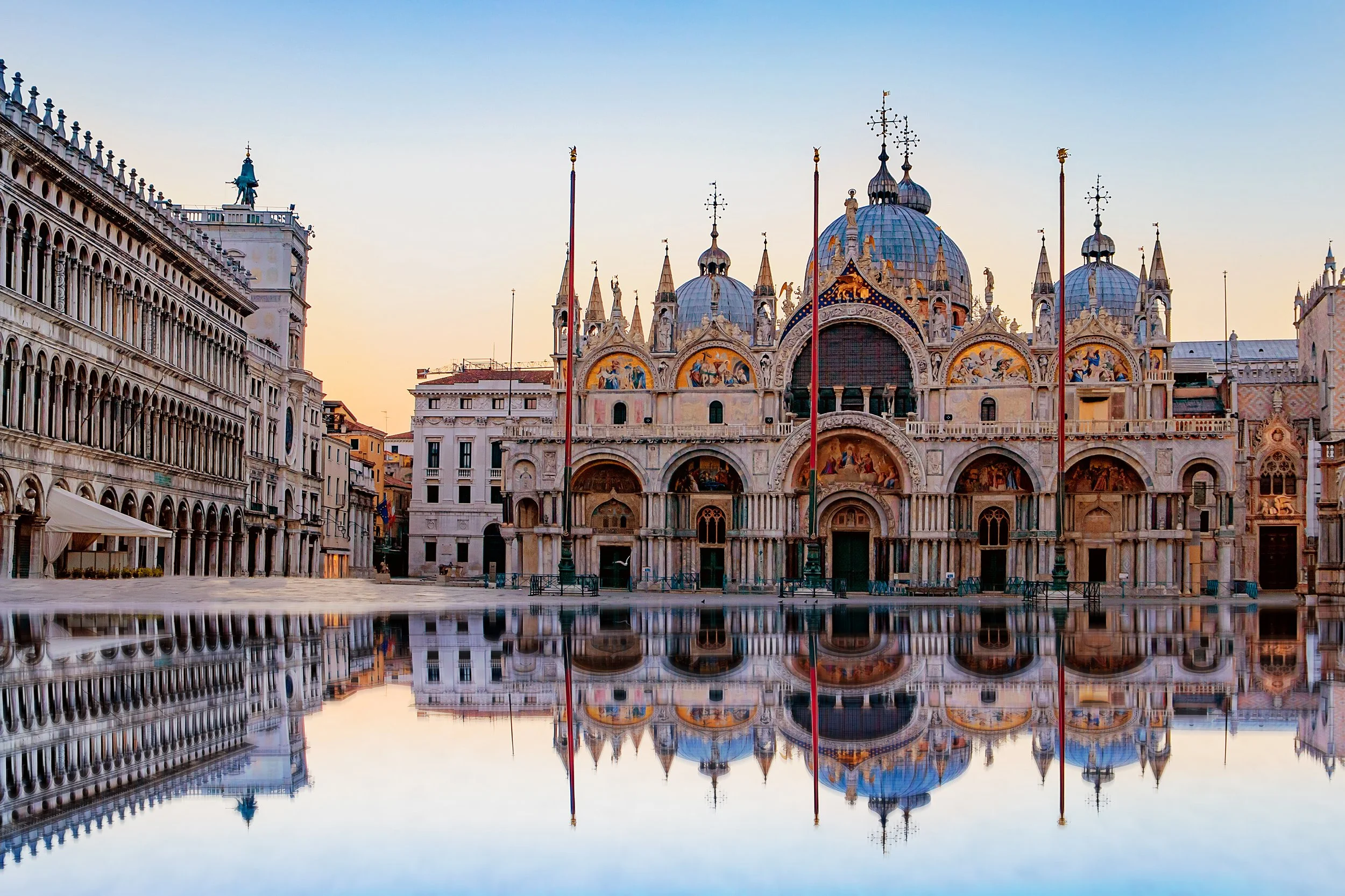
If MOSE is the macro-engineering answer, the glass barrier around St Mark's Basilica is the micro one, and the visual representation of flood defence in Venice.
St Mark's sits one one of the lowest points in the city. The piazza begins to flood at a tide of just 85 centimetres, well below the threshold at which MOSE is typically activated. For centuries, acqua alta (high water) was simply part of the basilica's existence, with salt water seeping through drains, pooling on the mosaic floors, and leaving behind crystals that slowly corroded marble and gold.
The floods of November 2019, which reached 187 centimetres, were particularly devastating. The basilica's governing body, the Procuratoria, said at the time that the building had "aged 20 years in a day."
The response was pragmatic and, by Venetian standards, remarkably swift. Mario Piana, the Proto (architect in charge) of the basilica and a professor of architectural conservation at IUAV University of Venice, decided enough was enough. Along with a team, he led the design of a system of transparent glass panels set into armoured concrete bases buried beneath the piazza's 18th century paving stones.
The glass belt, as it has come to be known, runs for approximately 150 linear metres around the basilica's perimeter. The panels are made from thermally toughened, multi-layered glass capable of protecting against tides of up to 1.90 metres above sea level. Four openings in the barrier, at the main entrance and sides, are sealed with metal bulkheads during high water events.
The system cost a reasonable €5.3 million and, according to The Art Newspaper, was completed in record time compared to MOSE's decades-long gestation. Francesco Bandarin, former director of the UNESCO World Heritage Centre, has described it as "elegant and unobtrusive." The glass is ultra-transparent, chosen specifically so as not to alter the colour of the basilica's white marble facade. From the piazza, the barrier is close to invisible.
The barrier proved its worth immediately. On 7 November 2022, with water at 95 centimetres in the piazza, the basilica's narthex and mosaic floors stayed dry. Two weeks later, when MOSE held back the 185-centimetre surge, the glass belt provided a second line of defence. The barriers work in conjunction with a network of underground drainage channels being installed beneath the church and piazza, designed to carry off residual water before it can accumulate. It's a system within a system within a system: MOSE for the lagoon, the glass belt for the basilica, drainage channels for the square.
This layered approach is very Venetian. The city has been adapting to water, layer by layer, for 16 centuries. The glass belt is simply the latest addition.
However, the glass ‘flood fence’ again isn’t a permanent solution, just another time-buying measure which does a job for now. It’s designed to provide a ‘now’ solution while the much bigger ‘later’ solution continues to be worked on.
The Conservation Machine
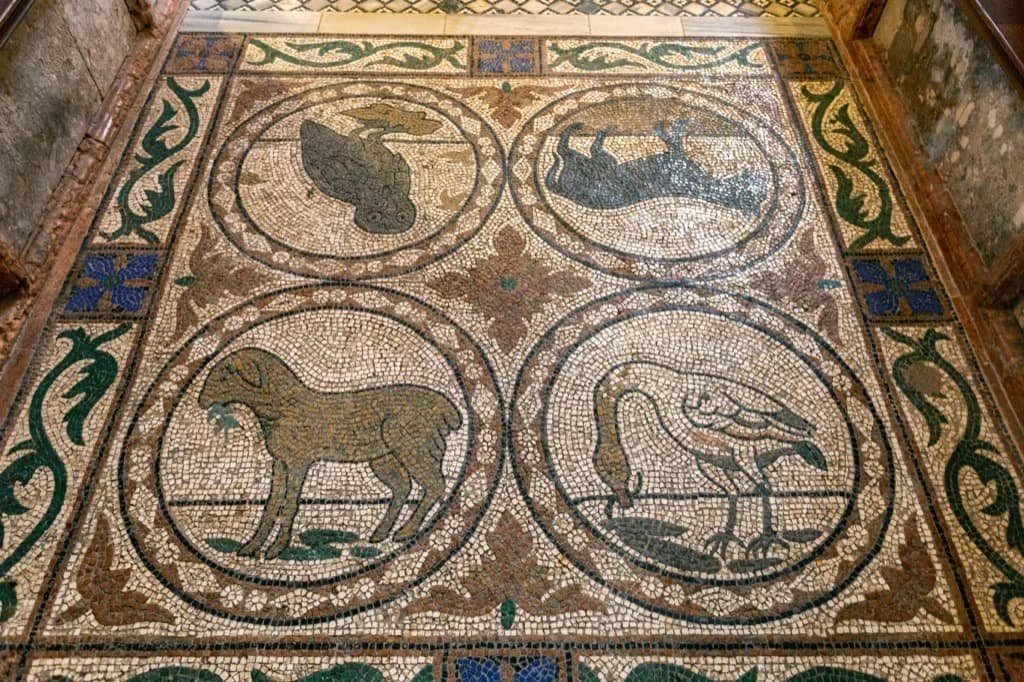
Venice could possibly be the most conserved city on earth. More than 20 private international committees, established in the wake of the 1966 flood, work on heritage preservation across the lagoon and major institutions like UNESCO give the city a lot of air time.
The largest organisation is Save Venice Inc., an American nonprofit founded in 1971 that has funded the conservation of nearly 1,700 individual artworks across more than 100 locations. It is the only private organisation in Venice to have restored two entire churches: Santa Maria dei Miracoli (1987 to 1997) and San Sebastiano (a campaign begun in 2007 that continues today).
Save Venice's recent work includes the restoration of the Italian Synagogue in the Venetian Ghetto, the treatment of 2,442 square feet of Byzantine apse mosaics in the cathedral of Santa Maria Assunta on Torcello, and the conservation of Tintoretto's Paradise in the Palazzo Ducale, the largest painting on canvas in the world. The organisation works in collaboration with the Italian Ministry of Culture, and its projects are supervised by the Soprintendenza, the government's cultural authority for Venice.
Following the 2019 floods, Save Venice created an Immediate Response Fund to provide rapid disaster relief and preventive conservation for vulnerable sites, including churches, museums, synagogues, and the scuole grandi. The fund has helped dozens of buildings better prepare for future high water events through measures as simple, and as essential, as installing flood barriers at entrances, distributing sandbags and raising electrical systems above anticipated water levels.
The scope of this work extends well beyond the famous names too. While the Basilica and the Doge's Palace attract the headlines, much of Venice's heritage is distributed across hundreds of smaller churches, private chapels, and community buildings that receive far less attention.
Save Venice has treated works by Carpaccio, Titian, and Veronese, but it has also conserved wooden crucifixes in small neighbourhood campi and faded frescoes in forgotten convents. The organisation employs dozens of expert restorers at any time, supervised by the Soprintendenza, and funds fellowships and training programmes for the next generation of Venetian conservators. There is something quietly moving about the scale of the enterprise. An organisation that isn’t even based in Venice has spent more than 50 years ensuring that a Tintoretto ceiling and an anonymous 16th-century altarpiece in a side chapel receive the same standard of care as the mosaics of Saint Mark’s.
Save Venice operates alongside UK-based Venice in Peril, Venetian Heritage, the World Monuments Fund, and many others. Collectively, these organisations represent an international infrastructure of conservation that has no real parallel elsewhere in the world.
Work is often largely invisible to visitors, and that is the point. Conservation in Venice is not a spectacle. It's an infrastructure, and a remarkably effective one.
Managing the Tide of People

If MOSE, the glass belt and an army of conservationists and scientists handles the water, the question of who handles the tourists is proving rather harder to answer, as you can see in the photo above. Venice has implemented three significant interventions in recent years, each with varying degrees of success.
The most structurally important was the ban on large cruise ships in August 2021, when the Italian government prohibited vessels over 25,000 gross tonnes from entering the Giudecca Canal and declared the San Marco Basin, San Marco Canal, and Giudecca Canal a national monument under Italian law.
The move, prompted by years of grassroots campaigning and a particularly alarming collision between a cruise ship and a river vessel in 2019, removed the most visceral symbol of overtourism from the city's visual landscape.
It also addressed a genuine environmental threat: research from the University of Venice estimated that cruise ships contributed significantly to canal erosion. The Italian government paid €57.5 million in compensation to affected shipping companies and terminal operators. Large ships now dock at the industrial port of Marghera, with plans for a permanent offshore terminal still under discussion.
The second intervention has been the Contributo di Accesso, the day-tripper entry fee introduced as a pilot in spring 2024 and expanded in 2025. The scheme charges day visitors €5 if booked in advance (or €10 within three days of arrival) on selected peak days, mainly Fridays through Sundays and public holidays between April and July, during the hours of 8:30am to 4pm. Overnight visitors, who already pay a separate hotel tourist tax, are exempt.
In 2024, the pilot generated €2.43 million from 485,000 payments across 29 days. In 2025, the scheme was extended to 54 days, and more than 720,000 visitors paid the charge, generating €5.4 million.
The results, however, have been contested. Data from the city's Smart Control Room monitoring system showed that during the 2024 pilot, Venice received an average of 7,000 more visitors on fee days compared to the same days the previous year, a finding that prompted opposition councillor Giovanni Andrea Martini to call the ticket "a failure."
Jan Van der Borg, the academic who led a study calculating Venice's maximum day-tripper capacity at 50,000, has predicted that even the doubled fee will simply increase municipal revenue without deterring visitors. Simone Venturini, the city's tourism councillor, has acknowledged that the fee is "not a magic wand for every problem" but has argued that it has exposed previously unregistered holiday rental properties and improved data collection on visitor flows.
The third measure, a cap on tour group sizes at 25 people, is too recent for meaningful evaluation, but if you’ve ever been to Venice on a busy summer’s day, it sounds like a great idea at the outset.

The honest assessment is that none of these interventions, individually or collectively, solves the fundamental imbalance between Venice's tourism economy and its liveability as a city.
The entry fee is more useful as a data tool and a source of revenue than as a deterrent. The cruise ship ban was significant but did not address the volume of land-based day-trippers who arrive by train and bus. What critics and UNESCO alike have demanded, and what Venice has yet to deliver, is a comprehensive sustainable tourism management plan with legal backing.
However, the deeper structural issue is housing. Tourist beds in the centro storico now outnumber permanent residents, a tipping point that activist group Venessia.com, which has monitored Venice's population using municipal data for 25 years, has been warning about for over a decade. In 2008, they installed a digital counter in a pharmacy window near the Rialto Bridge, broadcasting the shrinking resident count to passers-by. The number has fallen year on year.
Venice, Italy
Tourist arrivals in Venice: the other rising tide
Overnight tourist arrivals in millions, 2019–2027
2020 reflects Covid-19 travel restrictions. Projections extrapolated from Comune di Venezia and ENIT trend data. Figures rounded to nearest 100,000.
Cairn & CoveThe economic mechanics are grimly straightforward. A landlord in Venice can earn more from a short-term holiday rental in a single peak-season week than from a month of residential tenancy. The economic incentive to convert apartments is overwhelming, and each conversion removes a home from the already tiny pool of long-term rentals.
Families who might otherwise stay are priced out, so schools lose pupils, and therefore funding. Neighbourhood shops that served residents, like greengrocers, hardware stores, and pharmacies close and are replaced by souvenir outlets selling mass-produced masks and miniature gondolas. The community that made Venice a living city are just not prioritised.
Laura Besio, the city councillor for citizen services, has pushed back against the bleakest framing, noting in an interview with the Italian outlet Il Post that Italy's falling national birthrate is a significant contributor to the numbers, and that an estimated 8,000 to 15,000 non-residents live in the centro storico for extended periods, working, studying, or otherwise present but not counted in official population figures. The situation, she argued, is more nuanced than the raw numbers suggest. "Continuing to tell the world that Venice is dying does this city no service," she said.
There is truth in that. But there is also truth in the counter-argument: that nuance is cold comfort to the Venetians who have watched their neighbourhood transform around them.
The city's 2024 to 2026 Housing Plan aims to reassign vacant public housing units, and the Venice Campus City initiative is working with universities to find new accommodation for students.
Whether these measures can reverse, or even slow, a depopulation trend that has been running for 70 years remains an open question. What is clear is that the answer lies in housing policy, not flood barriers. MOSE can hold back the sea. It cannot hold back the economics of Airbnb.
What Visitors Can Actually Do
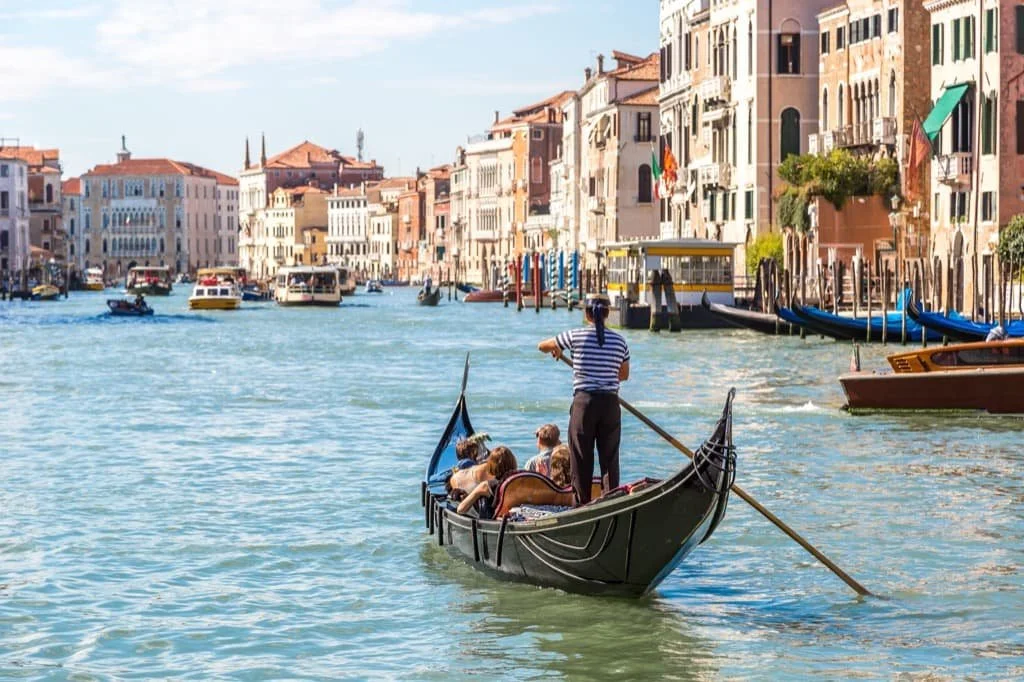
The most useful reframing of the Venice debate, for anyone planning a trip, is not necessarily whether to visit, it’s how to do it while helping the city to achieve its long term conservation goals.
Day-trippers, on average, spend between €20 and €30 per person during their time in Venice. Overnight visitors spend upwards of €150 per day. However, the difference isn't necessarily financial, but structural.
Hotel stays generate tourist tax revenue that funds city services. They support locally owned accommodation businesses. They spread visitor presence across morning, afternoon, and evening, rather than concentrating it in a midday crush around San Marco and the Rialto Bridge. The single most impactful thing a visitor can do for Venice is stay the night. Better still, stay two or three.
But where you stay matters, massively. Every residential apartment in the centro storico that becomes an Airbnb listing could be a home that a Venetian family can no longer afford. Choosing a locally owned hotel, a family-run B&B, or accommodation in one of the less touristed sestieri, Cannaregio, Castello, or the quieter corners of Dorsoduro, keeps money circulating within the community that actually lives there.
You absolutely need to keep an eye out for AirBnBs / VRBOs that are actually part of larger commercial vacation rental groups too. The money you pay to stay often doesn’t go anywhere near Venice, and instead towards the profits of companies that may not be based in Venice, or even Italy.
Where you eat and what you buy follows the same logic. Venice's retail landscape has been transformed by tourism, with many neighbourhoods losing local services in favour of souvenir shops selling mass-produced goods with no connection to the city. The antidote is specificity.
Antica Drogheria Mascari, a food and spice shop near the Rialto that has been run by the same family since 1948, stocks regional specialities and over 600 Italian wines. Antica Legatoria Piazzesi, operating from the same premises in San Marco since 1851, continues to produce hand-printed papers and bookbinding using techniques that have barely changed in a century and a half.
On Murano, the Vetro Artistico Murano certification guarantees that glasswork was produced using genuine methods by island-based artisans, a distinction worth knowing when every third shop on the main tourist routes sells imported imitations.
The Rialto Fish Market, open Tuesday to Saturday mornings, remains the centre of Venice's food culture, a place where chefs and nonni haggle side by side over the day's catch from the Adriatic and the lagoon. Spring brings moleche, the soft-shell crabs that are a Venetian delicacy; winter brings radicchio di Treviso from the mainland.
Eating at a neighbourhood osteria, ordering cicheti (Venetian-style small plates) and an ombra (a small glass of house wine), is not just cheaper and more pleasurable than eating at the tourist-trap restaurants around San Marco.
So, instead of eating at McDonalds, buying plastic gondolas or booking into a global chain hotel, push your boundaries and spend your money at businesses genuinely run by locals. You can just ask too – Venetians will certainly appreciate the extra effort you’re making to help their economy, rather than contributing to the wider problem.
There's a practical dimension to this, too. Venice is a walkable city of fewer than five square kilometres, and much of what makes it extraordinary lies outside the San Marco to Rialto corridor that most visitors never leave. The sestiere of Cannaregio, in the north, is home to the Jewish Ghetto, a neighbourhood of quiet intensity where three of Europe's oldest synagogues still hold services.
Castello, in the east, stretches from the Arsenale (Venice's medieval shipyard, now home to the Biennale) to the tree-lined waterfront of Via Garibaldi, one of the few streets in Venice wide enough to host a proper passeggiata. Dorsoduro, on the southern edge, has the Gallerie dell'Accademia and the Peggy Guggenheim Collection, but it also has the Squero di San Trovaso, one of the last working boatyards where gondolas are still built and repaired by hand.
The city itself has tried to formalise this kind of guidance. The #EnjoyRespectVenezia campaign, launched in 2017, sets out 12 rules for responsible visiting, from walking on the right to avoiding picnics on church steps. The companion DETOURISM initiative, run by the city's tourism department, offers alternative itineraries through less-visited areas and lagoon islands. Venezia Autentica, an award-winning social enterprise founded in 2015 by Venice residents, maintains a curated directory of genuine local businesses, artisan workshops, and neighbourhood restaurants, essentially a map of the Venice that exists beyond the postcard.
If you want to contribute more directly, Save Venice runs public treasure hunts across the city, costing €20 to €30, that guide visitors to restored artworks and lesser-known landmarks. It's one of the more satisfying ways to see a city: following a trail that leads you through quiet campi and into churches you would never have found on your own, while supporting the organisation that conserved the art you're looking at.
The underlying principle is straightforward. The "visit before it's too late" mentality treats Venice as something to be consumed. The better approach treats it as something to participate in. Spend more time. Spend more thoughtfully. Walk further from the centre. Support the people who actually live and work here. That's not a sacrifice. It's a better trip.
Should You Avoid Venice Altogether?
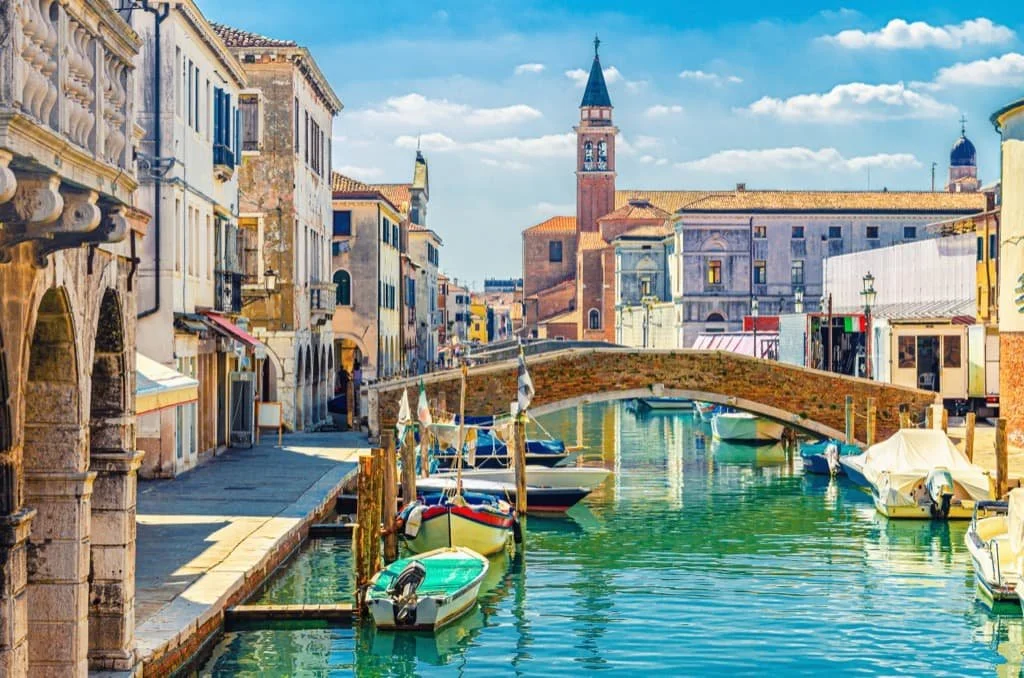
Avoiding Venice altogether certainly doesn’t help to contribute to the local economy, which in turn funds flood and sediment protection measures. But, if you feel strongly that your presence as a tourist is only going to make things worse, the extreme option could be to give Venice a ‘break’ for now and visit somewhere that isn’t in tourism crisis mode.
Luckily, there’s a mini Venice barely an hour from the actual Venice: Chioggia. Such is the likeness, and similar rich history, you could glance at photos of Chioggia and be forgiven for thinking that you’re looking at a smaller Venice canal.
Chioggia is becoming more popular, but you won’t get the constant stream of visitors like you currently do in Venice. You can even combine both, with boat, bus and rail connections making Chioggia an excellent day trip from Venice if you have enough time.
Italy certainly isn’t short of incredible ‘secondary’ cities that many tourists may not even know about, favouring Venice, Milan and of course Rome.
Lecce, in Italy’s south, has some of Italy’s finest architecture, gorgeous squares to rival San Marco, and a history way deeper than Venice’s. Turin, as famous for football as anything, also offers a different edge, with its Alpine culture and neat baroque layout a mile apart from Venice’s tightly-packed rows. You’re also perfectly situated for the mountains and the wider Piedmont region, a region that has somehow managed to escape the mass tourism of its more famous cousins.
Alternatively, if you feel very strongly about not contributing further to Venice’s tourism problem, but do want to make a difference, then you can always support the organisations in this article, like Save Venice, by making a donation (we are not affiliated with any of these charities in any way, just a suggestion!)
The Actual Future of Venice
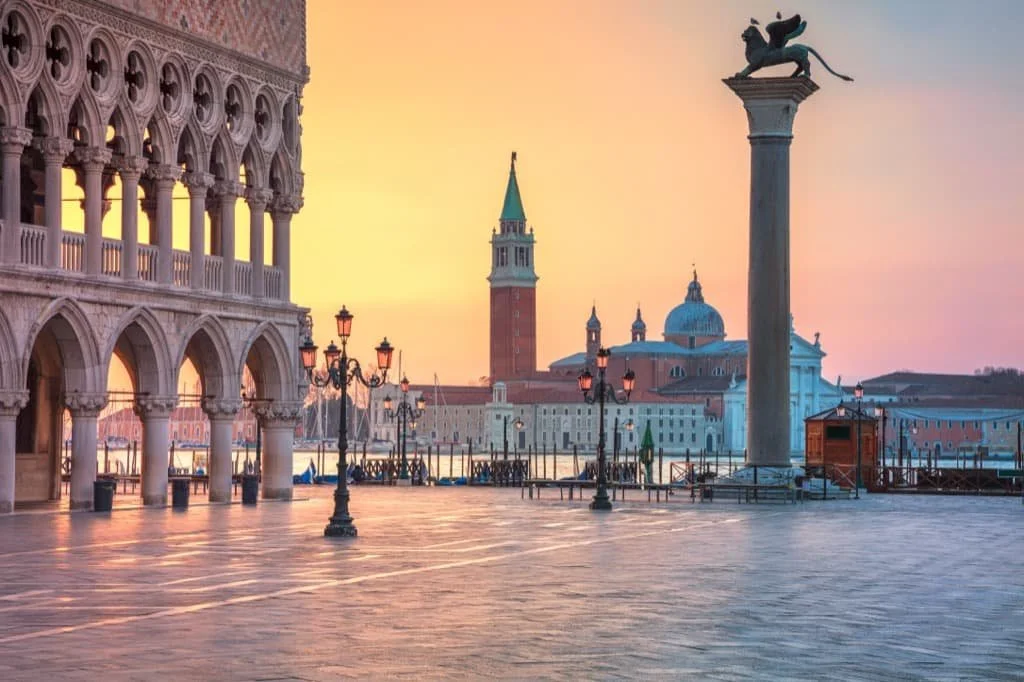
As you can see, Venice isn’t going anywhere anytime soon. Venice has survived the fall of its own republic, Napoleon, Austrian occupation, two world wars, the catastrophic flood in 1966 and again this century, as well as a self-inflicted subsidence crisis caused by industrial groundwater pumping. It has survived corruption scandals that delayed the one engineering project capable of protecting it. It has survived 30 years of apocalyptic headlines and a '‘don’t miss it’ narrative. And it has survived being loved, or at least visited, almost to death because of that.
But the reality is, Venice is still here, it’s thriving (at least from a tourism perspective) and it has more defences in place today than at any point in its 1,600-year history. MOSE works. The glass belt around St Mark's works. The cruise ship ban has removed the most damaging vessels from the lagoon.
Again, we have to remember the threats have not gone away, and they will not. Sea levels will continue to rise. The frequency of MOSE activations will increase, and the engineering community will need to manage the tension between flood protection and lagoon ecology with increasing care. The Teatini proposal to raise the seabed through deep aquifer injection remains in the research phase but represents the kind of thinking that will be needed if Venice is to remain habitable beyond the mid-century. The long-term future requires not just barriers but a fundamental rethinking of the relationship between the city, its lagoon, and the sea.
Perhaps the biggest threat that is really changing Venice’s DNA is the depopulation of the centro storico, driven by housing costs and the relentless conversion of homes into tourist rentals. There’s no engineering solution that can bring back generations of Venetians who have either cashed in or have been forced out.
Ensuring Venice remains Venetian, and doesn’t turn into some sort of Disneyland with canals requires political will on a scale that Italian municipal government has not yet demonstrated. This includes meaningful regulation of short-term lets, investment in affordable housing, and economic diversification beyond tourism – all of which are unpalatable in Italy’s current economic and political climate, locally and nationally. These are not problems that a flood barrier can solve. They are problems that require Venice to decide what kind of city it wants to be.
But the narrative of a city passively slipping beneath the waves has always been a fiction. Venice was built by people who chose to raise a civilisation on wooden piles in a muddy lagoon, who sang as they drove the stakes into the mud, who clad their buildings in stone shipped across the Adriatic and filled their churches with gold.
It has been defended by people who engineered a system of 78 steel barriers across the seabed to hold back the tide. It is maintained, day by day, by conservators who spend years restoring a single fresco, by glass-makers who still work with fire and silica on Murano, by fishmongers at the Rialto who sell branzino and orata every morning as they have for a thousand years, and by the residents who choose to stay even when staying is difficult.
The question facing Venice has never really been "will it survive?" The answer to that, on the evidence of 16 centuries, is yes. The question is what kind of Venice will exist in 50 or 100 years, and what role visitors play in shaping that answer.
A rushed day trip from a cruise terminal contributes one thing. A three-night stay in a family-run hotel, with meals at neighbourhood restaurants, a morning at the Rialto market, and an afternoon following a Save Venice treasure hunt through churches you had never heard of, contributes something quite different.
The ultimate solution is to stop treating Venice like another Instagram feed checklist. It isn't a city to be visited "before it's too late" act of selfishness. We need to think of it as an ongoing centuries-long project.
So, it could be argued that the tide isn’t Venice’s biggest threat right now. You are. Unless, of course, you make a few simple choices to ensure your money ends up in the pockets of the people who are striving to keep Venice as it is.
If you’re planning a visit, the city of Venice's official portal, Venezia Unica, provides information on the entry fee, ACTV vaporetto passes, and museum access. The DETOURISM web magazine offers curated itineraries beyond the usual routes. For conservation-focused visits, Save Venice organises treasure hunts and public events, and Venezia Autentica maintains a directory of genuine local businesses. The day-tripper entry fee (€5 advance / €10 last-minute) applies on selected peak days from April to July, typically Fridays through Sundays, between 8:30am and 4pm. Overnight visitors are exempt.
Read Next