For a Few Hundred Yen, You Can Still Ride the Last Tram in Tokyo
The last remnant of Tokyo’s once sprawling tram system is still going strong
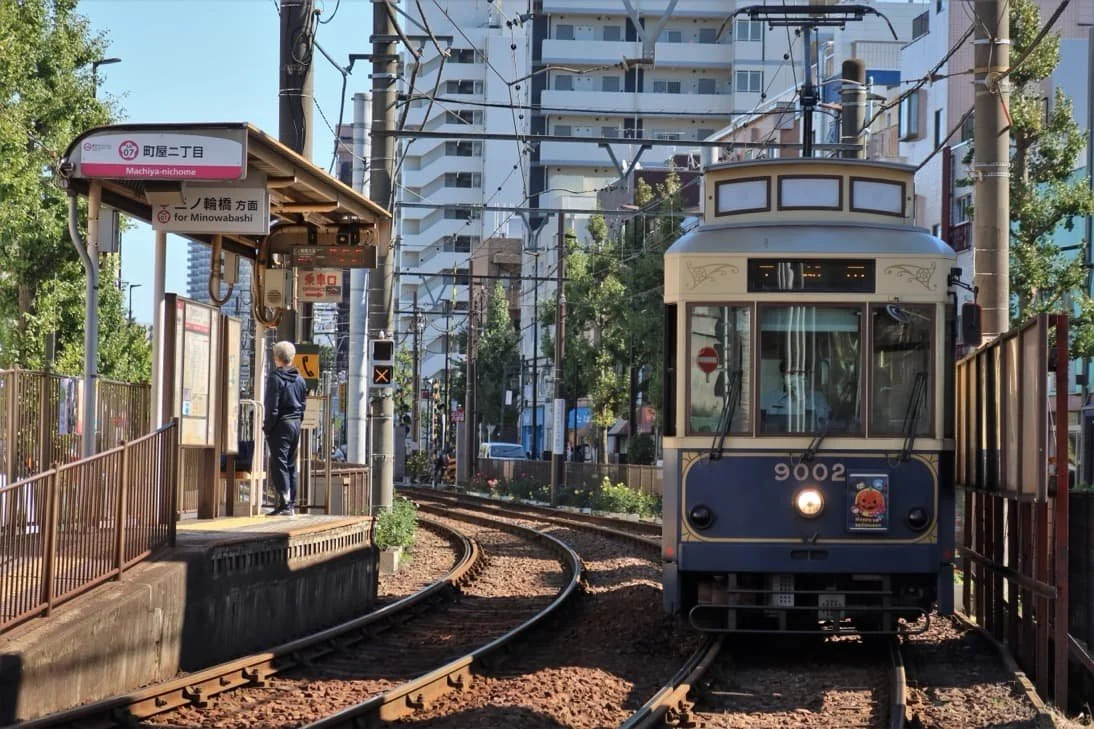
When Tokyo tore up 181 kilometres of track in the late 60s and early 70s in the name of progress, one 12-kilometre line refused to disappear. The Toden, or Tokyo Sakura Tram still runs through the neighbourhoods the guidebooks forgot, and it costs less than a cup of coffee to hop on board.
Back in 1943, Tokyo's tram network was one of the largest urban streetcar systems in the world. Forty-one lines threaded 213 kilometres of track through the city's wards, carrying up to 1.93 million passengers a day.
The trams were the connective tissue of the capital, known locally as chin chin densha for the ringing of their bells. But as Tokyo’s infrastructure began to heave as it approached its status as the most populous on earth, Tokyo’s officials decided trams were no longer the answer to faster roads with higher capacities.
A Network Erased
The dismantling began in the early 1960s, when several routes were cut ahead of the 1964 Tokyo Olympics. The Games demanded a modern capital, and trams running on public roads were seen as obstructions to the car traffic that symbolised Japan's postwar ambitions. This was the start of a golden era in Japanese car making, and cars were seen as the future of mass transit, rather than slow, noisy old trams.
Between 1967 and 1972, the Tokyo Metropolitan Bureau of Transportation shut down the rest in seven brutal stages, ripping up 181 kilometres of track and replacing the routes with buses and subway extensions. By 1974, every line was gone, except for one.
The Line That Stayed
The Toden Arakawa Line, now officially branded the Tokyo Sakura Tram, survived for two reasons.
The first was practical. The roads in this part of northern Tokyo were too narrow and too winding to accommodate a replacement bus service, plus they weren’t quite as busy as other routes closeby that followed the same orientation.
The second was stubbornness. Residents along the route pushed back against closure, and in a city where infrastructure decisions tend to be accepted without much fuss, their opposition worked. In 1974, parts of two condemned routes were merged and preserved as a single line, and the tram kept running.
And almost 60 years later, the tram is still going strong. The 12.2-kilometre route connects Minowabashi in Arakawa Ward to Waseda in Shinjuku, with 30 stops in between. End to end, the journey takes around 50 minutes. The flat fare as of Spring 2026 is 170 yen (roughly £0.90), or 168 yen if you tap a Suica or Pasmo card. Day passes are also available.
Through the City's Back Rooms

Another reason for this stretch of tramline is that the trams run almost entirely on dedicated track, sharing the road with cars for only a short stretch near Oji-ekimae. For the rest of the journey, it cuts through exactly the kind of Tokyo that doesn't appear on tourist itineraries.
Even a short ride will take you past residential blocks in Arakawa and Toshima wards, where laundry hangs from balconies and small shops open onto streets barely wide enough for two people to pass. It's the kind of route where the carriage almost brushes the eaves of the houses it passes, a detail Haruki Murakami used when he sent his protagonist down this same line in Norwegian Wood, describing the ancient houses sliding close to the tram windows.
That description hasn't dated at all. The line passes through four wards, and while the rolling stock is largely modern (a few heritage carriages remain in service), the neighbourhoods themselves feel remarkably unchanged, a pleasant throwback in a city that seems to evolve on a daily basis.
The terminus at Minowabashi sits near the covered shopping street of Joyful Minowa, a shōtengai where prices and pace belong to another decade. Locals along the route have planted rose bushes between the tracks, and in late May the tram earns its unofficial second name: the Rose Highway.
Stops Worth Making
Part of the pleasure is simply staying on board and enjoying the view as you trundle along. However, there are a few places along the route where making a stop is worth the wait for the next tram.
At Sugamo Jizōdōri, a two-minute walk from the Kōshinzuka stop, an 800-metre shopping street caters almost entirely to Tokyo's older residents, earning itself the affectionate nickname "Grandma's Harajuku." The main draw is Kōganji Temple, home to a Jizō statue said to relieve ailments, but the street's real appeal is its atmosphere: flat, accessible, and lined with over 200 shops selling wagashi sweets, green tea, and red underwear that is, according to tradition, meant to bring the wearer good health and long life.
Near Ōji-ekimae, Asukayama Park is one of Tokyo's oldest public parks, designated a cherry blossom viewing spot since the eighth Tokugawa shōgun planted trees here in the 1720s. During sakura season, the tram's curve around the park is one of the best places to see cherry blossom in Tokyo, and considerably less crowded than Ueno or Meguro.
Further west, at the Kishibojinmae stop, the grounds of Zōshigaya Kishimojin Temple hold two quiet surprises. The temple itself is dedicated to the Buddhist goddess of safe childbirth and child-rearing, and in its grounds stands a 700-year-old ginkgo tree designated a natural monument by the city.
Beside it, Kamikawaguchiya has been selling dagashi (traditional penny sweets) since 1781, making it Japan's oldest continuously operating sweet shop. It's still run by the same family, still laid out with wooden bins of sweets priced at 10 to 30 yen, and still feels like a place that time cannot quite reach.
A Welcome Break from Tokyo’s Pace
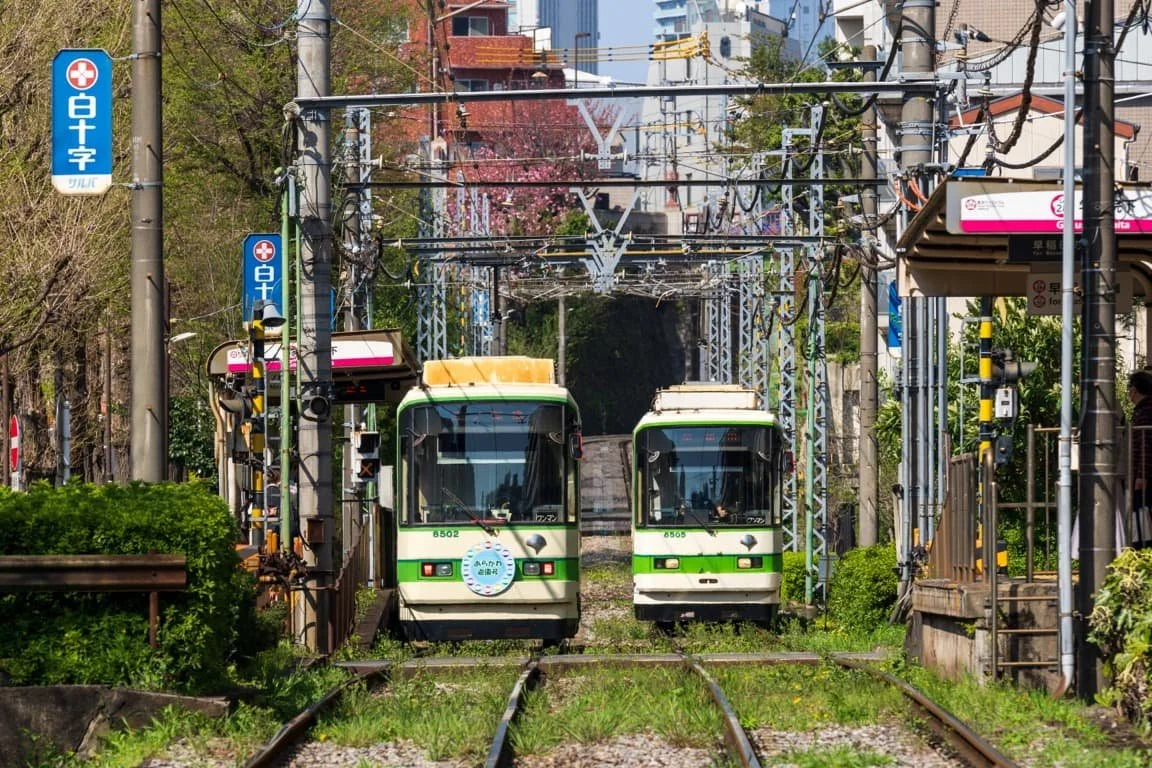
The Tokyo Sakura Tram carries around 48,000 passengers a day now, most of them commuters and elderly residents rather than tourists. That being said, it isn't quite a heritage ride or a preserved curiosity kept going for the cameras. It's a working transit line that happens to pass through a version of the city that the Shinkansen and the Yamanote Line simply cannot show you.
Tokyo rebuilds itself constantly, treating impermanence as a design principle. That’s what happens when you build in an earthquake zone, and when wars almost completely erase the entire city.
This makes a single tram line survived the wrecking of an entire network, kept alive by the people who lived along it, all the more appealing. It’s also a rare example of a Japanese community foregoing the usual polite acceptance of progress.
The tram runs roughly every six to eight minutes from around 6am until 11pm. You board at the front, pay as you leave, and listen for the bell that signifies a stop is coming up!
The Tokyo Sakura Tram runs from Minowabashi to Waseda, connecting with the Hibiya Line (Minowa Station), the JR Yamanote Line (Ōtsuka-ekimae), and the Tokyo Metro Tōzai Line (Waseda). A single ride costs 170 yen; the Toden one-day pass is 400 yen, available on board. The tram is also covered by the Toei one-day pass (700 yen), which includes Toei subways and buses.
Read Next