The Part of Arches National Park Where Access is Earned
Most visitors drive the scenic road and call it done. The Fiery Furnace requires a little more effort.
The numbers at Arches can be hard to absorb. More than 1.8 million people visit each year, and on a peak-season morning the queue of vehicles at the park entrance can stretch back onto the highway before 8am. Since 2022, the park has operated a timed-entry reservation system between April and October, requiring visitors to book a slot in advance just to pass through the gate. This means that if you turn up on the day during peak season, your chances of getting turned away can be high.
But even if you do managed to get in, it’s likely you’ll join the herd that drives the scenic road past Balance Rock, waits in line at the Delicate Arch viewpoint, snaps photos from busy pullouts, then heads back to Moab thinking they’ve seen it all.
But if you visit Arches National Park without straying from the tarmac, you’re missing a trick. There are literally dozens of amazing hikes and viewpoints that the average visitor doesn’t even know about. And the Fiery Furnace is just one section of the park that requires some additional effort.
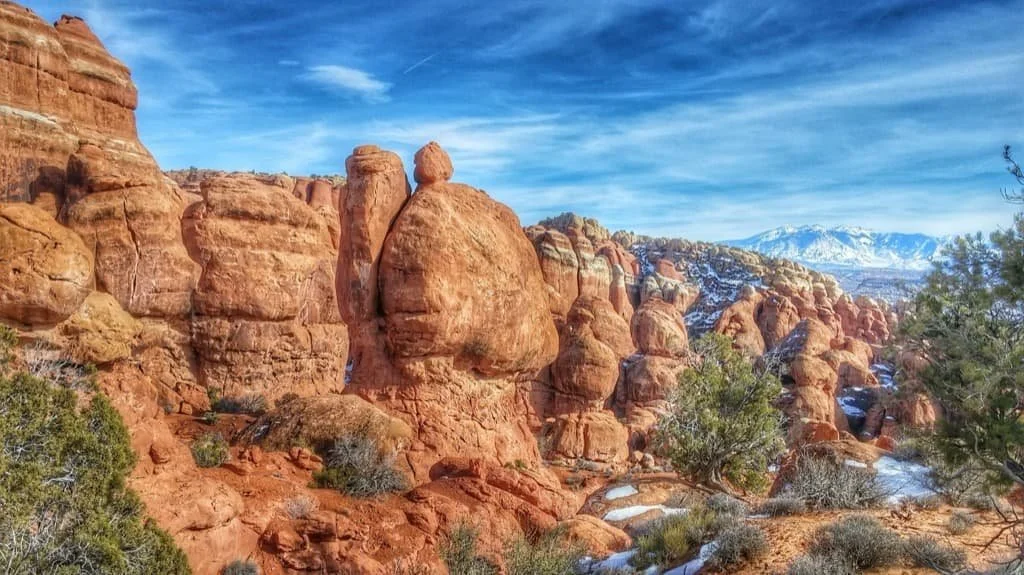
The Fiery Furnace is a labyrinth of tall Entrada sandstone fins and narrow dead-end canyons near thge geographic centre of Arches National Park. From above, the parallel rows of fins and passages give the landscape the appearance of something scored by an enormous rake, dotted with gravity-defying arches and structures.
Incredible, yes, but you can’t just arrive, lace up your boots and head out into the maze. Access to Fiery Furnace is strictly controlled (which is actually a good thing) and requires you to jump through several hoops just to be allowed inside.
So how do you earn the right to explore this protected chunk of Arches? Let’s look at what’s required to escape the crowds and discover the Fiery Furnace.
Why is Access Controlled?

The National Park Service has kept the Fiery Furnace under permit or ranger-guided access since 1994, a direct response to the environmental damage that unrestricted visitor numbers had begun to inflict.
One of the casualties was the park’s selection of rare plant species, including one of the largest known concentrations of Canyonlands biscuitroot, a flowering plant endemic to the Colorado Plateau. The plants have returned in numbers since the restrictions, but the balance is fine.
The other worry was Cryptobiotic soil crust, a living community of cyanobacteria, lichens, mosses, and fungi that can take thousands of years to form, which covers much of the desert floor between the rock surfaces. A single footstep in the wrong place will break it apart.
The ephemeral pools that collect in rock depressions after rain and support micro-ecosystems were under threat too, and they are irreplacable if depleted. The permit system exists not to make the place exclusive, but to prevent it from being loved to death.
The other side of the coin is that the Fiery Furnace’s scale is deceptive, and the layout can get very confusing, fast. The fins, walls of reddish Entrada sandstone formed over millions of years as water, ice, and wind run in near-parallel rows, creating a grid of passages that look identical from within, especially after a day of hot, tiring hiking.
There is a 2.3-mile route that is marked by small metal arrows fixed to the rock face, but they are pretty sparse and easy to miss. Add in the fact that GPS doesn't work among the close walls and the passages that branch off the route, and it pays to have a local ranger who knows the way out, or at least some navigation skills and enough water to find your way back to the car safely.
How to ‘Earn’ Access
Before you put a single foot in the mazy canyons, you’ll need to book a hiking permit. But even then, access isn’t guaranteed.
75 self-guided permits are available each day, bookable through recreation.gov up to seven days in advance. As you can imagine, demand is fierce during peak season and permits typically disappear within seconds of opening at 8am. This is the first hurdle.
If you’re caught without a permit, you can face a fine of up to $500, or even jail time for repeated breaches!
You probably won’t realise the second hurdle, unless there is a problem. Park staff and rangers, who are there to keep everyone safe, will make a decision on allowing access based on not just physical ability, but the weather, canyon conditions, temperatures and many other factors. If they feel there’s a risk, they’re entitled to deny access, a decision which may be disappointing, but must be respected. They will be deciding based on their experience and expert knowledge, not just because they want to spoil your day.
The third hurdle is that everyone must watch an orientation video covering minimum-impact navigation, and you’ll only get a permit if you’ve watched and understood everything. Groups of up to six can hike together on a single permit, with all members required to be present at the Arches Visitor Center to collect it.
For first-time visitors or those who aren’t experienced hikers, the ranger-led tours offer a different and much safer approach. Running from spring through autumn and lasting approximately two and a half hours, each hike takes a group of up to 14 people into the labyrinth with a ranger who knows the passages. These tours also sell out weeks in advance, so you need to be quick.
The Name
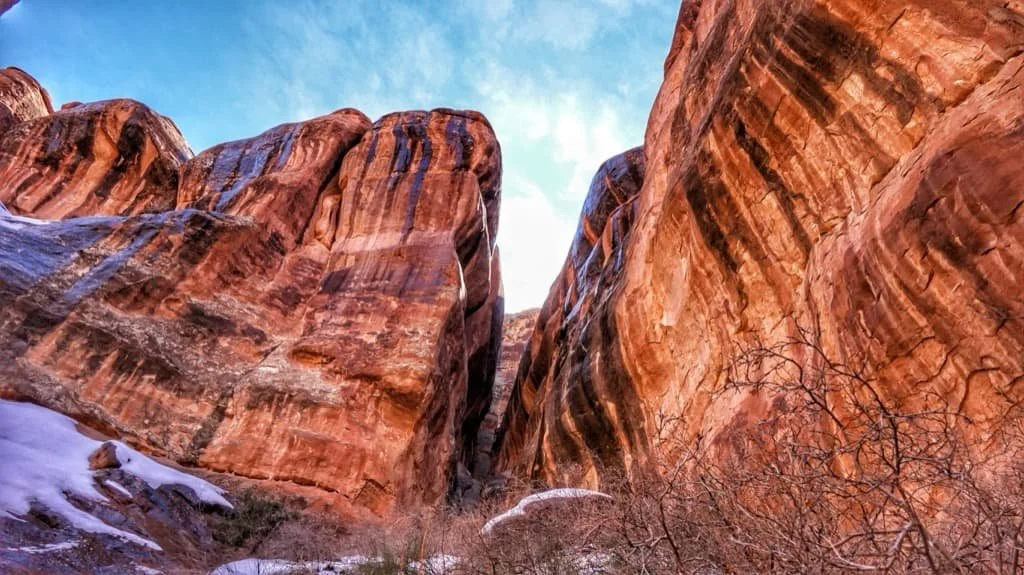
Temperatures in the high Utah desert regularly exceed 38°C, and the canyon floors get a fair share of the heat. However, the name actually refers to the colour the sandstone fins take on in the last light of the day, when they deepen through orange into something closer to the hue of cooling iron. The landscape looks less like rock and more like molten metal that’s just beginning to cool.
Here’s a top tip: if you’re visiting one Utah national park, you may as well visit five! The Utah Big 5 is a national park road trip that connects Utah’s main national parks in a simple route. Read the article below next to see how you can squeeze in even more of Utah’s natural wonders, if you have extra time available.
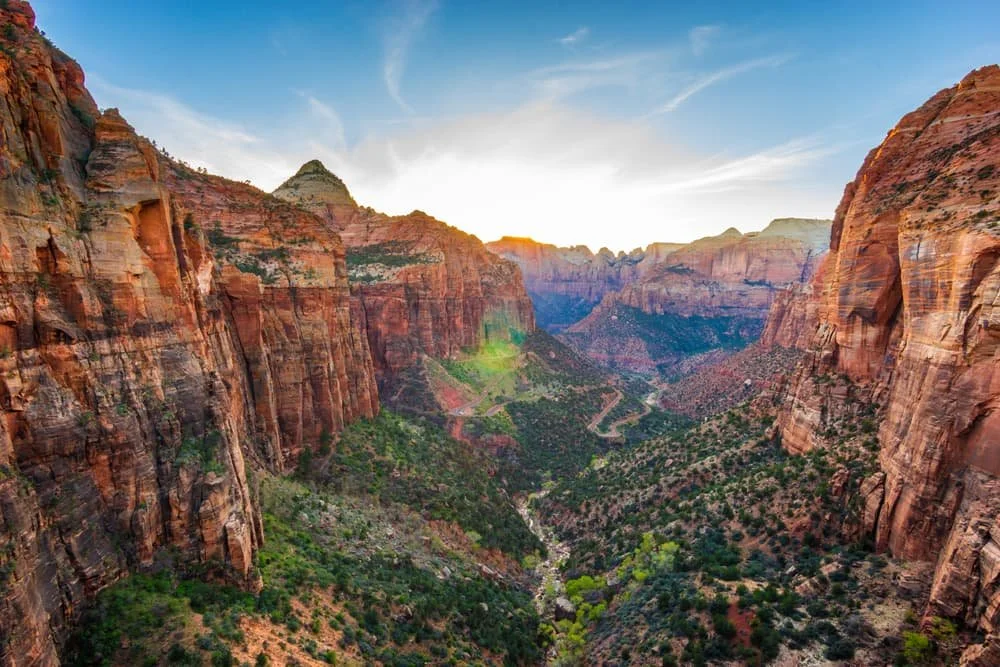
This is why a great tip is to visit the Fiery Furnace later in the day, or indeed first thing, to see the effect that golden hour has on the rock.
You can see the Fiery Furnace effect without a hiking permit or on a guided tour too. A paved pullout on the park's main road gives access to the Fiery Furnace viewpoint, but bear in mind that dawn and dusk see extra traffic as everyone tries to capture the moment.
The Other Reasons Why Fiery Furnace is So Special
Most of what makes Arches impressive can be seen from a car window or a short paved trail, but you’re missing most of Fiery Furnace if you don’t your vehicle. Its value is inseparable from the effort of being inside it, which is precisely the point.
The terrain also requires some squeezing through gaps barely wide enough for a day pack, jumping narrow drops, short scrambles using hands and feet and passing through natural arches low enough to require crouching. Just navigating the place is an adventure in itself.
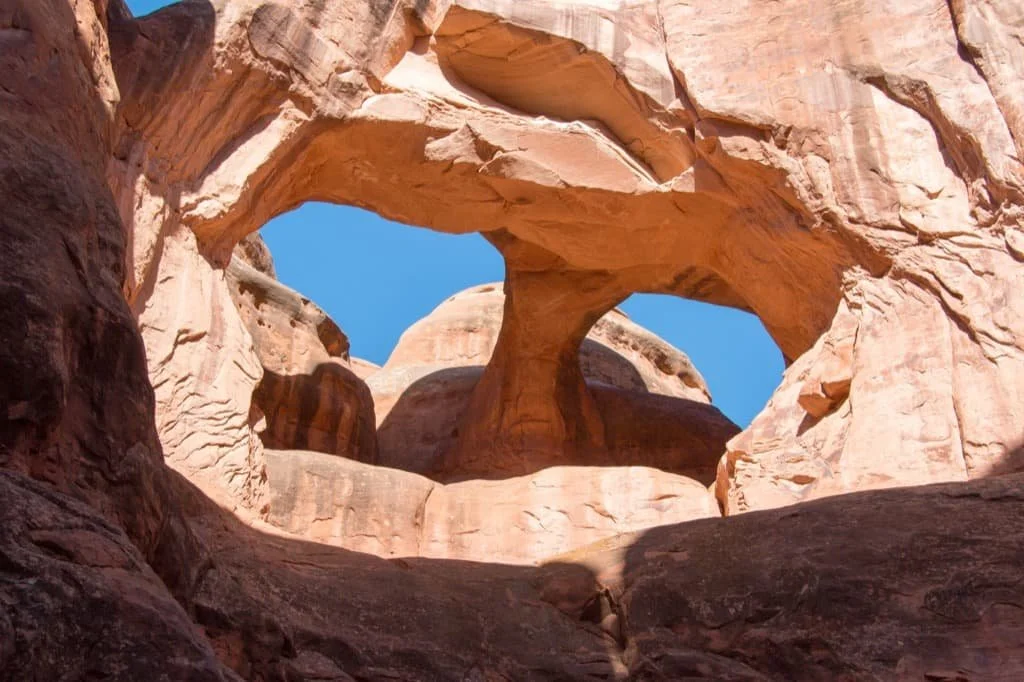
The Fiery Furnace contains 19 catalogued arches in total, according to geologist S.W. Lohman's survey, including Skull Arch, Kissing Turtles Arch, Surprise Arch, Walk Through Arch, and the self-explanatory Crawl Through Arch. None can be reached by parking in a pullout and walking 200 metres. The labyrinth is large enough that even experienced visitors won't find them all in a single visit, and that incompleteness is part of what makes returning feel worthwhile.
There is also the silence. The sandstone walls amplify voices and carry them unexpectedly far, so the National Park Service asks visitors to move quietly inside the Furnace to avoid confusion. In a park that elsewhere hums with the low-grade noise of camera clicks and commentary, this isolation somehow feels like a privelige.
When to Go
Spring and autumn are the sensible windows. March to May brings cooler temperatures and, in a good year, wildflowers among the sandstone. September and October offer similar conditions with slightly lower visitor pressure.
Summer trips are possible but require extra planning and an acceptance that you’ll be sharing both the park and the Fiery Furnace (if you can get a permit) with additionalc rowds.
The NPS recommends beginning desert hikes before 9am in June, July, and August and wrapping up before the heat sets it. The canyon environment of the Fiery Furnace offers limited shade and the rock walls can exacerbate the already intense heat. In winter, the Fiery Furnace may close if snow or ice makes the terrain hazardous, and the ranger-led programme only runs between spring and autumn.
The wider Arches National Park timed-entry system operates from April to October. This reservation is separate from the Fiery Furnace permit itself. Both are booked through recreation.gov, and again need to be done as far in advance as possible.
Where to Stay
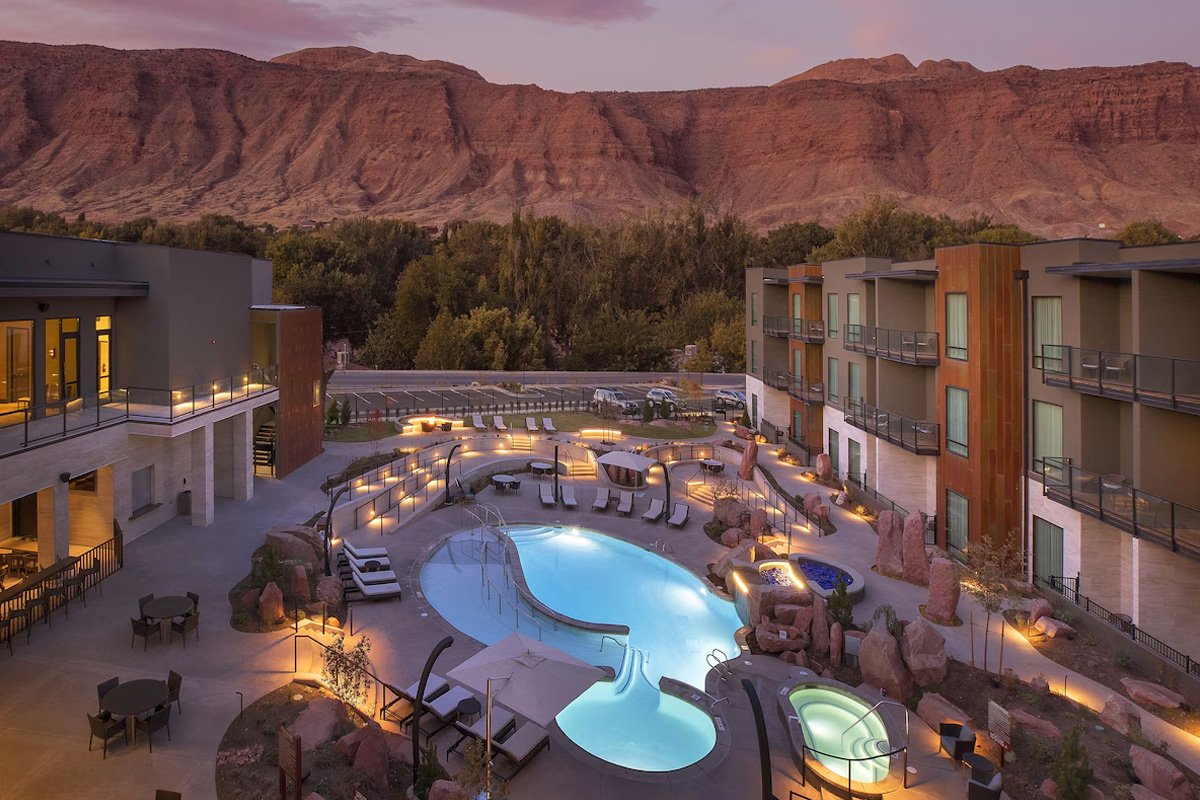
The city of Moab is around five miles south of the park entrance and is the best place to stay if you need some creature comforts at the end of a long day of hiking. The Hoodoo Moab, Curio Collection by Hilton is the closest the town has to a genuine four-star hotel, centrally located and a 10-minute drive to the park. There’s even an on-site spa to fix those sore muscles.
If that all sounds too soft and fluffy, then Under Canvas Moab, a luxury tented camp on 40 private acres a few minutes from the park entrance, means you can wake up to a rugged landscape rather than breakfast in bed.
Thanks to the park’s proximity, Moab has more restaurants than a town of its size would normally justify. Desert Bistro, Moab's long-running premier dining room, serves hearty south-western cuisine in a covered courtyard setting, and takes reservations for good reason. After a day of scrambling through sandstone, it's a great spot to refuel.
Arriving Prepared

Arches National Park receives more visitors than it can comfortably hold, especially in summer. We’ve said it enough times already, but you need to book your park access and Fiery Furnace permits in advance.
You also need to really consider if you and your party are up to the physically demanding terrain. Even the most basic route requires climbing, scrambling and navigating uneven terrain. The permit system, orientation video and of course park staff act as a safety filter, so even if you think you’re up to it, you must be accepting if the rangers disagree.
With no GPS or cell phone signal, extreme temperatures and threats like rain, snow, wind and potentially all seasons in one day, you’ll need the right kit, more food and water than you think you’ll need and a mindset that focuses on what you’ll do if things go wrong. So the same advice for any sort of hike, really.
The final consideration is applying the typical leave no trace approach, but in the Fiery Furnace being extra-aware of the micro-ecosystems and plant life that the permit protects.
Read Next