The Height War: A French Cathedral Road Trip
Seven French cathedrals, an escalating rivalry across centuries, and a vaulted ceiling that went too far…
◔ 30 minute read
In the mid-1100s, something happened in Northern France that went completely against the grain of cathedral architecture. All of a sudden, gone were the curves and (relative) simplicity of Romanesque designs. In came something taller, lighter, and more structurally daring than anything the Roman Empire had managed, or the early medieval world thought possible. On the outskirts of Paris, the gothic cathedral was born.
During remodelling work at the basilica of Saint-Denis, a town barely a day’s ride from the French capital, an abbott tore up the old building and created something daring, brilliant and unique (maybe accidentally, more on that later).
In the following 150 years, this new design kick-started a chain of cathedral builds that popped up in a single section of countryside smaller than Wales, each one deliberately designed to surpass the last. Vaults climbed from 29 metres to around 48.5 metres, at which point the limits were finally realised. The style was exported across Europe and eventually the Americas and is now referenced and even reproduced.
The great news is that many gothic cathedrals still stand. You can visit them to gawp at the colossal scale, incredibly ornate designs and hidden stories that really make you wonder how they were built with basic tools and no calculators or computers. We’ve even put together a quick itinerary that allows you to see them all on a relatively short trip.
But before you book the hire car and start searching for dreamy hotels along the the way, the story that connects them is one of the great untold narratives in European travel.
These buildings aren’t just a display of commitment to faith. They are weapons of mass distraction used in a competitive arms race played out in limestone and glass, where theology, civic ego, structural genius, and financial ruin collided.
Their existence isn’t solely about reference or inspiration from above either. It was a conscious, competitive dynamic, driven by bishops who treated their cathedrals the way modern cities treat sports stadiums or skylines, as statements of civic power, prestige, and wealth.
Each new building was designed with explicit reference to its predecessors and rivals. Architects travelled between construction sites, studying what had been achieved, identifying where compromises had been made, and designing their own buildings to go further. The height of a vault or the number of panes in a stained glass window was never incidental or constrained. It was a conscious effort to have the bigger, better cathedral, and every bishop in northern France knew exactly how tall the next town's ceiling was.
Taken individually, each cathedral is a remarkable place to visit. Taken in sequence, they become individual chapters in a game of one-upmanship, and how far – and high – human ambition can reach before everything crashes to the ground.
So let’s start at the beginning, on Paris’ northern edge.
Basilica of Saint-Denis

The Basilica of Saint-Denis doesn’t really feature on most ‘must-visit French cathedral’ lists. Most tourists only end up in this part of Paris to watch something at Stade de France. There just isn’t the same draw as there is a few miles south in the centre.
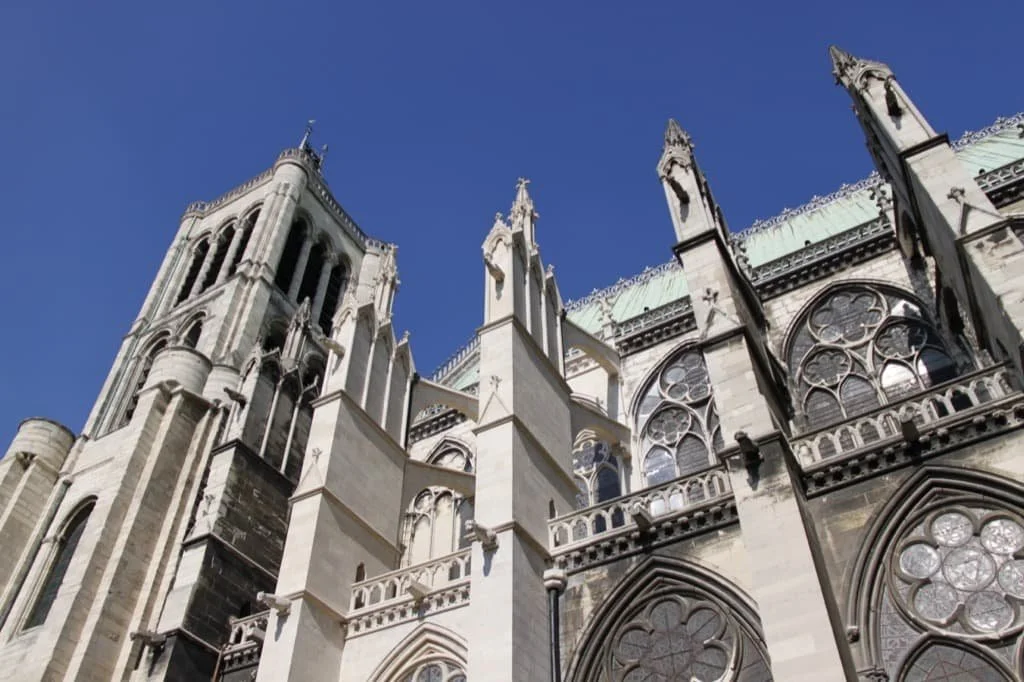
Beyond Saint-Denis, the actual Basilica of Saint-Denis isn’t even that much to write home about either, when you consider Chartres and Amiens are on this list. The cathedral is uneven, missing one of its original towers, which was dismantled in the 1840s over structural concerns following storm damage, including being hit by a tornado. You could even argue it doesn’t break into the top five churches and cathedrals in Paris. But without Saint-Denis, gothic cathedrals don’t exist.
In the 1140s, Abbot Suger decided it was time rebuild the east end of his abbey church. The legend goes that, inspired by the writings of Plato and through his fascination with Pseudo-Dionysius, an early Christian mystic, Suger believed that physical light was a direct manifestation of the divine. A church, in his view, should be engineered to admit as much radiance as possible, which meant the thick stone walls that traditionally held a building up needed to get out of the way.

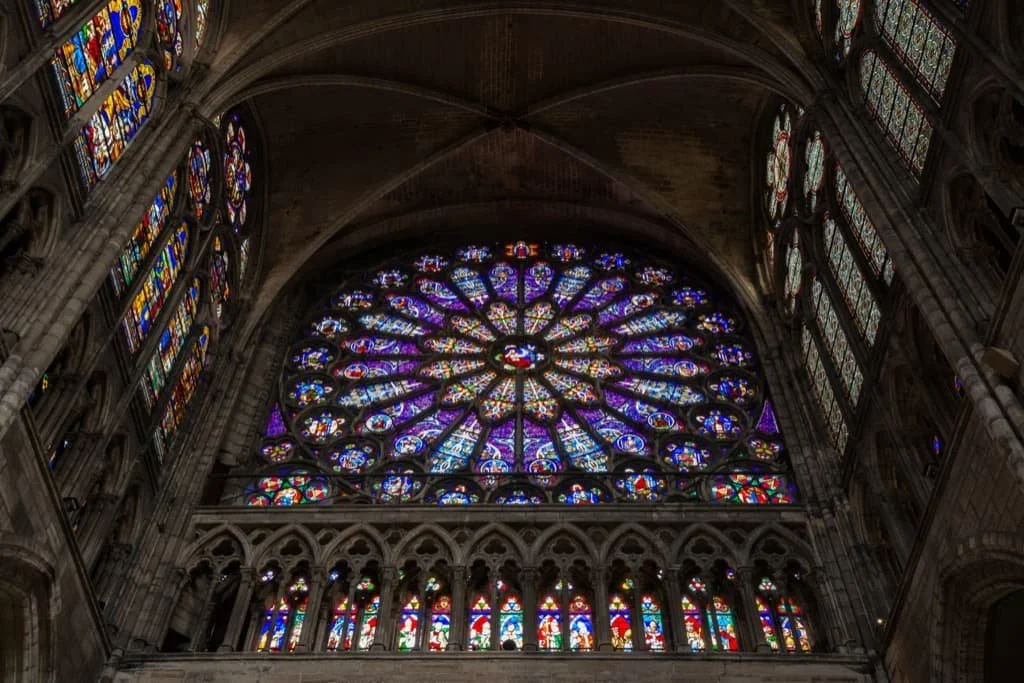
Or, the roof was ripped off during reconstruction, and the good Abbot decided he liked the amount of light suddenly flooding into the building.
Either way, his builders achieved this new philosophy, or desire for more light, by combining three structural innovations: the pointed arch, which distributes weight more efficiently than a round one, the ribbed vault, which channels that weight along specific paths, and the flying buttress, which distributes force and weight to the exterior so the interior walls can be freed up for bigger windows.
None of these were entirely new concepts. But assembled together here, deliberately, they created a building that allowed for more glass and a much taller ceiling, creating a bright, airy and grandiose space. In feudal medieval France, it would have looked like something literally created by the heavens.
The ambulatory at Saint-Denis, the walkway behind the altar, is where the technique is most visible. The walls are thinner than anything that preceded them, punctuated by windows that Suger himself described as creating a "continuous light." His own writings about the project survive, and they reveal a man who understood that he was doing something unprecedented. He was right. The ambulatory at Saint-Denis is, by consensus among architectural historians, the birthplace of all Gothic architecture. Everyone else even referred to gothic as ‘the French work’ before the word gothic was even a thing.
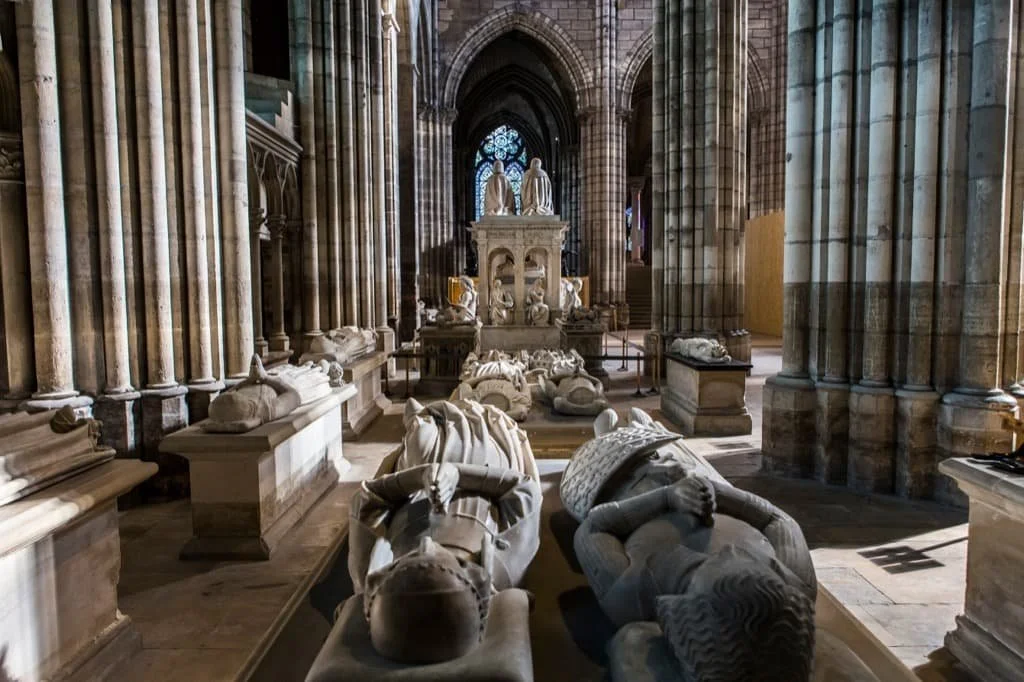
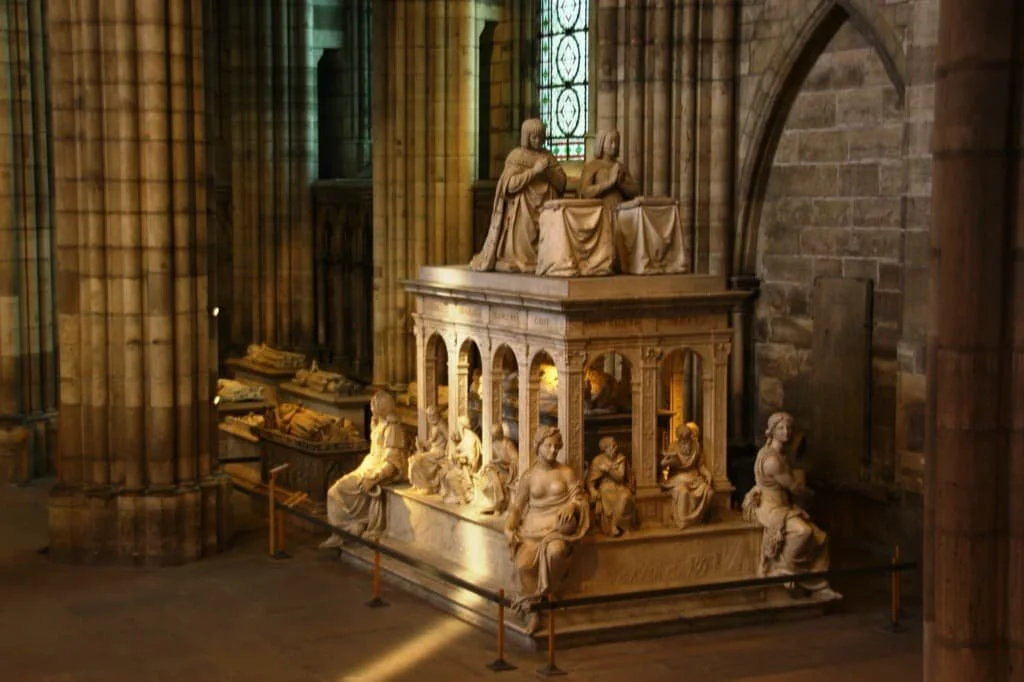
The basilica also houses the royal necropolis of France, one of the most significant collections of funerary art in Europe. Over 70 monuments cover over a thousand years of monarchy. 40 kings and 26 queens were buried here, from the Merovingian king Dagobert I in 639 to Louis XVIII in 1824.
The tomb sculptures range from austere 13th-century effigies commissioned by Saint Louis to extraordinary Renaissance monuments for Francis I and Henri II, carved by some of the finest sculptors of their era. You can practically follow the improvements in sculpture and stonemasonry by looking at the dates of death.
During the Revolution, the tombs were opened, the bodies exhumed and thrown into mass graves outside the basilica and covered with quicklime. Many of the sculptures survived only because an archaeologist named Alexandre Lenoir claimed them as artworks for his Museum of French Monuments. They were returned after the Bourbon Restoration and most now stand in their original positions. As you’ll find out soon, it’s quite fitting that the first example of extravagant gothic architecture became the graveyard of the monarchy that funded it.
If you’re starting your road trip here, you’re actually best off avoiding any driving near the cathedral, instead hopping on the Paris Metro to get to Notre Dame next. You can do both in a day if you don’t have all the time in the world, too.
The other big positive about Saint-Denis is that it lacks the endless crowds of Notre-Dame and Montmartre. You’ll get stalwart history buffs and local worshippers over crowds of bored teenagers on foreign exchanges and the constant camera flashes you’ll need to navigate at Notre-Dame.
Abbott Suger probably didn’t predict what his experiment would set in motion, but, based on the certainty of his writings, maybe he did. Either way, within two decades, bishops across the region were looking at Saint-Denis and making plans to not just match it, but outdo Suger’s work
Beyond the basilica itself, the Musee d'Art et d'Histoire de Saint-Denis, housed in a former Carmelite convent adjacent to the church, covers local history from the medieval abbey to the Paris Commune. The Stade de France, the national stadium built for the 1998 World Cup, is a 10-minute walk south.
The Basilica's nave and choir are free to enter but the royal necropolis and crypt require a ticket (managed by the Centre des Monuments Nationaux). Audio guides are available in several languages. The necropolis alone takes at least 45 minutes to walk through properly.
Notre-Dame de Paris
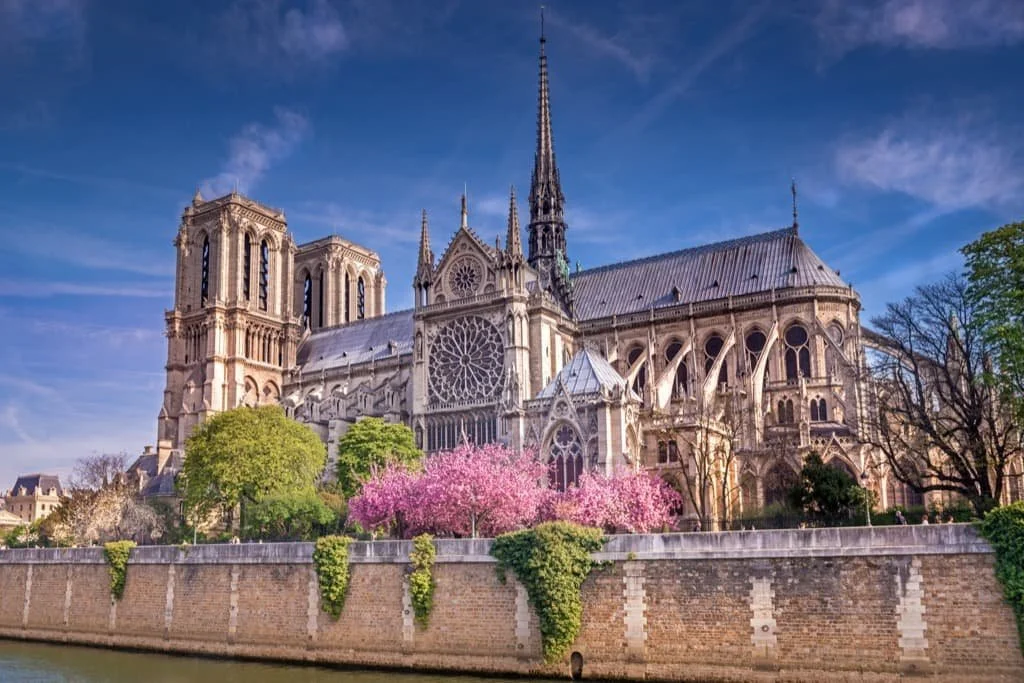
It’s possible that Bishop Maurice de Sully wasn’t prepared to let Saint-Denis hog the local limelight. He certainly rode a wave to make sure his cathedral outdid Saint-Denis.
Paris was becoming the pre-eminent city in Europe, the centre of a powerful and expanding kingdom, and de Sully wanted Notre-Dame to be the largest church not just in Paris or France, but in Christendom, matching the city’s ambitions.
Before he laid the first stone in 1163, the entire Île de la Cité changed, with whole streets razed and even the course of the Seine affected. Paris was committed to a construction project that would take nearly 100 years to complete. When it was, the vault reached 33 metres, taller than anything previously attempted.
Foreshadowing the next thousand years, Notre-Dame barely had the scaffolding off before remedial works were needed to rescue it. Those magical flying buttresses that are part of the cathedral’s image? They’re 13th century additions to stop the original walls falling inward, the casualties of a design that was several hundred years ahead of the actual engineering.
This is the first appearance of a pattern that repeats at every subsequent stop on this route. Ambition outruns engineering, engineering catches up through retrofit and repair, and then ambition outruns it again, all the way up to the 19th century at times.
The interior of Notre-Dame uses a six-part rib vault, an older and heavier system than what would follow at Chartres. The vault therefore distributes the weight of the roof across six sections per bay rather than four, which meant thicker walls and smaller windows in the upper storeys.

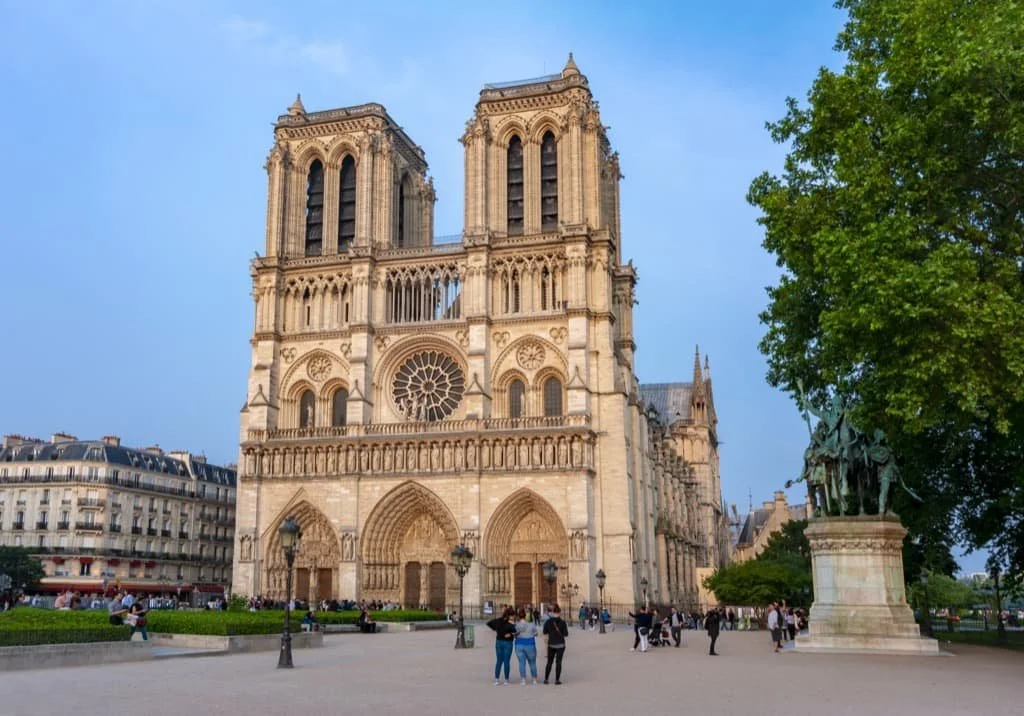
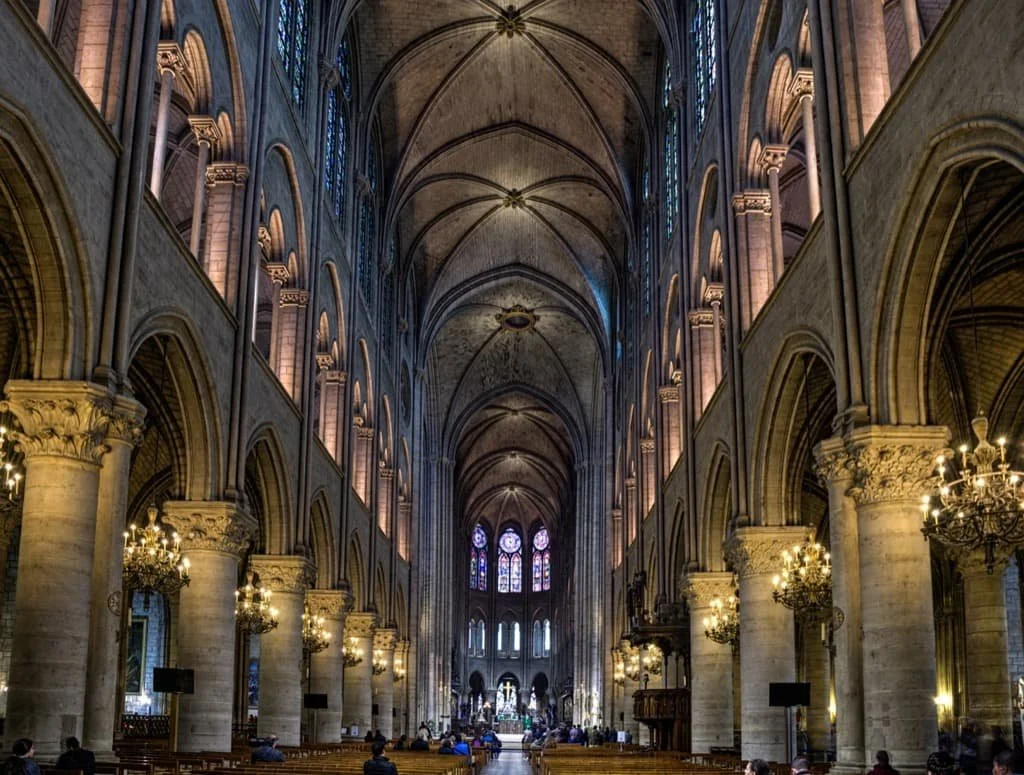
The technology was already conservative by the time Notre-Dame's nave was completed, and the difference becomes apparent to anyone who visits Chartres afterwards (and can remember to reference the number of ribs). Within a single generation, the structural possibilities of the Gothic system had leapt forward, and Notre-Dame, for all its scale, found itself representing an approach that was already being superseded.
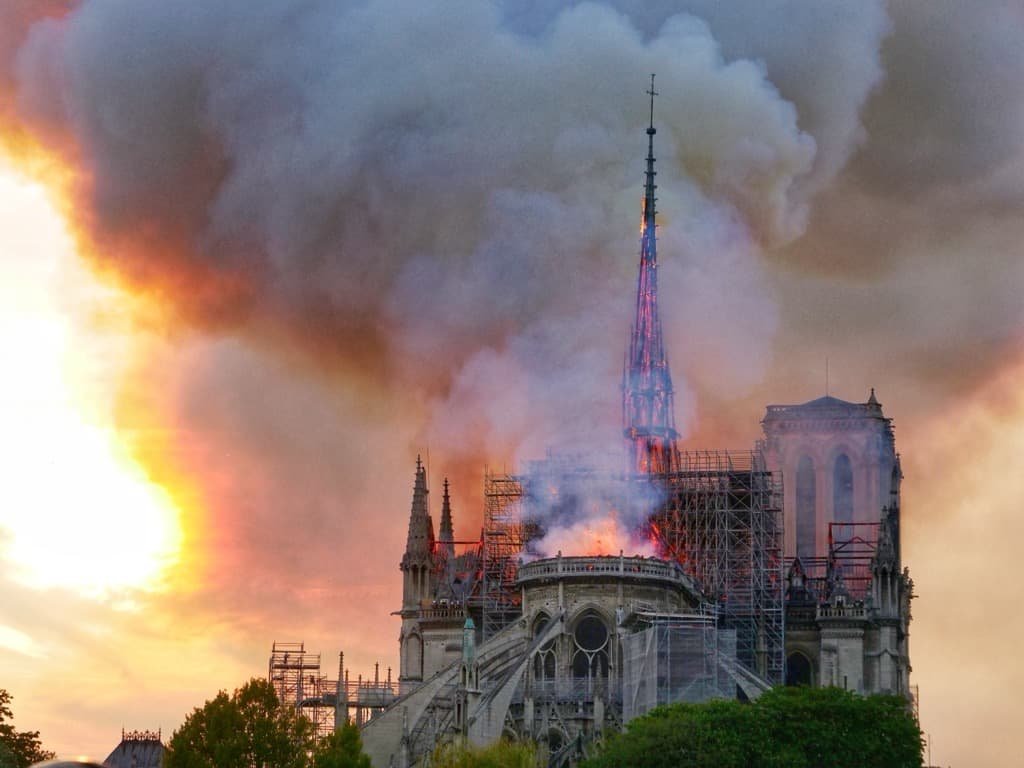
It’s hard to focus on the original design in a cathedral that has had no shortage of alterations, planned and unplanned. The fire of April 2019, the five-year restoration, and the reopening in December 2024 are part of its ongoing story. Notre-Dame has been rebuilt, restored, damaged, and repaired so many times across its existence that the building is less a fixed monument than a continuous project approaching a millennium in magnitude.
The 19th-century architect Eugene Viollet-le-Duc, who oversaw a major restoration in the 1840s-60s, added the famous spire, redesigned gargoyles, and replaced damaged statuary according to his own vision of what Gothic ought to look like. This means the boundary between "original" and "restored" at Notre-Dame is blurrier than at almost any other cathedral on this route, and this is itself part of the story.
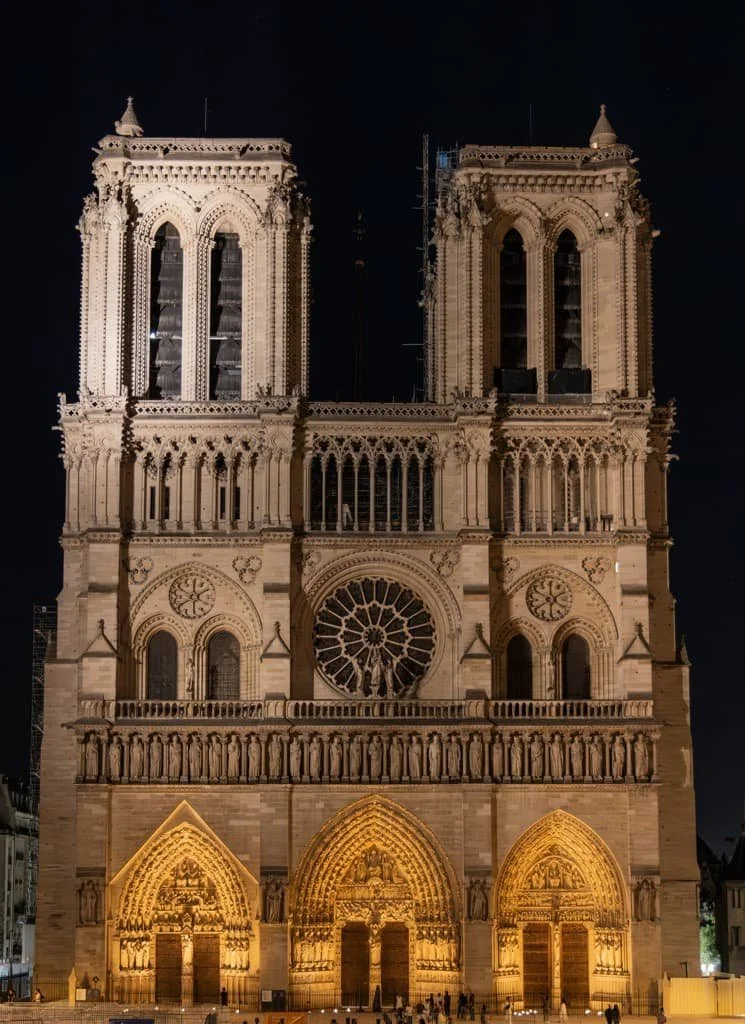
None of France’s cathedrals can be truly viewed as static objects that looked as they did in the 12th and 13th centuries. They were always being added to, modified, repaired, and reimagined. The idea of a "finished" cathedral is largely a modern invention. Almost none of them were completed according to their original plans.
When you’ve arrived and are being talked through the basics by your tour guide, it’s better to think of Notre-Dame not as a stuffy old cathedral, but a kind of civic stage. Royal weddings, state funerals, Te Deum celebrations after military victories, and the coronation of Napoleon in 1804 all took place here. The cathedral was, and remains, a building that operates at the intersection of faith, politics, and national identity, which is precisely why its near-destruction in 2019 produced the intensity of response it did.
And let’s just be honest about visiting, for a second. The cathedral is by far the most famous, and therefore most popular, on this list, literally smack-bang in the centre of one of the world’s most-visited cities. It will be crowded, regardless of the time of day, week, month or year, and you’ll need to reserve your spot for a free visit, else you’ll be waiting on a long line that has been know to take a couple of hours.
However, the best option is to connect with an expert local guide who will not just help you navigate the crowds, but give meaning to the cathedral, the art inside it, and the stories barely clinging to its walls after nearly 900 years of turmoil.
Chartres
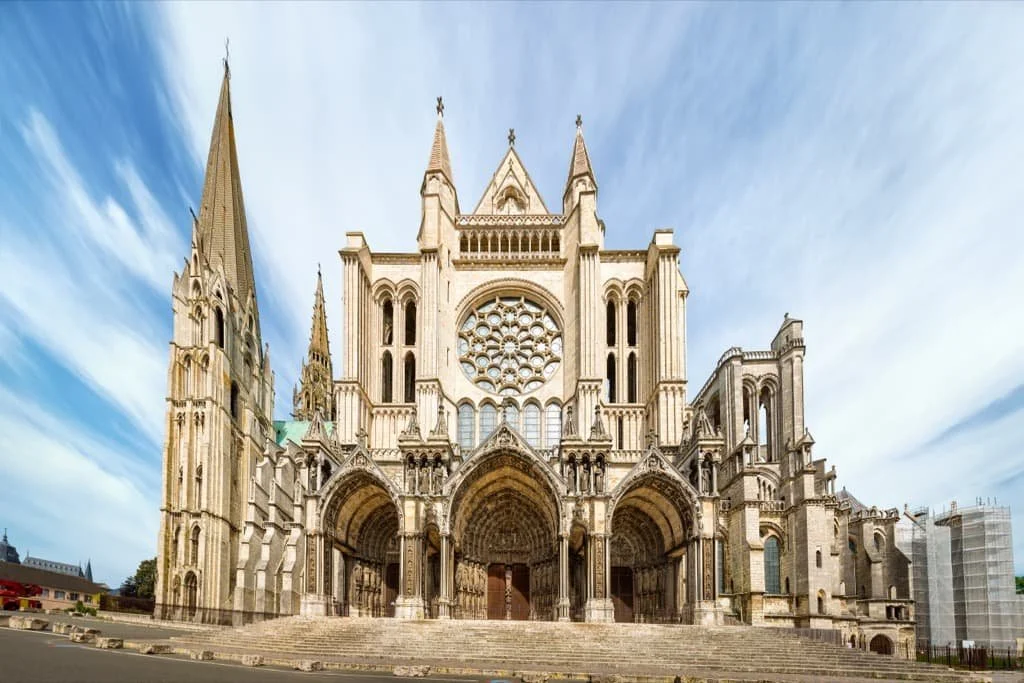
On the night of 10 June 1194, fire destroyed most of the Romanesque cathedral at Chartres. The town's most sacred relic, the Sancta Camisia (believed to be the tunic worn by the Virgin Mary at the birth of Christ, and the object that had made Chartres a major pilgrimage destination for centuries), was feared lost. When it was found intact in the crypt three days later, the discovery was interpreted as a divine mandate to rebuild the cathedral. Naturally, senior management had both Saint-Denis and Notre Dame in their sights.
What followed was a hyper-speed construction project, clocking in at around 26 years (not bad with hand tools and hard, manual labour) that rendered the gothic cathedrals that came before it obsolete.
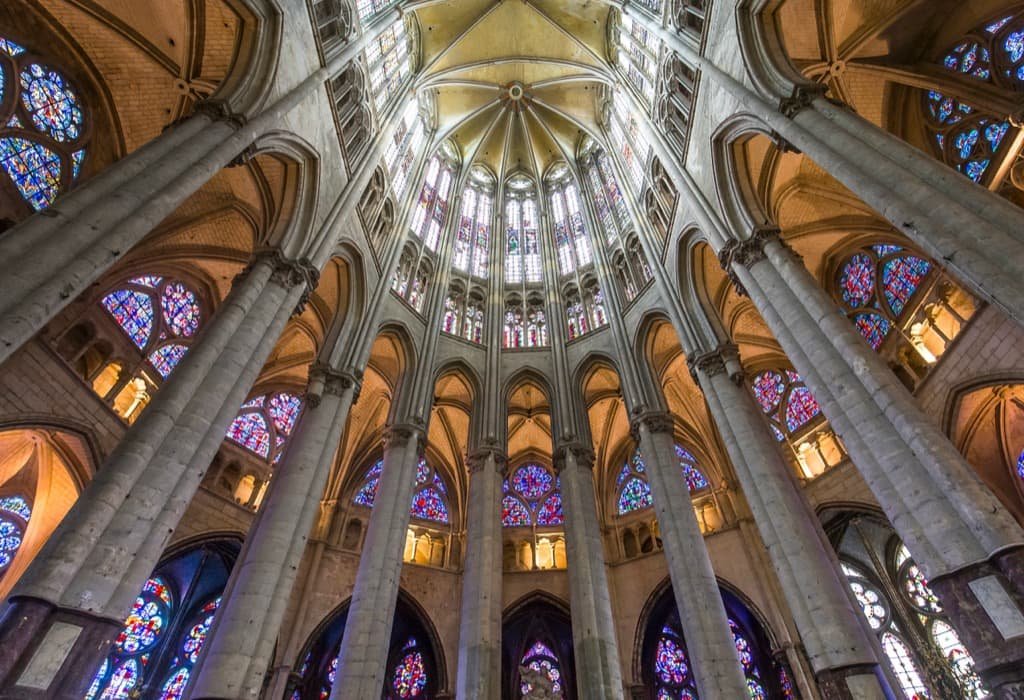
The next stop on your France cathedral tour, about 90 minutes from Paris by car or slightly faster by train, Chartres Cathedral is one of the original UNESCO World Heritage Sites. This is not just because of the scale, but the importance of the decision made by the unknown master builders. By reducing the interior elevation from four storeys to three, they changed the entire trajectory of European ecclesiastical architecture.

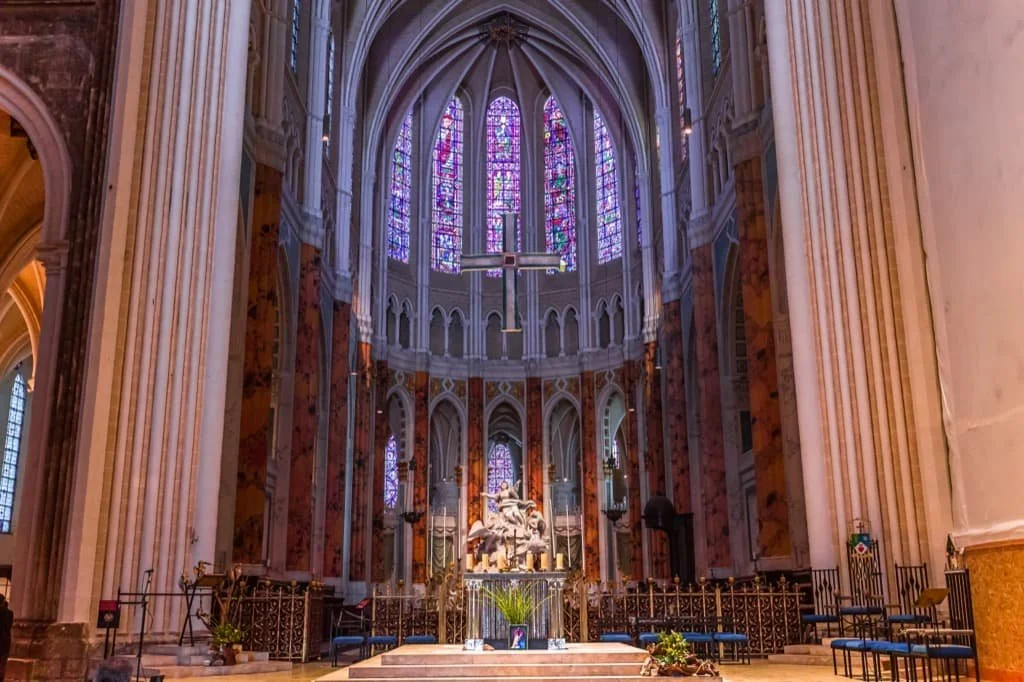
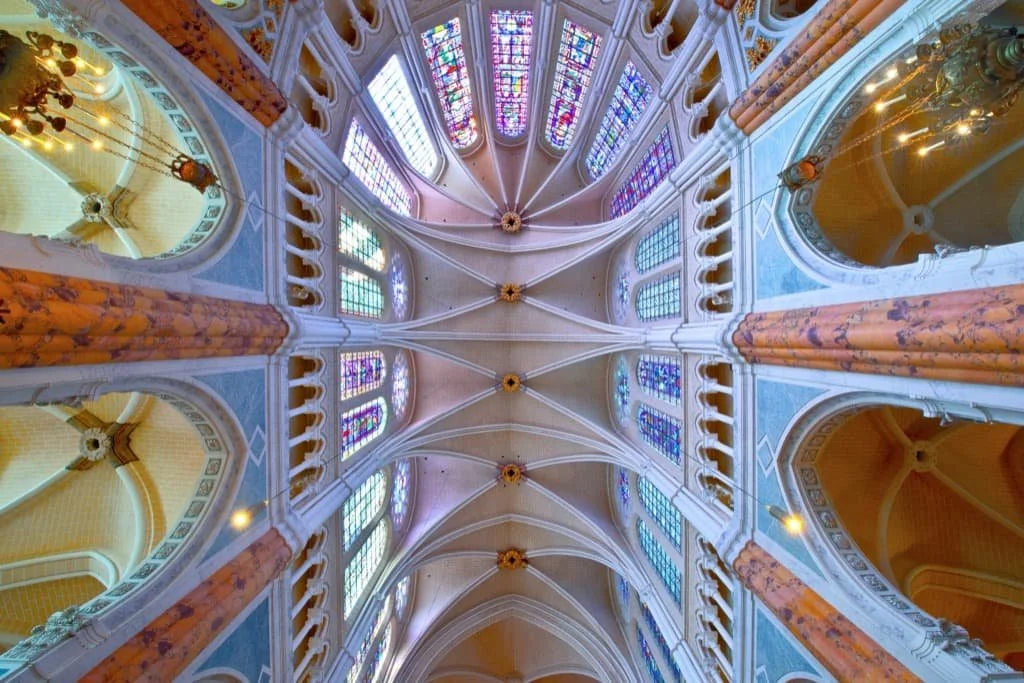
By eliminating the gallery level that Notre-Dame and its contemporaries used, the builders could make the ground-level arcade taller. This in turn meant the clerestory (the band of windows running along the top of the nave, now we’re really learning our obscure cathedral architectural terms) enormous.
The upper walls became, in effect, curtains of glass. And to prevent those glass walls from collapsing under the weight of the stone roof above, flying buttresses were deployed not as a later addition (as at Notre-Dame) but as an integral part of the original structural design. At Chartres, they aren’t a post-fix, they’re the building's skeleton.
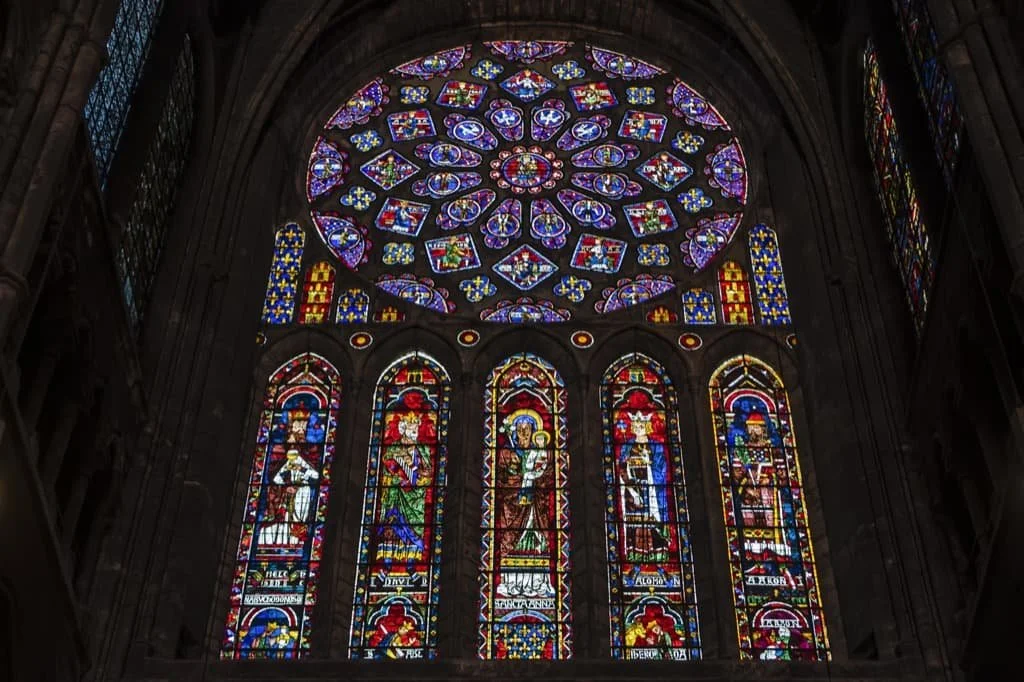
The stained glass is the most celebrated feature at Chartres. 152 of the original 176 windows survive, making this the most complete collection of medieval stained glass in the world. The famous "Chartres blue," a deep cobalt produced by specific mineral compounds in the medieval glass, has never been precisely replicated. The colour is widely described, across centuries of commentary, as having a quality that photographs cannot capture, a luminosity that appears to generate light rather than merely transmit it.

Three great rose windows (west, north, and south) anchor the collection, but the lancet windows in the aisles, at eye level and therefore easier to examine in detail, allow for a more personal experience. They depict not only biblical narratives but also the tradespeople who funded them. You’ll clearly make out butchers, bakers, furriers, and weavers, their guild symbols woven into the lower panels. The windows are, among other things, a record of who paid.
There are a couple of architectural details at Chartres that stand out at first glance. The mismatched spires on the west facade (a plain Romanesque tower from the 1160s on the south, an elaborate Flamboyant Gothic construction from the early 1500s on the north) represent a 340-year gap in construction, a visible reminder of the timescale these projects operated on.
The other is the labyrinth set into the nave floor around 1200, about 13 metres in diameter and one of the oldest surviving examples. It is accessible to walk on Fridays when the chairs that normally cover it are cleared. Medieval pilgrims walked it, or reportedly crawled it on their knees, as a spiritual substitute for the journey to Jerusalem.

Chartres has considerable depth beyond the cathedral too. The medieval old town descends from the hilltop to the banks of the River Eure, where half-timbered houses, stone bridges, and 19th-century wash houses line the water. The Centre International du Vitrail, housed in a medieval tithe barn near the cathedral, is the only institution in France dedicated entirely to stained glass, with exhibitions and workshops that will prove just how much work, money and material went into creating the vast displays at the top of the hill.
The Church of Saint-Pierre, a few minutes' walk away, features its own 14th-century stained glass and painted interior walls. It’s also usually empty. Between April and October, the town runs Chartres en Lumieres, projecting light shows onto the cathedral facade and over 20 other buildings across the town centre after dark, so time your visit to catch this impressive lightshow.
As you depart, bear in mind that every major Gothic cathedral built after 1220 borrowed from Chartres. The three-storey elevation, the structural buttresses, the vast clerestory windows became the template. The architects who followed studied Chartres, absorbed it, and asked the question that drove the next century of construction: how on earth do we beat this?
Reims
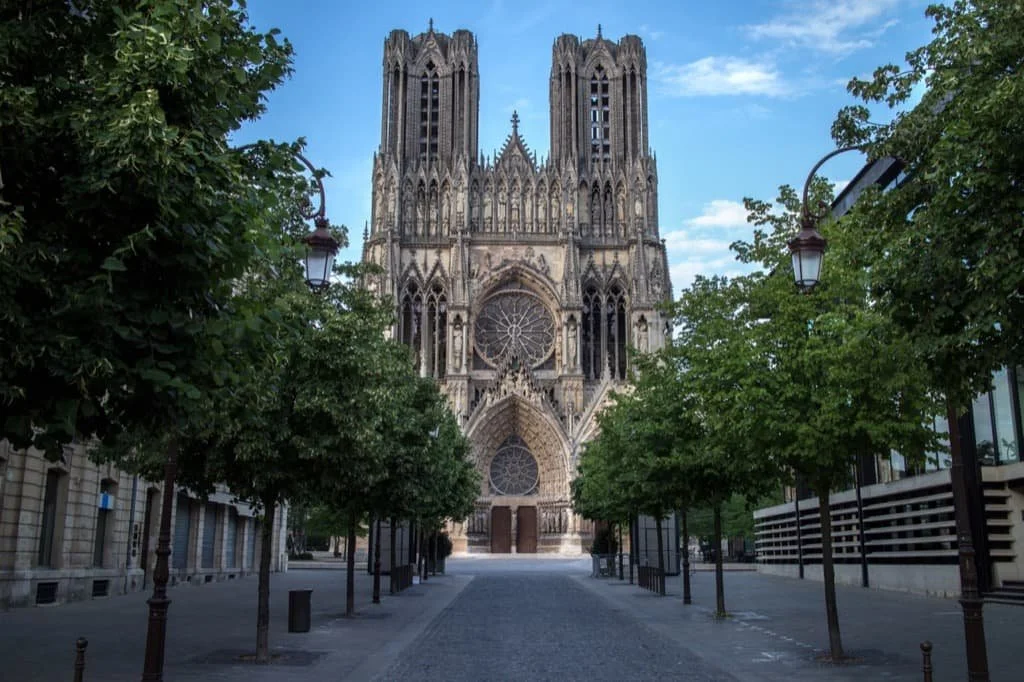
Reims wasn’t just another cathedral town competing for prestige. It had been an important city for French royalty since Clovis, King of the Franks was baptised there in 496 AD, which led to Reims being a good place to get coronated. However, the new cathedral at Saint Denis hd become the home of the coronation regalia, including the robes, crowns and sceptre, a serious statement when it came to staking a claim to be the ‘official’ royal cathedral of France.
The question wasn’t whether if the structure could go higher than Saint-Denis or Charters – it had to go higher. But in Reims, the extreme competitiveness nearly ruined the city.
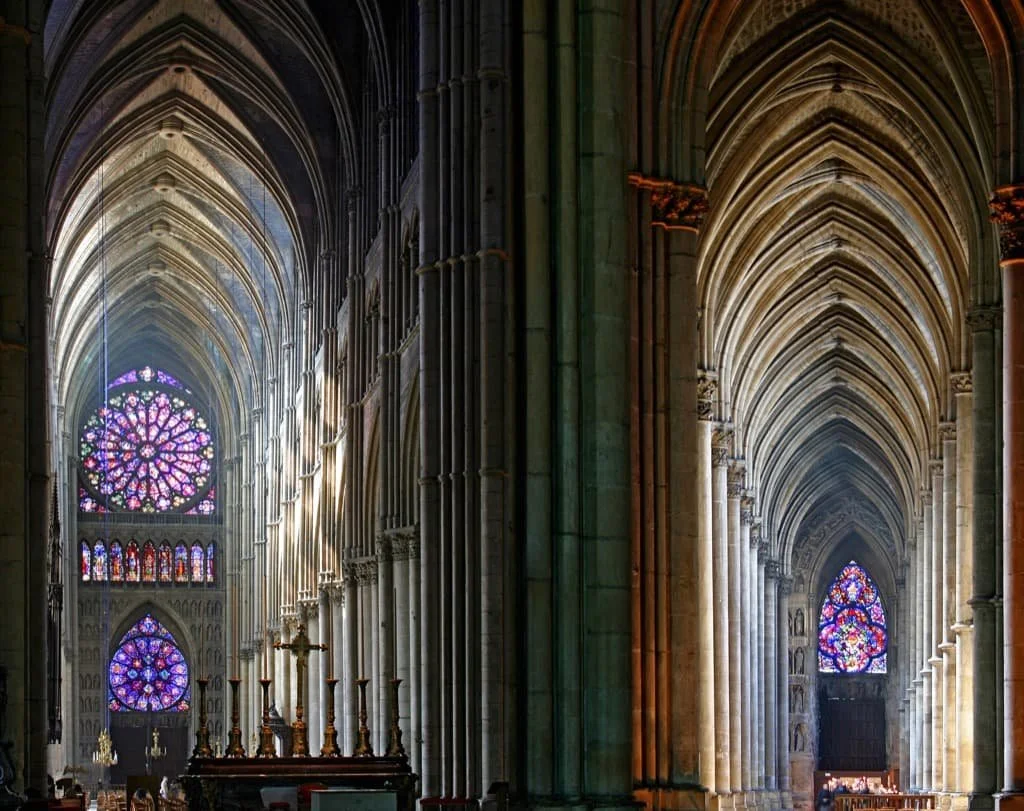
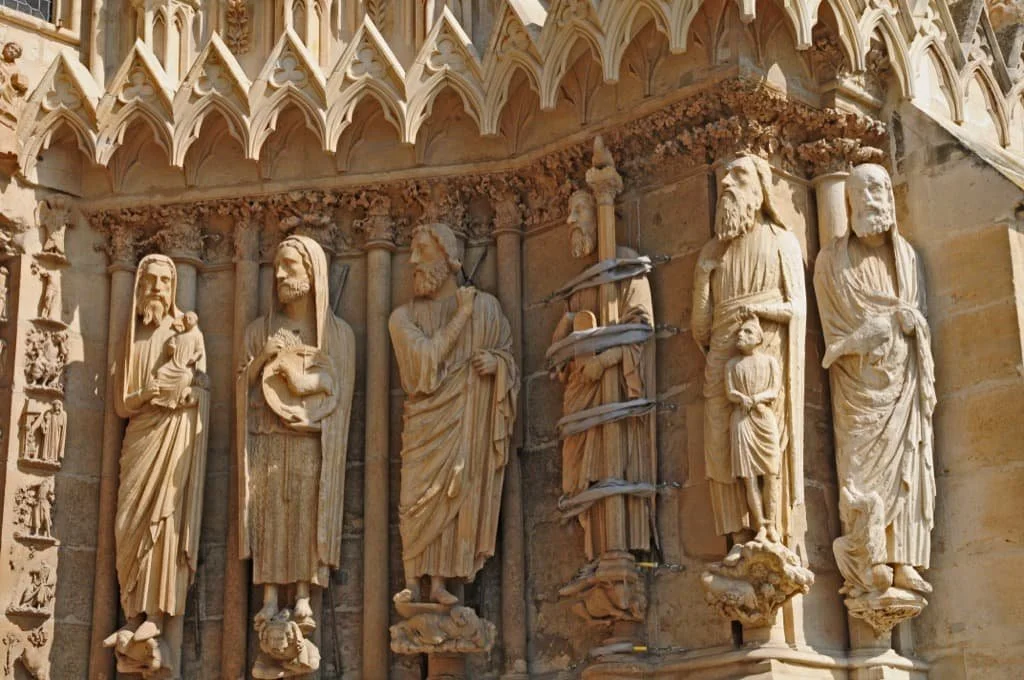
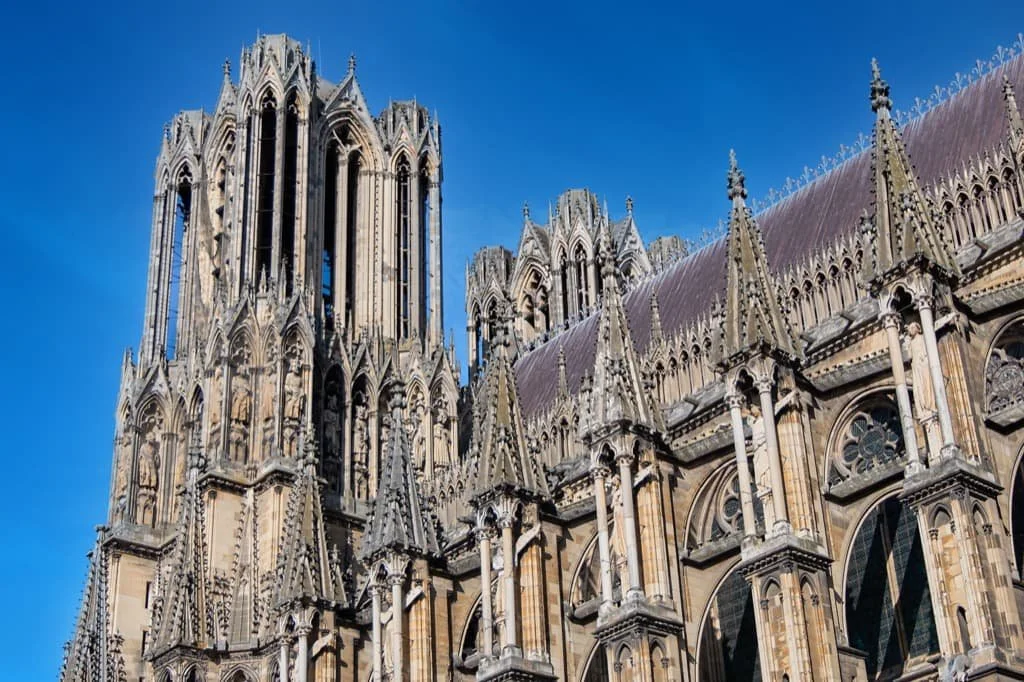
When fire destroyed the previous cathedral (which had already been altered to imitate Saint-Denis) in 1210, Aubry de Humbert commissioned a replacement barely a year later that would, frankly, blow its predecessors out of the water. The vault reached 38 metres. The west facade received over 2,300 sculpted figures, more than any other cathedral in France, a programme of decoration so dense it functions almost as a history of not just Christianity, but the world as it was known then, in stone.
Unlike Chartres, where the master builders are anonymous, the four architects of Reims are known by name: Jean d'Orbais, Jean-le-Loup, Gaucher de Reims, and Bernard de Soissons. Their identities were recorded in a labyrinth set into the nave floor, similar to the one at Chartres. The labyrinth was destroyed in 1779, but we still have 18th-century drawings that act as proof and reference. One of these reproductions is now used as the French Ministry of Culture's official symbol for designating historical monuments.
But the cathedral’s (at times extreme) dedication to being the biggest and best came at an enormous cost. The archbishop's fundraisers were dispatched to neighbouring dioceses demanding contributions, offering letters of indulgence in exchange for money. The chapter sold property to bring in cash flow too. And importantly, taxes and levies were raised on the people of Reims to pay for the stone and stained glass.
In 1233, the citizens of Reims revolted. The creeping taxation had pushed ordinary people to genuine hardship, and even the bishops of nearby sees formally protested the forced collections. The cathedral chapter, fearing violence, abandoned construction for the best part of three years. It required the combined authority of Pope Gregory IX and King Louis IX to restore order.
But this tale of suffering to deliver colossal vanity projects isn’t limited to Reims. It runs through the entire Gothic cathedral building boom. These buildings were not just an expression of faith or architectural ambition, but a programme of civic one-upmanship that extracted enormous resources from populations with limited say in how they were spent.
Reims is where that tension surfaces most sharply, and it deserves acknowledgement alongside the admiration. Ultimately, the desires of the bishop were fulfilled. A further 25 kings were anointed within its walls between 1223 and 1825. But that was only due to the major gamble of selling anything that wasn’t nailed down and taxing the populace to breaking point.
Once you have acknowledged the politics, coercion and, judging by the scale of these cathedrals, power-madness, Reims is yet another incredible cacophony of masterpieces.
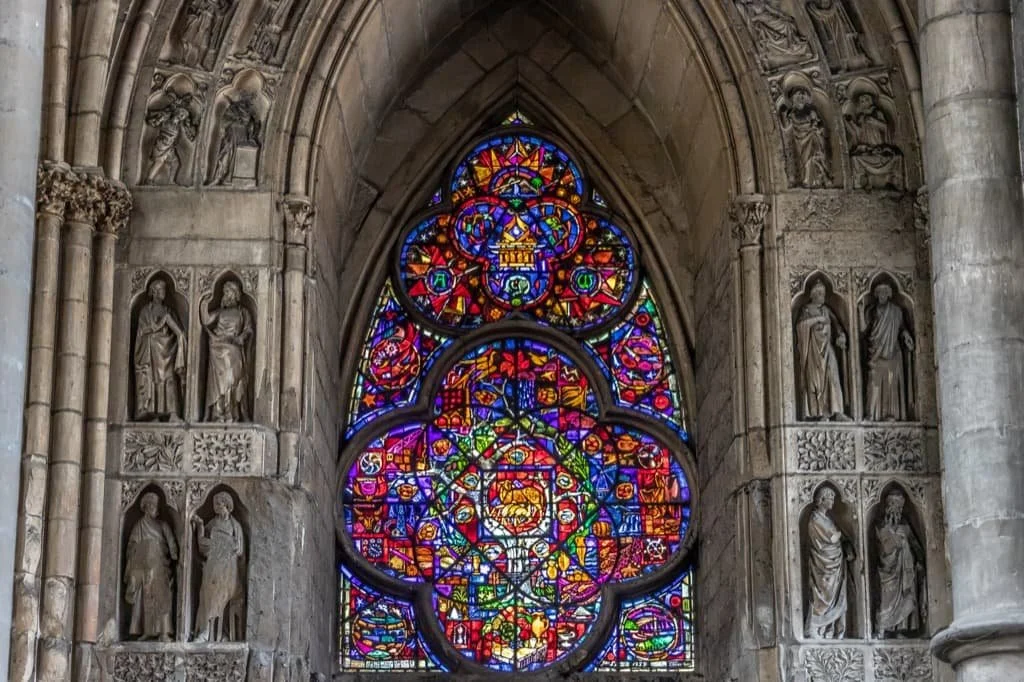
The uncountable sculpted figures that fill in almost every square inch of the facade can be overwhelming. Marc Chagall's blue-toned windows in the axial chapel, installed in 1974, are a 20th-century addition that sits alongside 13th-century glass with striking coherence. The Smiling Angel on the central portal of the west facade, dating from the mid-13th century, has become the city's emblem and is considered one of the finest individual sculptures of the Gothic period.
But like many of France’s important landmarks, not everything is as it was. During World War I, Reims Cathedral took over 300 artillery shells. The roof burned, scaffolding melted, sculptures were lost and it looked like abandonment was on the cards.
The restoration, which stretched across decades, was partly funded by the Rockefeller Foundation. The Palais du Tau, the former archbishop's palace adjacent to the cathedral, now houses original statuary and the coronation treasury.
Reims sits at the centre of the Champagne region, so it makes sense to squeeze in a cellar tour or two if you’re in this part of France anyway. Taittinger, housed in remains of a 13th-century Benedictine abbey and with Roman-era chalk tunnels (crayeres) extending 25 metres underground, is a great add-on before or after your trip to Reims.
Veuve Clicquot also runs tours of its own UNESCO-listed crayeres, which stretch over 20 kilometres. Both the champagne houses and the cathedral sit on the same chalk bedrock.
Amiens
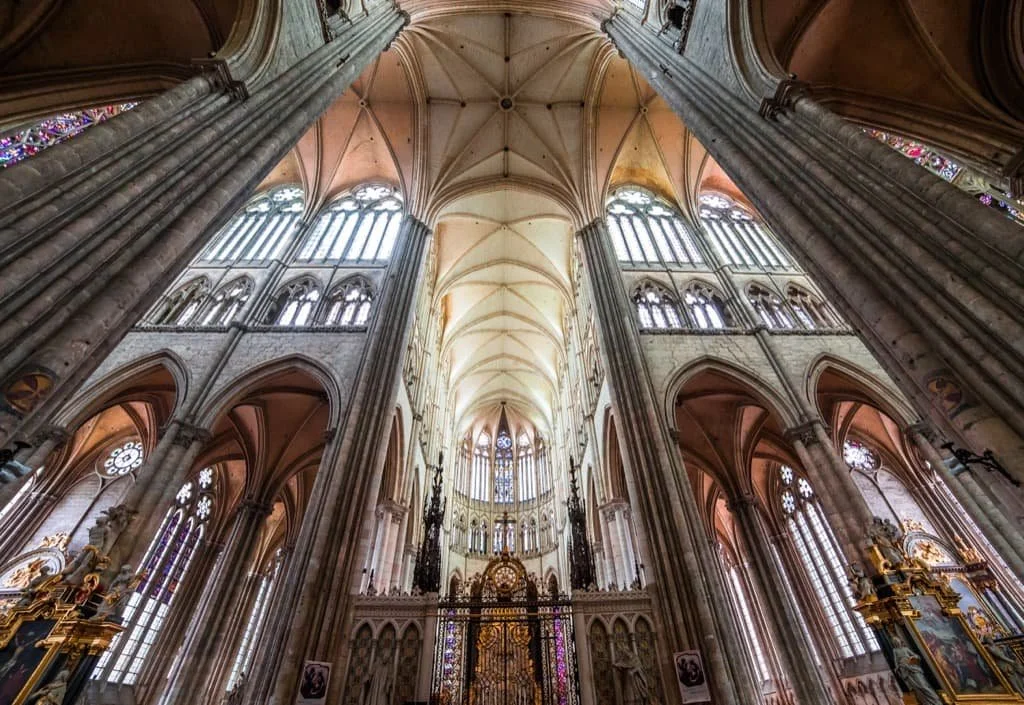
You could argue that Amiens is the point where gothic cathedral building in France peaked. Everything that had been developing for 80 years came together and went further than it had ever gone, resulting in a truly epic building.
When lightning destroyed the old cathedral in 1218, Bishop Evrard de Fouilloy hired Robert de Luzarches, an architect who had studied Paris, Chartres, and had visited the already-rising Reims to see what was happening. De Luzarches took his findings and designed Amiens Cathedral to, once again, exceed them all.
The nave was completed in 16 years, extraordinarily fast for a building of this size. The vault reaches 42 metres, the tallest of any completed Gothic cathedral in the world. The interior volume is twice that of Notre-Dame.
The speed at which Amiens was completed gives it a unique edge amongst its competitors and peers: stylistic unity. Most Gothic cathedrals were built across so many decades (or centuries) that they accumulated layers of different fashions, afterthoughts and add-ons that the original designers wouldn’t have considered.
Amiens, with its core structure that went up within a single generation, is a coherent statement. The sole exception is the upper portions of the west facade, where Flamboyant Gothic rose windows were added in the 16th century, several hundred years after the original portals below them. But nobody’s perfect.
The choir stalls, carved in oak in the 1500s, contain over 4,000 individual figures. Biblical scenes run alongside depictions of daily life, grotesques, and allegorical vignettes that are essentially a carved time machine. They survived the Revolution by chance and are widely regarded as among the finest medieval woodcarvings in Europe.
The west facade holds what is considered the best-preserved High Gothic portal sculpture in France, centred on the Beau Dieu figure on the central pillar, a representation of Christ. Its naturalism marks a clear evolution from the stiffer carving at Chartres that were en vogue only a few decades earlier.
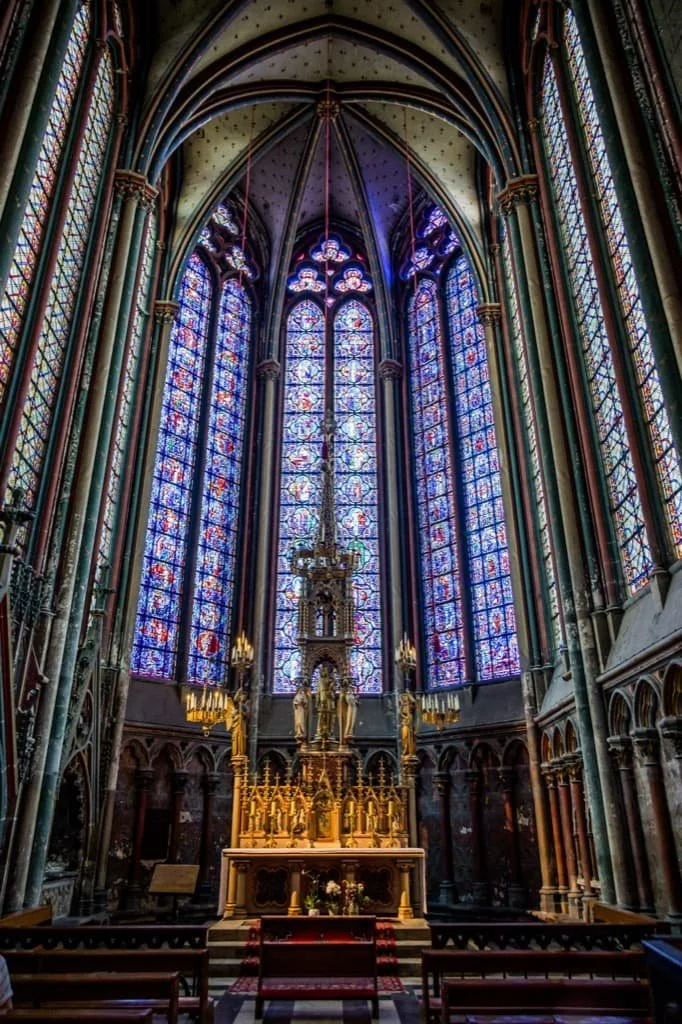


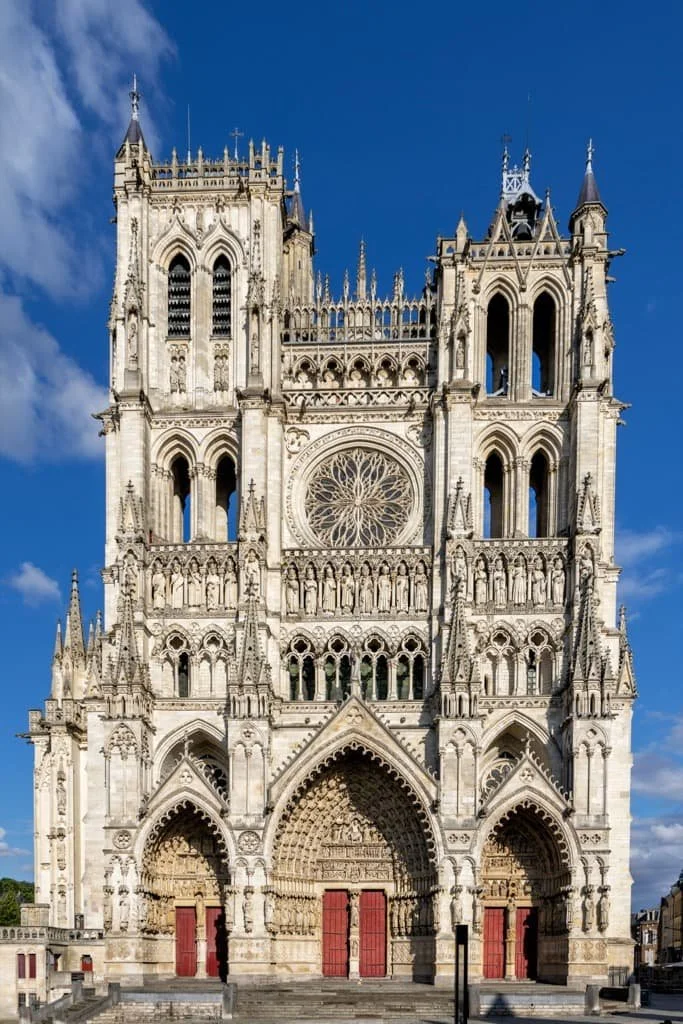
In the summer and during the Christmas fair, Amiens stages Chroma, a nighttime light show that projects reconstructed medieval paint colours onto the west facade. You may already know that most cathedrals in Europe weren’t finished with bare stone. Like Roman statues before it, it was actually painted in vivid blues, reds, and golds. This is true of virtually all Gothic cathedrals (the stone austerity we associate with the period is an accident of time, not an original intention). Chroma isn’t just a pretty distraction to draw tourists (some of the displays are), but a chance to see what the cathedral might have looked nearly a century ago.
Amiens has two distinctive draws beyond the cathedral. The Hortillonnages, accessible from the Saint-Leu quarter at the edge of the old town, are a 300-hectare network of floating gardens cultivated in the marshes of the River Somme since the Middle Ages.
The site consists of small islands connected by 65 kilometres of narrow canals, navigable by traditional flat-bottomed boats (barques a cornet) from April to October. The name derives from the Latin "hortus" (garden), and the plots were originally created when medieval locals mined the Somme marshland for peat, leaving trenches that filled with water and created a labyrinth of highly fertile land. For centuries, the hortillons (as the market gardeners are known) supplied Amiens with fruit and vegetables, transporting produce to market by boat. A dozen families still farm the plots today, selling at a Saturday morning market at Place Parmentier in the Saint-Leu quarter.
The other draw, the Saint-Leu quarter, is a canal-threaded old neighbourhood immediately north of the cathedral, has restaurants lining the Quai Belu along the water and a character quite distinct from the rebuilt streets elsewhere in the city.
The Maison de Jules Verne, where the novelist lived for 18 years and wrote many of his most famous works (including Around the World in Eighty Days) in a tower study, is also in Amiens and open to visitors. The Musee de Picardie, one of the first purpose-built museums in France, holds collections spanning archaeology, medieval art, and 19th-century painting.
Amiens proved that 42 metres was structurally sound. The engineering held. And then, 80 minutes to the south, someone decided it was not enough. The building has been a UNESCO World Heritage Site since 1981.
Beauvais
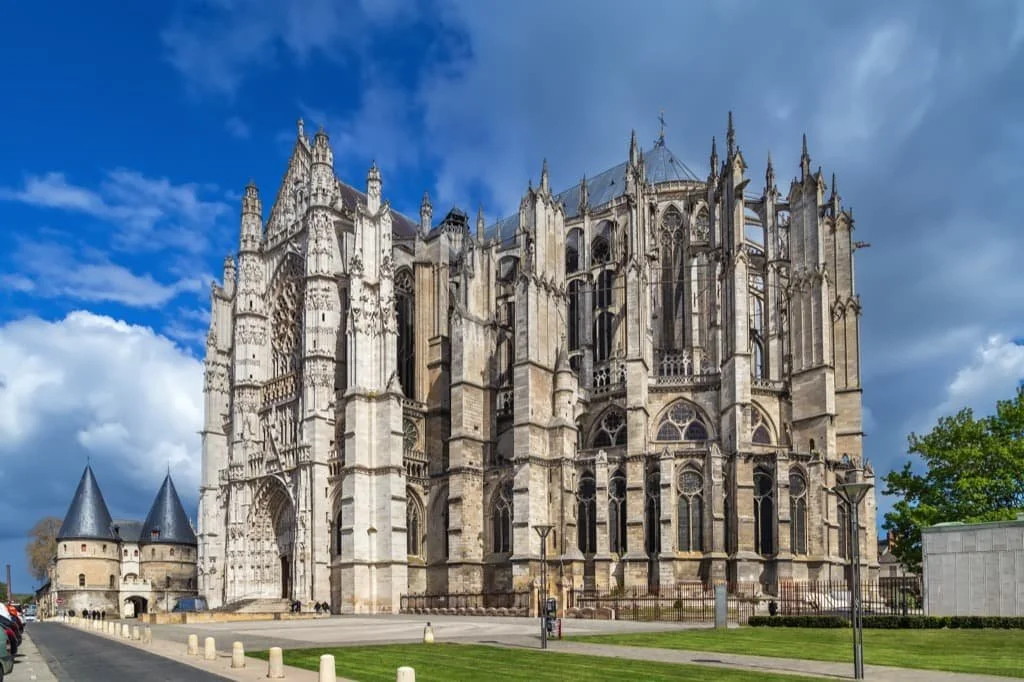
The builders at Beauvais began work in 1225, seven years after most of Amiens was declared finished. The ambition, as ever, was to construct the tallest and largest Gothic cathedral in France, regardless of the cost, constraints and of course impact on the congregation and beyond. This time, the planning and building hit new extremes.
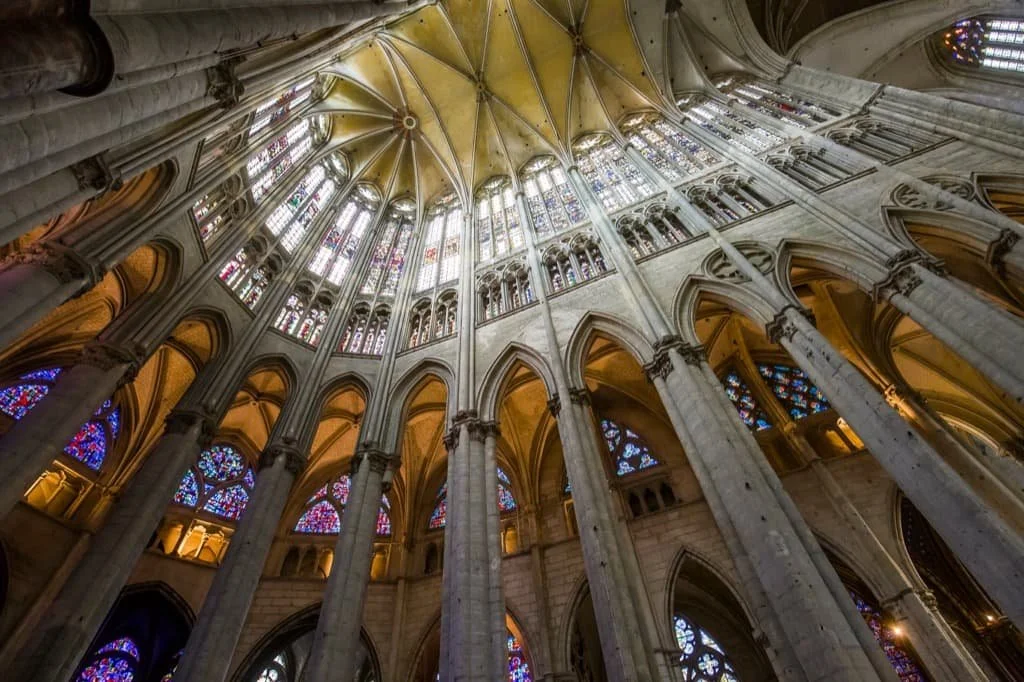
The vault of the choir eventually reached 48 metres, the highest ever built, surpassing even the nave of St Peter's Basilica in Rome. To achieve this height, the buttresses were made thinner than any previous structure had attempted, maximising the surface area for glass – but crucially, losing a lot of reinforcing strength. In 1284, twelve years after the choir was completed, part of the vault collapsed.
The most widely accepted modern theory attributes the failure to wind resonance. The thinned buttresses could not absorb the lateral forces generated by storms acting on the enormous expanses of glass. Whatever the exact mechanism, the collapse is regarded by architectural historians as a watershed, a crisis of nerve among the masons of northern France that brought the era of competitive vault height to an end.
The response was reconstruction and reinforcement. Intermediate piers were added, doubling the number of supports and breaking the original spacing of the bays. The repair is visible in the uneven column arrangement of the choir, a structural scar that has never been disguised.
Then, in the 1560s, a crossing tower was raised to 153 metres. From 1569 to 1573, Beauvais Cathedral was the tallest human-made structure on earth. On Ascension Day 1573, the tower collapsed during a service. No one was killed. They did not try again.
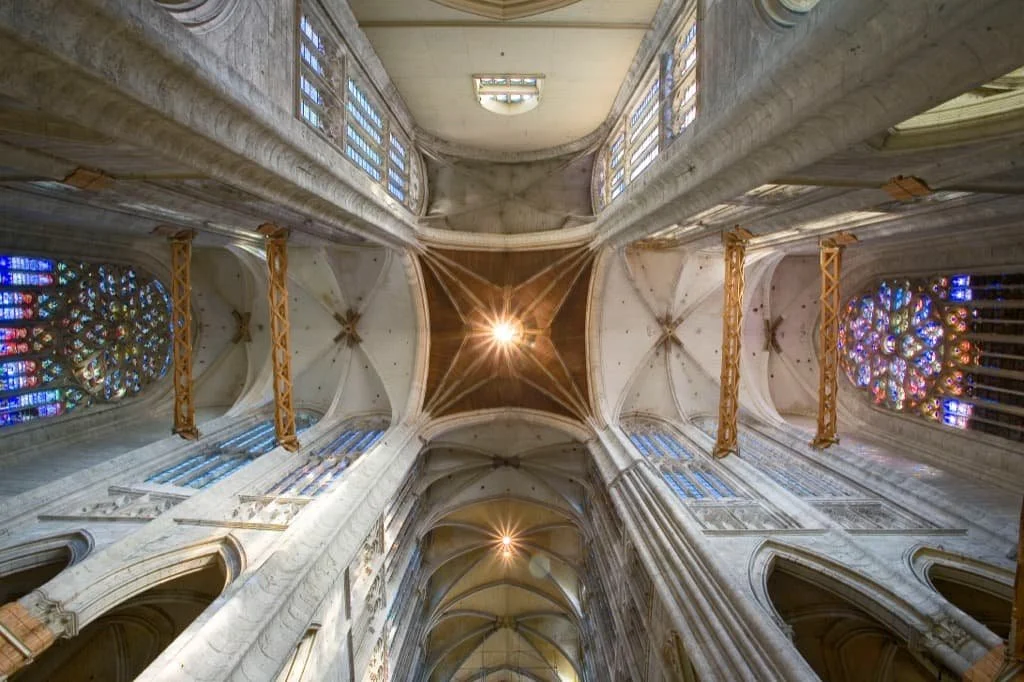
The cathedral is to this day an odd shape, as a nave was never built. A wall erected as a temporary measure in the 16th century remains standing. Iron tie-rods installed between the flying buttresses after the first collapse are still in place too. The building exists today as a choir and transept only.
Despite the structural turbulence and unfinished nature, Beauvais is still incredible to look at. The Renaissance stained glass by Engrand Le Prince, a native of the city, is considered among the finest glazing work of its period. The glasswork depicts scenes with a delicacy and technical command that belongs to the world of painting as much as glasswork.
Earlier windows, dating from the 13th century, survive in the choir and offer a striking contrast. You can compare the two eras of glass, separated by 300 years of technique, illuminating the same compromised space.
The 19th-century astronomical clock in the north transept, with over 90,000 individual parts and 52 dials displaying everything from planetary positions to local tide times, is a mechanical curiosity that matches the original ambition.
Once again, thanks to Beauvais being well off the tourist trail, the interior is often nearly empty, a shame but also a blessing for visitors.
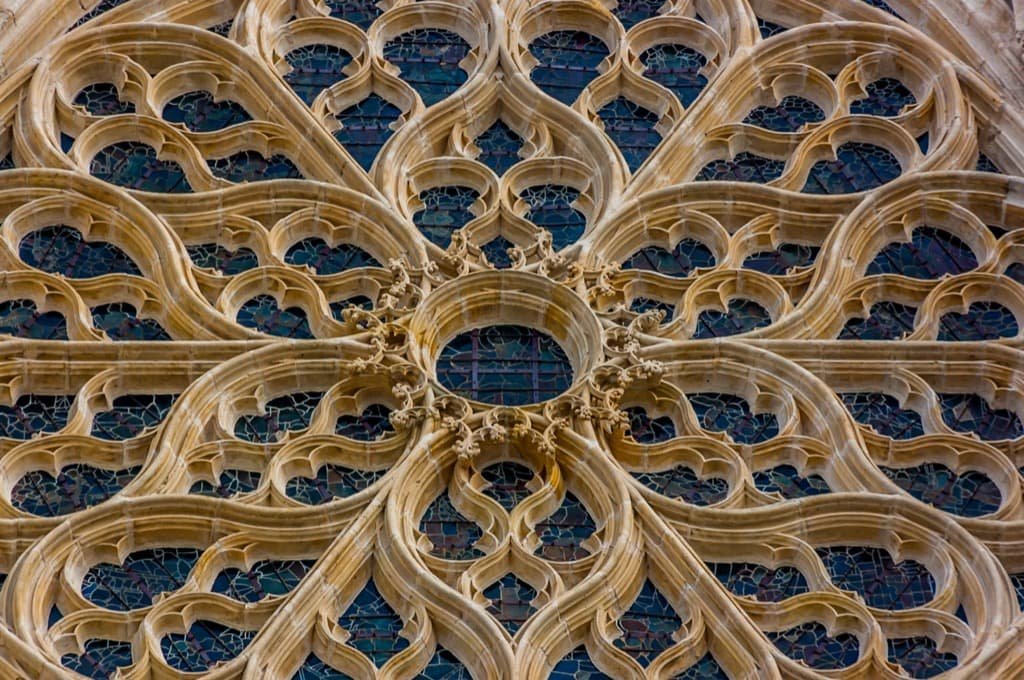
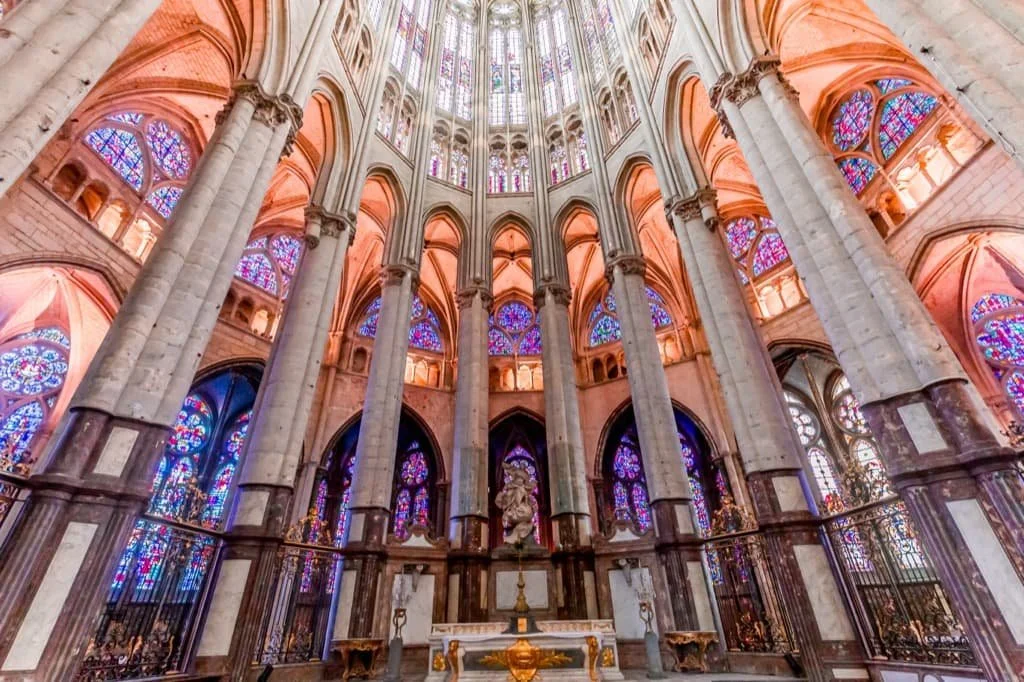

The city of Beauvais itself is small and quiet, a marked contrast to Reims or Paris. It was heavily damaged during World War II (much of the historic centre was destroyed in June 1940) and carries a largely rebuilt character.
The Galerie Nationale de la Tapisserie (National Tapestry Gallery), adjacent to the cathedral, houses a collection of tapestries produced at the Beauvais manufactory, which operated from 1664 until 1940 and was one of the most important workshops in France alongside the Gobelins in Paris. The cathedral and the tapestry gallery sit within a few steps of each other, meaning you can squeeze in a quick visit before the parking runs out.
What Beauvais represents is not simply failure. It is the logical endpoint of a 150-year escalation. Every cathedral on this route pushed further than the one before it. At each step, the engineering held, or was made to hold. At Beauvais, the gap between ambition and physics finally became too wide. The building is both the greatest achievement of the Gothic height war and its most honest monument: extraordinary, unfinished, and held together by iron.
The eventual winner: Rouen
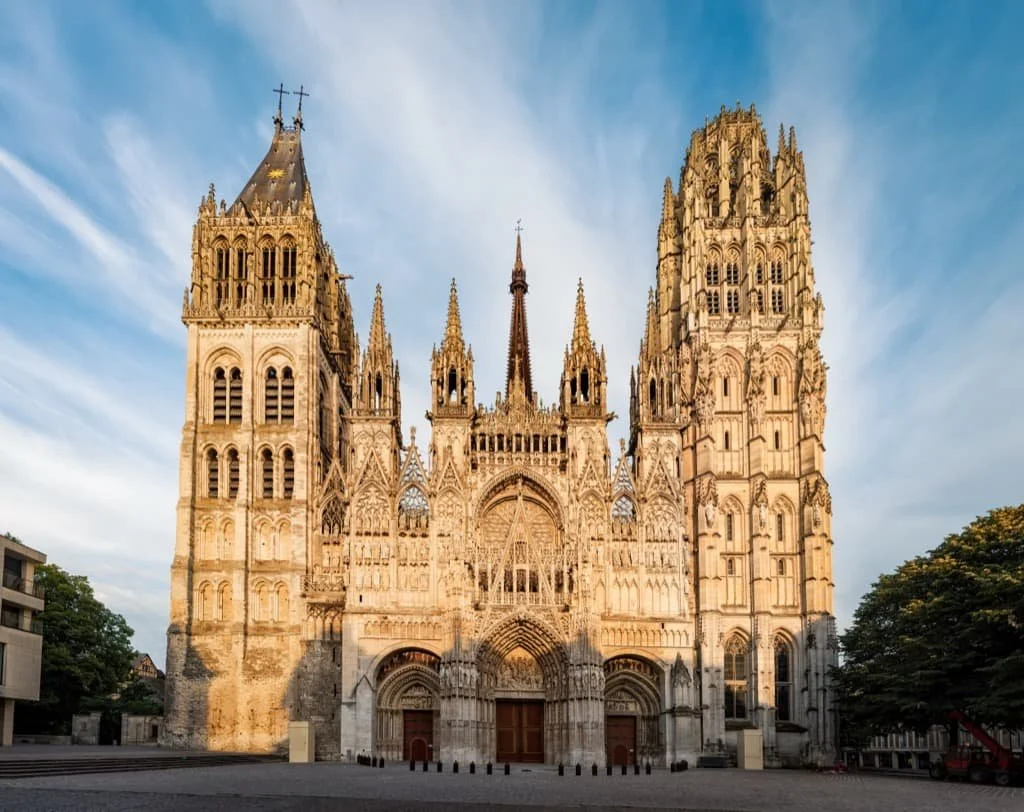
Although medieval competitors measured ambition in vault height, and Rouen didn’t compete with Beauvais (before it broke) in that respect, it did eventually take the crown. However, there is a big asterisk.
It took Rouen, a very attractive gothic cathedral that is just as colossal in scale as the rest, just the 800 years to lift the French cathedral height crown. But that’s total height, spire included, measured from the ground to the tip of the highest point. It took a gigantic 19th century vanity addition that didn’t really add anything to finally win the height war.
There has been a Christian church on the site of Rouen cathedral since at least the late 4th century, when Bishop Victricius built a basilica here around 395 AD. It hasn’t been an easy life since then. The current edifice has been built, burned, rebuilt, extended, struck by lightning, sacked by Calvinists, nationalised by revolutionaries, bombed by the allies during World War II, and hit by a hurricane. Maybe someone upstairs isn’t a fan.
The result is a building that contains elements from virtually every phase of Gothic architecture (early, high, Rayonnant, Flamboyant) plus Renaissance additions and a wild 19th-century spire made of cast iron, all layered on top of each other in a single structure. It is, in the most literal sense, a cathedral that has never truly been completed.
The three towers tell the story most visibly. The Tour Saint-Romain, on the north side of the west facade, dates from the mid-12th century and is the oldest surviving part of the building, a piece of early Gothic austerity that couldn’t be further from the tower that sits next to it.
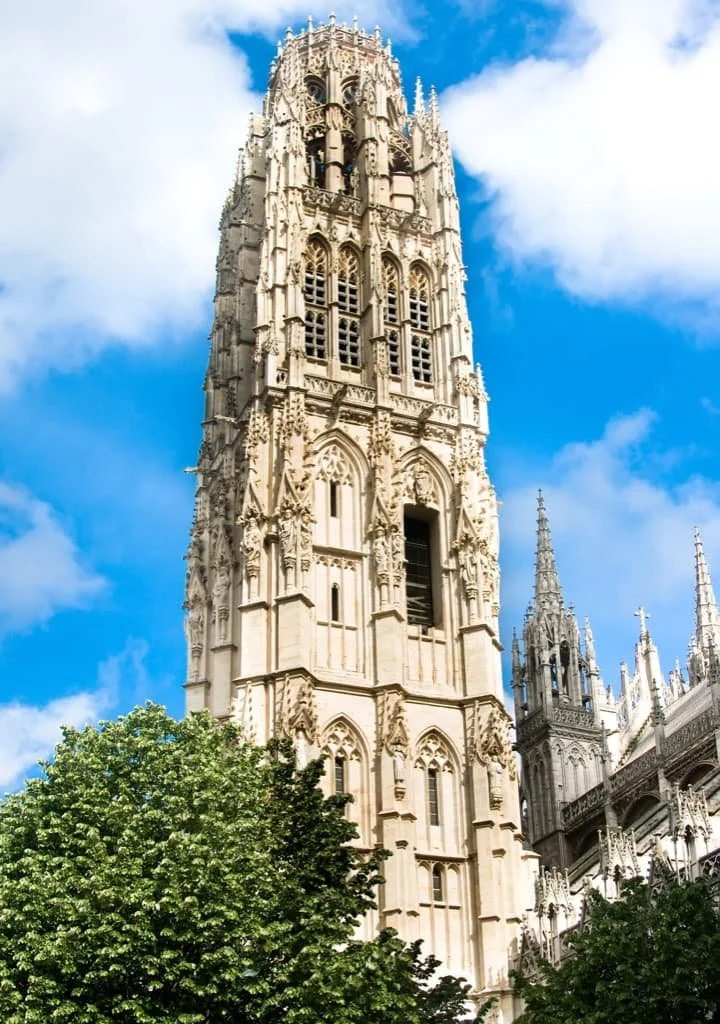
The Tour de Beurre (Butter Tower), on the south side, was built between 1485 and 1507. The name? Allegedly, wealthy parishioners paid for dispensations to eat butter during lent, which in turn paid for the building works. As you can see, they certainly liked butter, if the story is true.
The Butter Tower is Flamboyant Gothic at its most ornate, lacy, exuberant, and several centuries newer than the Tour Saint-Romain. The contrast between the two, one plain and one extravagant, separated by over 300 years, is a visual representation of the ever-developing gothic styles measured in centuries, not design iterations.
Then there is the central tower, the Tour Lanterne, which carries the spire that gave Rouen its ‘win’. The lantern tower dates from the 13th century and the first spire was destroyed by fire in 1514. A replacement in wood and lead, built in Renaissance style, stood for three centuries before being destroyed by lightning in 1822.
Not one to be outdone by flame once again, architect Jean-Antoine Alavoine proposed to replace it with a spire made of cast iron, a suggestion so controversial that Gustave Flaubert (a native of Rouen and not a man who kept his opinions quiet) publicly derided it. Nonetheless, construction proceeded.
The cast-iron spire was completed in 1876, reaching 151 metres, and for four years, from 1876 to 1880, Rouen Cathedral was the tallest building in the world. The building that overtook it four years later? Cologne Cathedral, the one gothic cathedral that everyone knows, and certainly isn’t in France.
But the spire isn’t the only chunk of Rouen that can’t seem to stay consistent. The west facade has its own history of constant revision too. It was first built in the 12th century, entirely redone in the 13th, and then completely reconstructed again at the end of the 14th and into the 15th century in increasingly elaborate Flamboyant Gothic. Layers of lacelike stone tracery were applied over earlier work and hundreds of sculpted figures were added to the portals.
The facade is like a well-worn whiteboard, a surface scrawled on and erased over and over for four centuries, each layer more ornate than the last. It is the largest west facade of any cathedral in France.
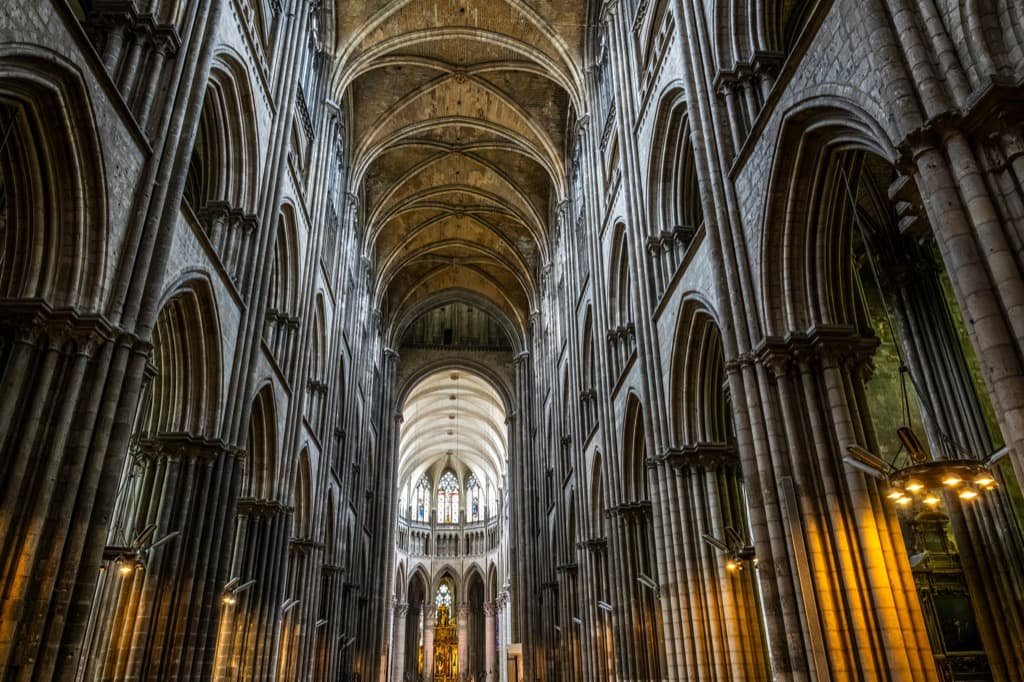
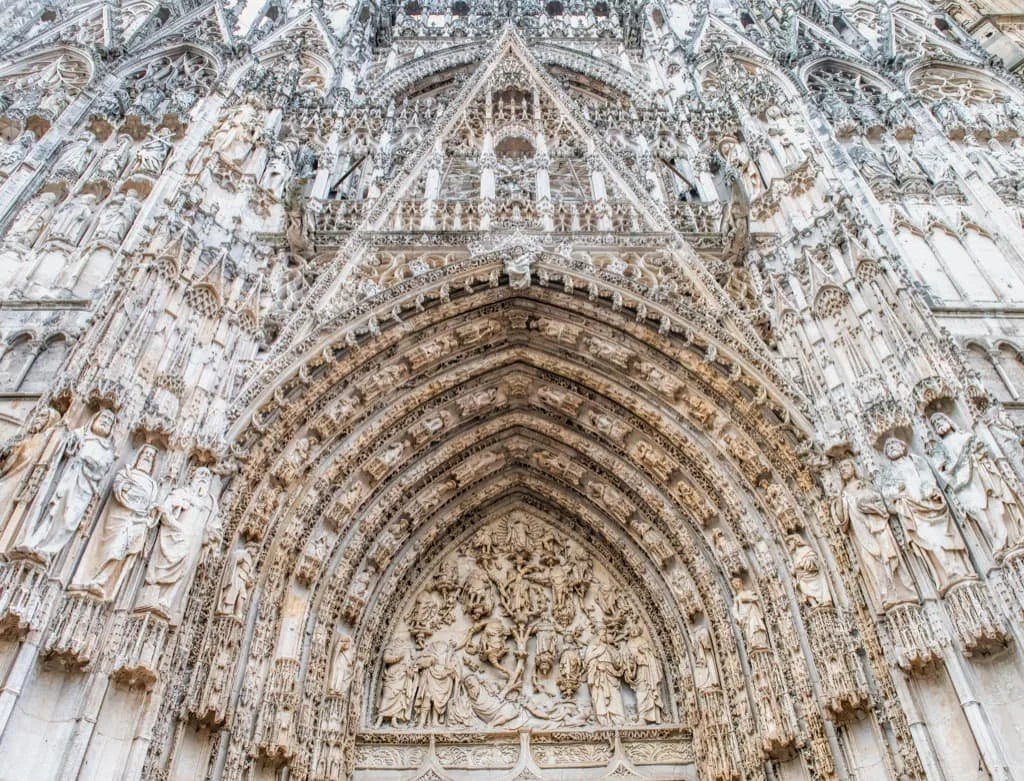
This quality of accumulation is what makes Rouen distinctive on this route. The other cathedrals on the height war itinerary tend to represent a specific moment in the Gothic story: Saint-Denis is the origin, Chartres is the template, Amiens is the peak. Rouen is all of them at once, and several other moments besides. It is a building that absorbed every style, survived every disaster, and kept going.
It is also, famously, a building that Claude Monet painted obsessively. Between 1892 and 1894, he produced around 30 canvases of the west facade, each depicting the same surface under different conditions of light and weather, from pale morning haze to deep afternoon gold. The series, now scattered across museums worldwide (five are in the Musee d'Orsay in Paris, one is in the Musee des Beaux-Arts in Rouen itself), is considered one of the defining achievements of Impressionism.

Rouen itself is one of the finest medieval cities in northern France. The old town, heavily damaged during the Allied bombing of 1944 but substantially restored, has half-timbered houses, narrow lanes, and a concentration of churches dense enough to justify the city's historical nickname, "the city of a hundred spires."
The Gros Horloge, a Renaissance astronomical clock mounted on an arch spanning one of the main streets, dates from the 14th century and is one of the most recognisable landmarks in Normandy. The Place du Vieux-Marche, where Joan of Arc was burned in 1431, is a few minutes' walk from the cathedral. And, as we’ve already mentioned, the Musee des Beaux-Arts, one of the largest and most important regional art museums in France, holds works by Caravaggio, Velazquez, Modigliani, and, of course, Monet.
Like Notre-Dame in 2019, Rouen was the victim of fire in July 2024, when the spire caught alight during renovation works. However, it was brought under control the same day.
But that’s business as usual for Rouen Cathedral. It keeps on burning, falling, and being rebuilt, a pattern that’s lasted the better part of a millennium. That it still stands, still changes, and still holds the title of tallest cathedral in France is perhaps the most fitting conclusion to the height war. The winner isn’t building that reached highest in a single act of ambition, but the one that has taken the crown, in an audacious way, and refuses to let go, regardless of whatever disaster comes next.
The Road Trip
The seven cathedrals occupy a compact area of northern France, all reachable from Paris, and follow a rough chronological and geographical sequence that suits a multi-day trip.
The first six stops trace the height war's vault escalation in order. Rouen, the epilogue, sits to the northwest and can be added as a final stop before returning to Paris, or visited as a standalone detour.
| Stop | From previous | Key measurement | Built |
|---|---|---|---|
| Saint-Denis | — | 29m vault | 1140s |
| Notre-Dame de Paris | 20 min | 33m vault | 1163–1345 |
| Chartres | 90 min | 37m vault | 1194–1220 |
| Reims | 3 hrs | 38m vault | 1211–1275 |
| Amiens | 2 hrs | 42m vault | 1220–1270 |
| Beauvais | 80 min | 48m vault (incomplete) | 1225–unfinished |
| Rouen | 90 min | 151m total height | 1145–ongoing |
Wrapping Up
A lot of writing about French cathedrals sees them treated as a collection. The ten best. The five you shouldn't miss. A checklist, organised by region or some sort of fabricated and subjective star rating, where each building exists in isolation. Often, the only connecting thread is that they're all old and all tall and all worth a photograph.
Hopefully we have reframed them for you as a sequence. Each cathedral on this route was built by people who had stood inside the previous one and decided they could do better.
The vault heights are not coincidental. They are deliberate, competitive, escalating responses, separated by a few decades and a few dozen miles, from architects who knew exactly what they were trying to beat. That turns a series of impressive interiors into a single sustained argument about ambition, engineering, faith, money, ego, and the lack of care for the people who were taxed or coerced into donating in exchange for promises, indulgences, or even by threat.
The other benefit is seeing a story, a progression, unfolding before your eyes. The walls get thinner. The windows get larger. The buttresses do more and more of the work. The confidence builds. And then, at Beauvais, the confidence exceeds the physics, and the result is a building held together by iron rods and the stubbornness of everyone who refused to let it fall.
Northern France is not short of reasons to visit. But there are few routes anywhere in Europe where the buildings themselves tell a story this coherent, this dramatic, and designed to leave you feeling in awe.
Read Next