Hallstatt Too Crowded? Try These Stunning Austrian Alternatives Instead
Some other alternatives to consider if you don’t have the time or desire to battle tripods, crowds and influencers for an unforgettable view…
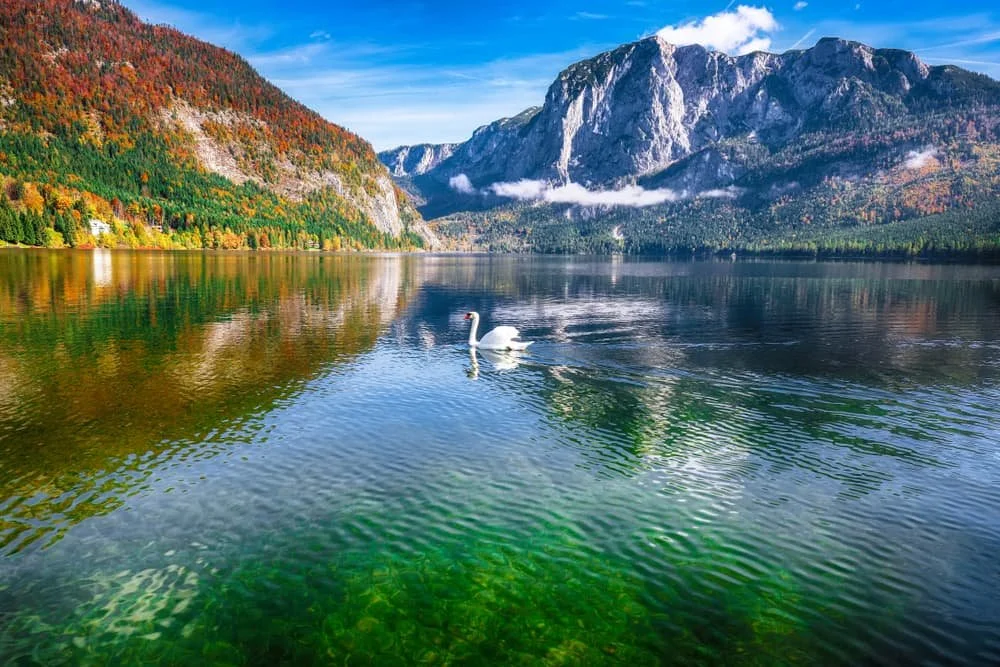
It’s amazing how far a. great view can take you. The sleepy lakeside village of Hallstatt wasn’t particularly famous for many years, but social media soon skyrocketed its popularity thanks to the misty, ethereal images of those pretty Austrian settlement set against the mirror that is the Hallstätter See.
But with that popularity comes problems. The town itself has even begged for more crowd control measures, with locals desperate to retain the postcard beauty and maintain control over the herds of visitors looking to emulate the famous photos.
The good news is that Austria has plenty of absolutely stunning alternatives, some of which aren’t that far away, and many don’t suffer the same overtourism. So here are 6 Hallstatt alternatives to add to your Austria bucket list that won’t leave you reeling from a selfie stick to the forehead.
Traunkirchen, Traunsee
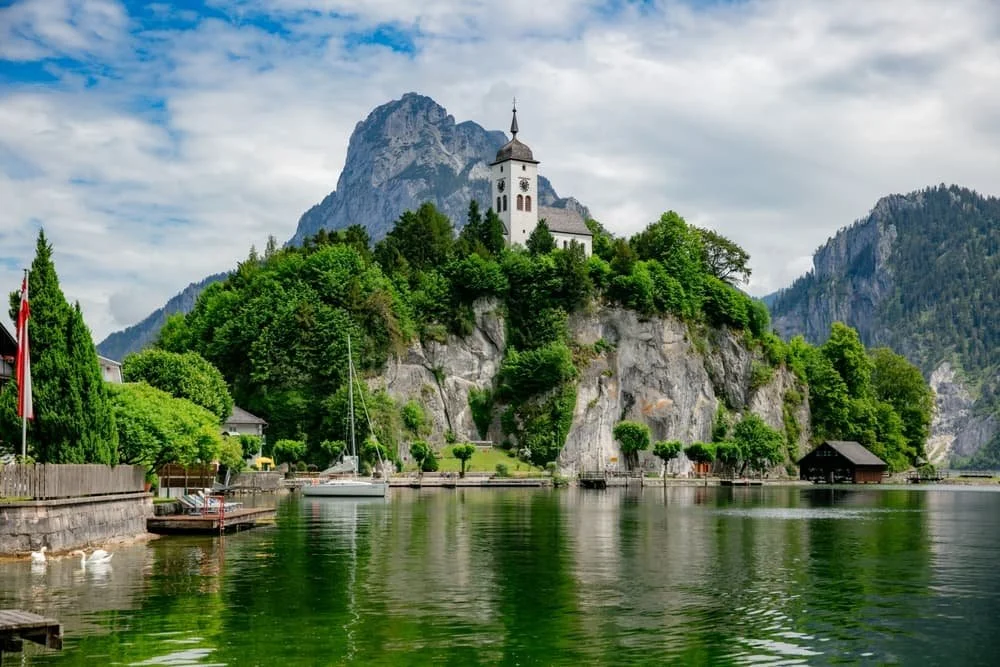
If your heart is absolutely set on the ‘church reflecting in Alpine lake’ aesthetic, then the a trip tip to Traunsee will tick that box and then some.
Austria is somewhat famous for its baroque architecture, and this church is a stellar example of the grandiose style that filtered through the Alps northward. The view of the parish church and higher chapel, both situated on a humpback hill that rises out of the water, is superb, but don’t forget to head inside. The intricate Fisherman’s Pulpit is a baroque carving masterclass, theatrical, and slightly odd.
Don’t skip the climb up to the Johannesbergkapelle, especially early in the morning, where you can breathe in fresh forest air, lake mist and soak up views that give Hallstatt a run for its money.
Altaussee, Styria
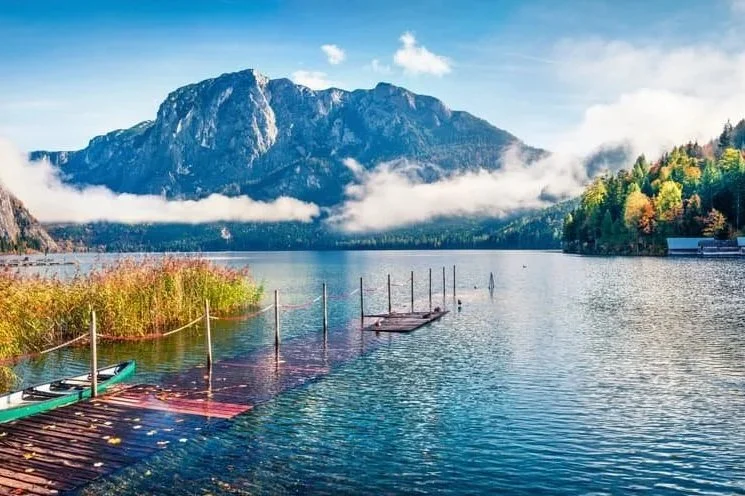
Reflective Lake? Check. Gorgeous Alpine Scenery? Check. Pretty town on the lake’s shore? Absolutely.
In fact, Altaussee isn’t just a good alternative – it may even be better than Hallstatt. The shoreline path stretches much further than anything at Hallstatt and you can loop around for completely crowd free views of the steep mountain slopes and church spires poking through the trees. If the weather permits, you can even have a dip or enjoy a picnic right by the water, something that just isn’t possible in crowded Hallstatt.
Another great reason to visit Altaussee is the salt mine. This isn’t just a twee tourist trap, however; it’s a proper piece of Austrian history. As well as exploring the tunnels that run deep below the mountains, you can hear tales of precious artworks being hidden below ground m,ade famous by the movie The Monuments Men.
The Nazis hid Michelangelo’s Madonna, paintings by Rubens and Rembrandt, the Ghent Altarpiece by the van Eyck brothers and works by Dürer and Vermeer, as well as many others, in the mines during the Second World War.
Gosau & Vorderer Gosausee, Upper Austria
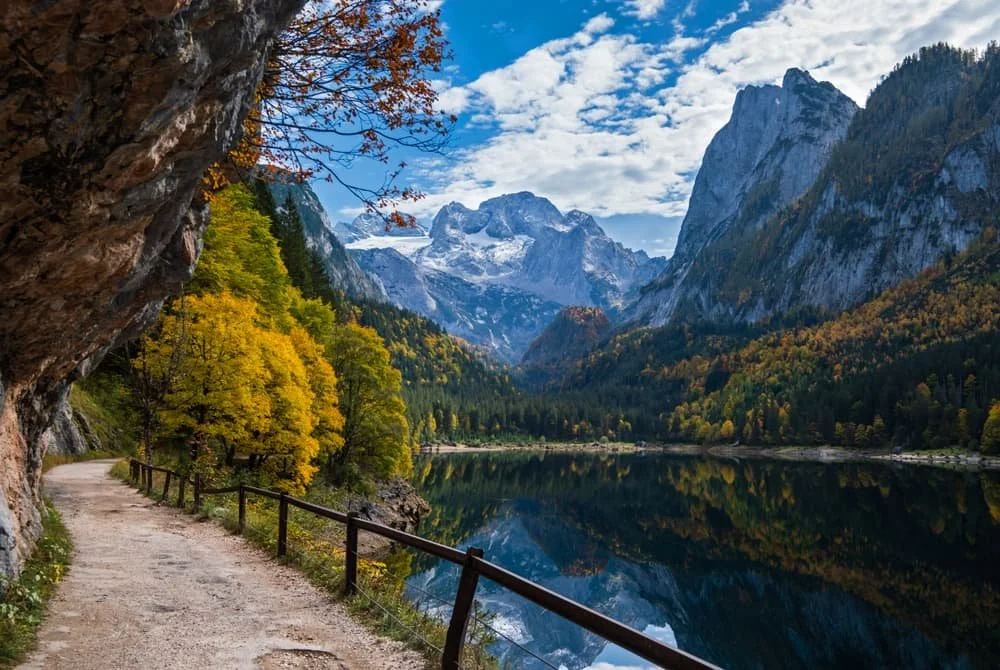
Gosau is an excellent antidote to the coaches and crowds in Hallstatt. Instead, expect meadows, barns and sleepy hamlets providing the focal points, with the epic, jagged Dachstein as your backdrop.
The Vorderer Gosausee (Lake Gosau) is where you’ll grab your social media jaw-droppers, with the dramatic peaks reflected in the glassy lake below. The place certainly isn’t engineered for tourists, with limited parking, a handful of local amenities, and an attitude of bemusement and welcoming from locals, rather than a sigh.
A good tip is to take the Gosaukammbahn lift up to the Zwieselalm for more superb views and hiking trails in summer, and of course some tremendous ski runs when the snow has set in.
Schloss Ort, Traunsee
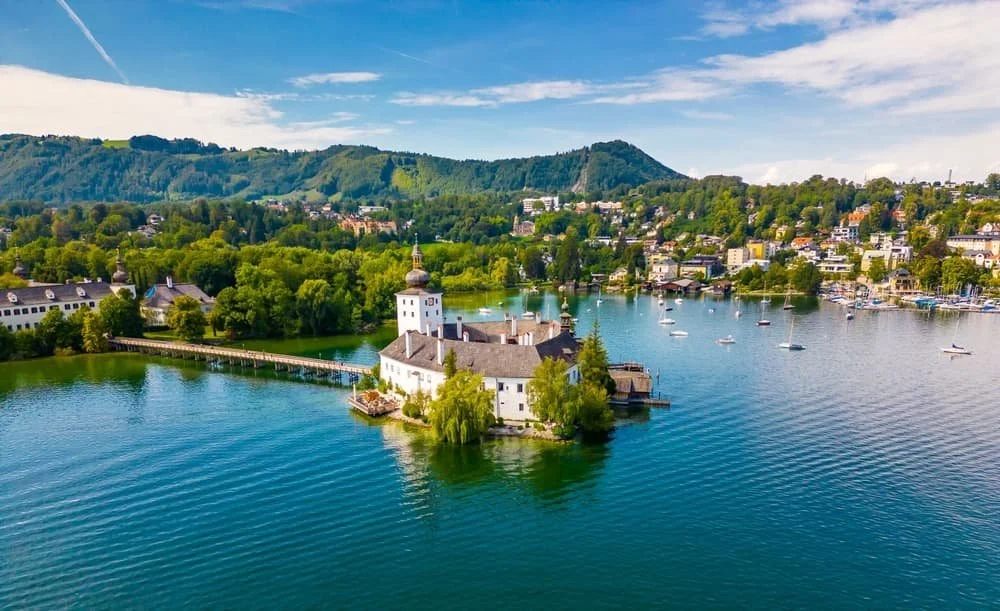
Once again on the beautiful Traunsee, further north in the town of Gmunden you’ll find another incredible view, this time of a castle floating on its own island in the lake.
The small fortress known as Schloss Ort dates back to 1080, with significant remodelling during the Medieval and Early Modern periods, notably under the ownership of multiple Holy Roman Emperors. Sadly the castle isn’t open for public tours, instead used as study center of the Federal Ministry for Land and Forestry, but you can still appreciate it with the lake and mountain background.
The land-based castle on the other side of small bridge is however open to visitors. Now a church with a small cafe, it’s the ideal spot to soak in views of the older castle and grab a coffee or enjoy a picnic if the sun is shining.
Ramsau am Dachstein
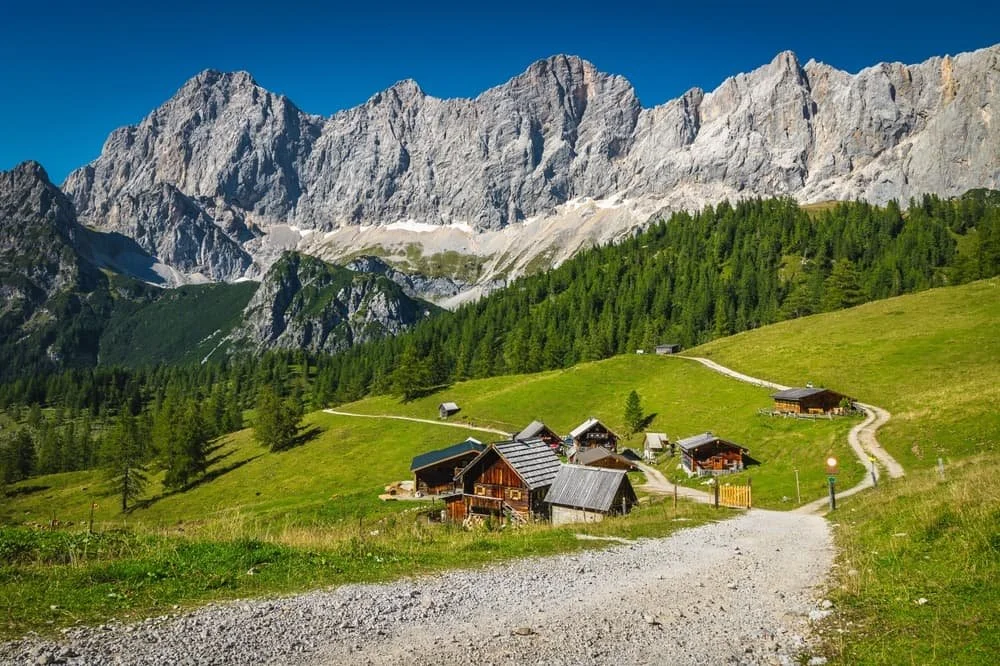
One way to avoid the lakeside scrum at Hallstatt is to rise above it – quite literally. The natural balcony that hosts Ramsau am Dachstein is 1,100m above sea level, with gargantuan views to match.
The oddly flat balcony hosts the pretty village, but it’s the views over the edge and onto the glaciers that make it worth the trip. It’s all made even better with cowbells tinkling, wildflower meadows blooming and those iconic Austrian crossed fences littering the natural balcony.
If you visit in winter, than Ramsau just happens to be a superb entry point for the region’s best skiing, with many resorts catering to a local crowd rather than hoards of outsiders. If there isn’t snow, then the runs turn into great hiking trails where you could run into alpine ibex, chamois or even golden eagles.
Weissensee, Carinthia
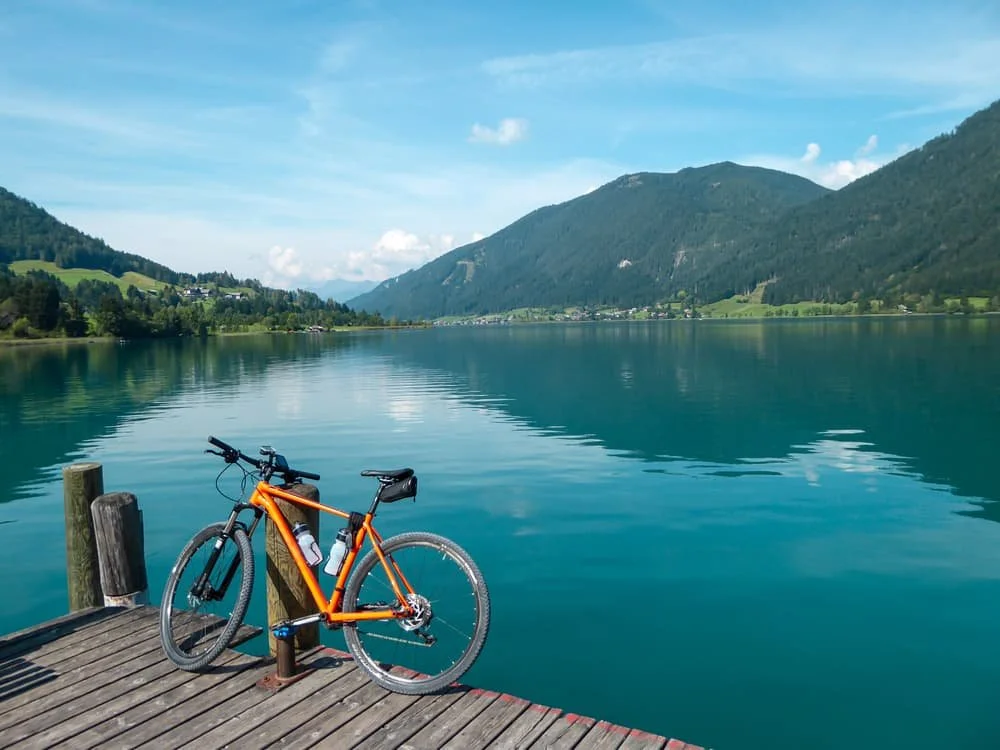
Where visitors are trucked in and your view can be spoiled by small boats and pleasure cruisers down in Hallstatt, you won’t struggle for deep blue waters and green hillsides by the Wissensee. That’s because active measures, including an approach labeled ‘soft mobility’ are being taken to restrict the number of cars, and limit noise and pollution sources like private speedboats.
The views across the lake in summer are exceptional, with the altitude, mineral content and green shores fostering an emerald hue that you’ll be used to if you’ve visited Lake Tahoe or Moraine Lake. But in winter, the views transform once again, especially as you stand on the water.
The whole lake tends to freeze over in the winter months, creating Europe’s largest skating rink. Nothing beats gliding out onto the openness of the frozen water and capturing shots you simply will never acheive down in Hallstatt!
Grüner See, Styria
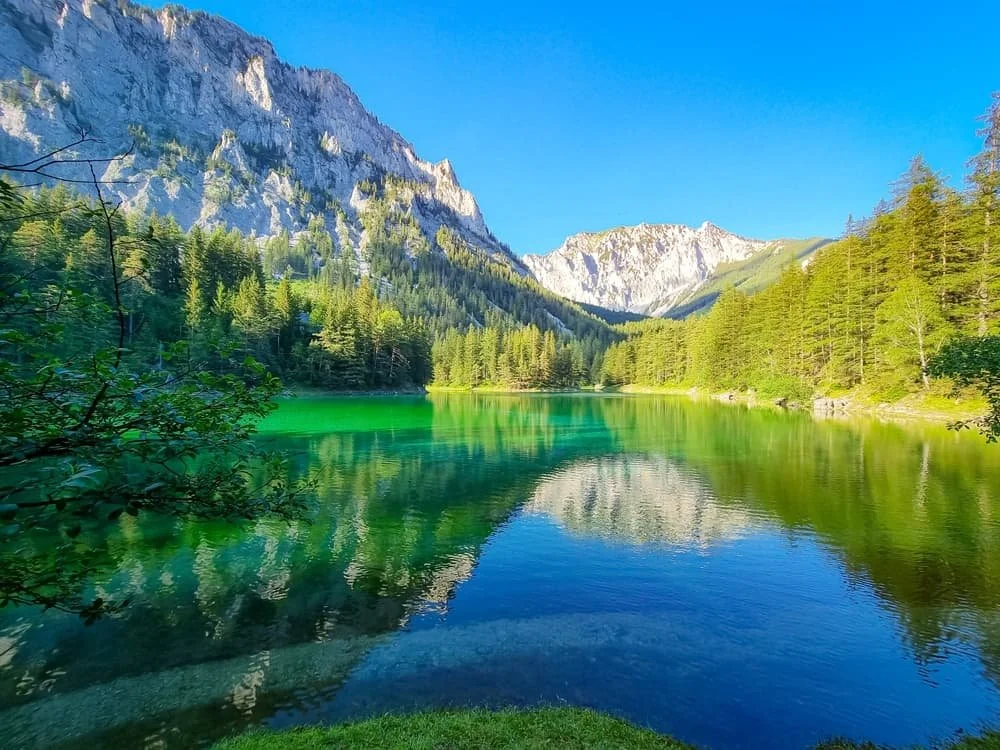
This stunning lake reflects a shade of deep green with touches of sky blue and emerald depending on what the light is doing – and how green the meadows below the surface are.
During winter, the Grüner See isn’t much to look at, more of a puddle than a lake at 1-2m. But when the snow melts in spring, the whole lake can reach 12m, submerging trees, bushes, flowers, grass and even a bench and bridge. The result is a mix of reflection and vegeatation below the surface that creates a unique shade that’s hard to find elsewhere in Austria.
Visitors used to be able to swim and dive to see fully submerged trees thriving perfectly fine below the surface, but now any kind of swimming or watersports are prohibited to keep the lake as it is, which is no bad thing.
Double your experience by hiking to the nearby Kreuzteich, another beautiful Alpine lake, with both reachable from the village of Oberort.
Read Next