There's a Secret River Running Beneath Siena, and You Can Actually Walk Through It
Many tourists miss the underground river network that still feeds the city’s fountains
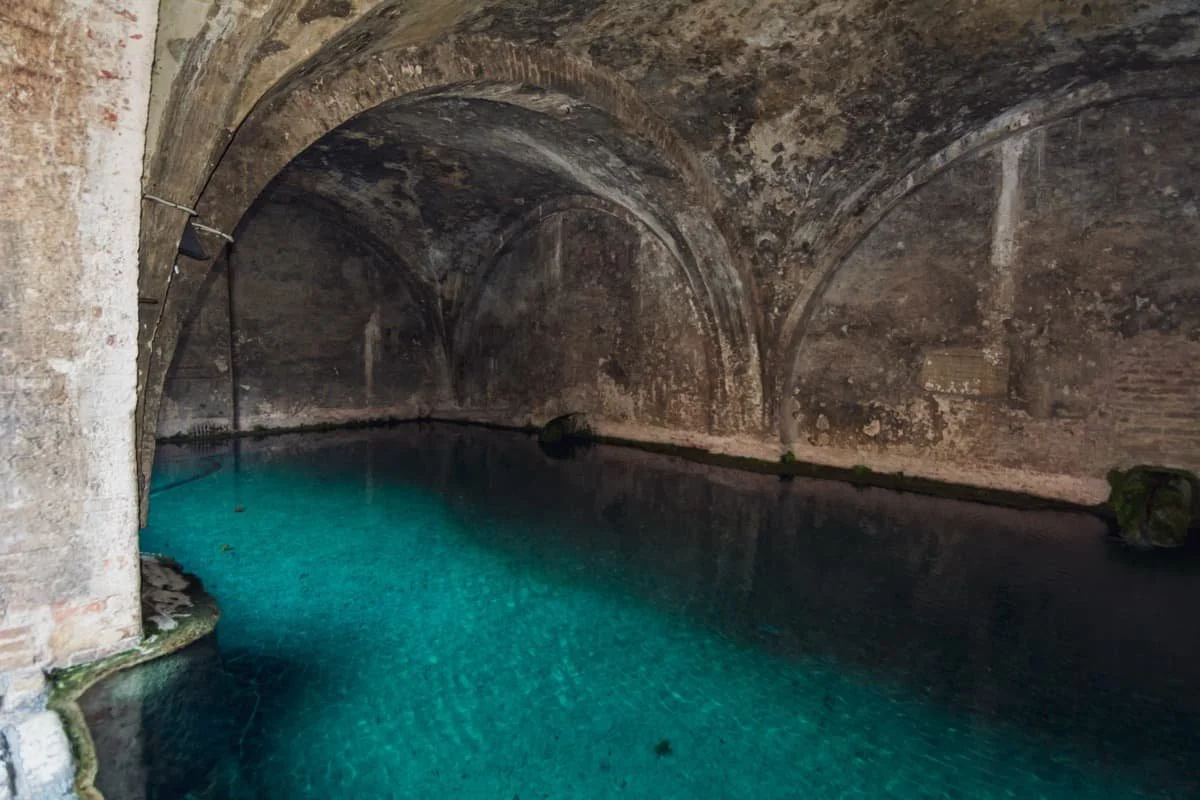
Deep below Italy’s infamous medieval city, away from the stamping hooves of the Palio, twenty-five kilometres of hand-carved medieval tunnels still channel water through the city, exactly as they have for eight centuries. Most visitors have no idea they exist.
After the Leaning Tower and the Colosseum, Siena’s Piazza del Campo is easily one of Italy’s most-visited places. Millions visit for the annual Palio horse race, or to visit a city that’s had little done to it within the last millennium.
They photograph the scalloped brick expanse, the Torre del Mangia, the Palazzo Pubblico. They sit at café tables and sip Negronis in the late afternoon light and feel, rightly, that they are somewhere extraordinary. What almost none of them realise is that directly beneath their feet, water is moving. And it has been moving there, through the same hand-dug tunnels, since the 13th century.
The Bottini di Siena are one of the most remarkable feats of medieval engineering in Europe, and one of the least known. A labyrinth of underground aqueducts stretching some 25 kilometres beneath the city, the tunnels and channels carved from the soft tuffaceous sandstone on which Siena sits still carry water to the city's historic fountains.
In fact, their efficiency and reliability meant they were the sole water supply for the entire population right up until 1914. Today, they remain essentially intact, quietly doing what they were built to do while the world above them takes selfies and queues for gelato.
A City Without a River
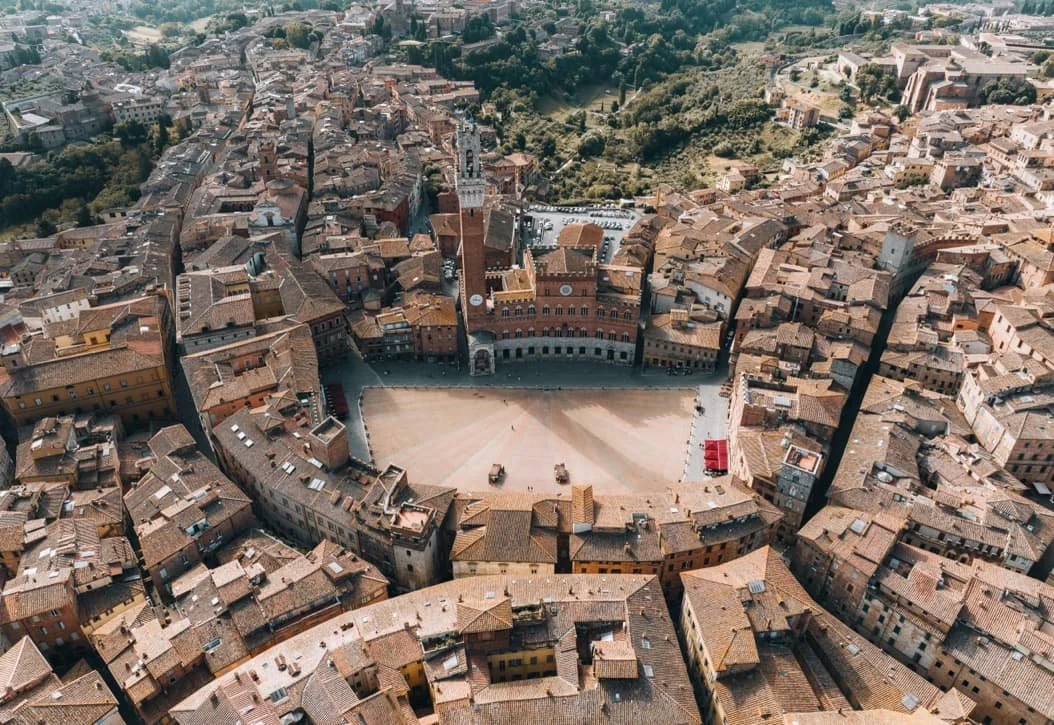
Siena's success problem was always geographical. Unlike Florence with its Arno, or Rome with its Tiber, the city sits on three waterless hilltops with no river, no lake, no natural spring of any consequence. For a growing medieval power, this was existential.
By the 11th century, the population was expanding rapidly, and the demand for water, for drinking, for industry, for the tanneries and dye-works and mills that drove the economy, far exceeded what could be gathered from rainfall.
The search for a solution produced one of medieval Italy's more enduring legends. Beginning in 1176, the Sienese became convinced that a vast underground river, the Diana, flowed somewhere beneath the city. Wells were dug, experts consulted, astrologers and fortune-tellers employed.
The search consumed public funds and civic energy for over a century. Dante, never one to miss an opportunity to mock the Sienese, immortalised their folly in Canto XIII of the Purgatorio.
The Diana was never found. But something far more practical emerged from the obsession. The Sienese discovered that the porous sandstone beneath their city acted as a natural filter, meaning they collect and channel the rainwater that seeped through the ground.
The result was the Bottini: a system of barrel-vaulted corridors, typically around 1.8 metres high and just under a metre wide, with a small channel called a gorello running along the base, carrying water on a gentle gradient toward the city's monumental fountains.
Engineering Without Instruments

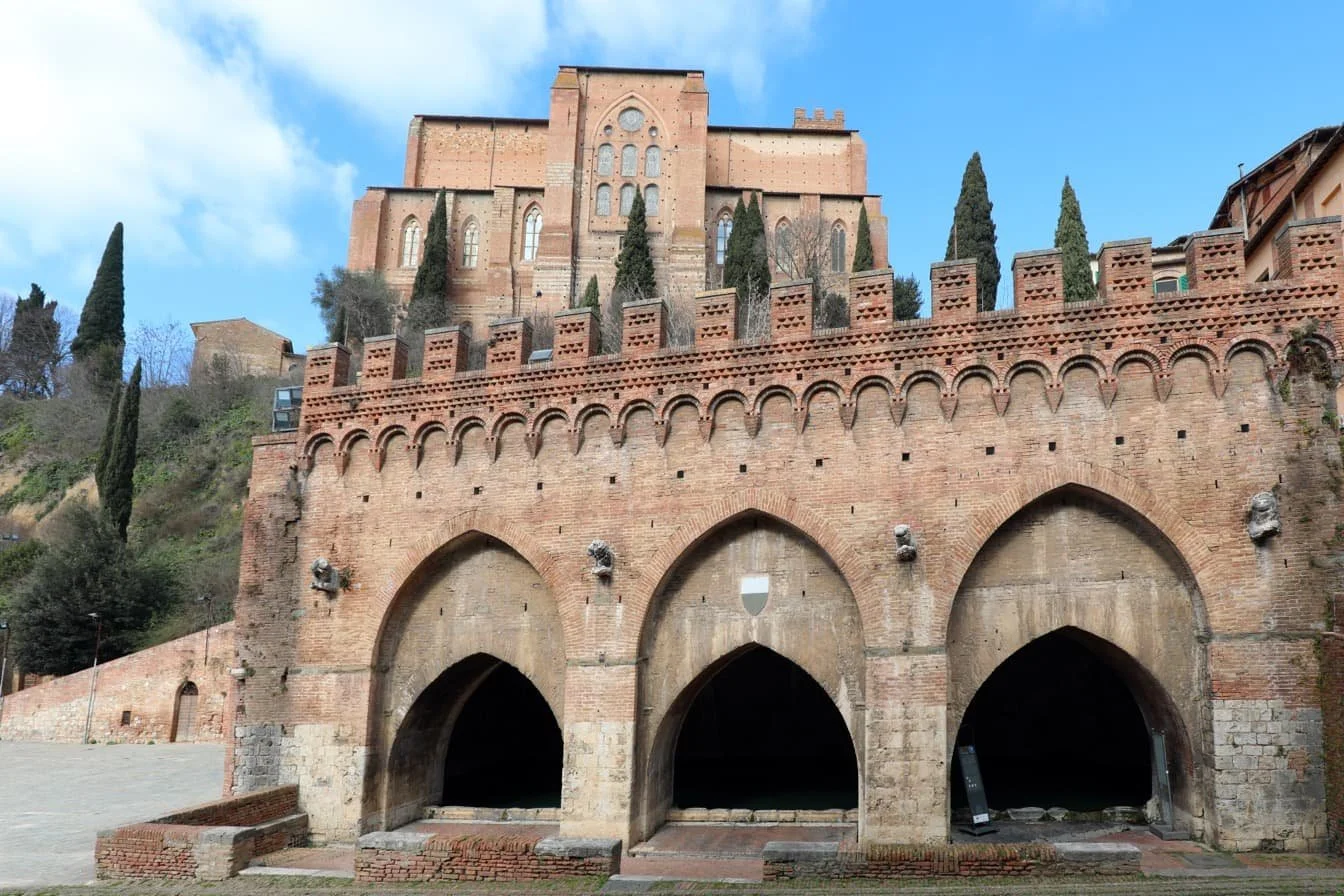
The construction spanned roughly three centuries, from the late 1100s to the 1400s, and the engineering was extraordinary given the tools available. The oldest branch, the Bottino maestro di Fontebranda, was dug from a single end, starting at the great Fontebranda fountain and working outward and upward along a gradual incline.
The second major branch, the Bottino maestro di Fonte Gaia, built around 1300, was more ambitious. Crews dug from two directions simultaneously, converging on a midpoint. Without adequate surveying instruments, the risk of the two tunnels missing each other entirely was real.
In places where this nearly happened, you can still see the evidence: sections that are taller or wider than normal, where workers corrected their course.
The water these tunnels carried was not just to prettify the fountains either. It powered Siena's economy.
The Fontebranda alone, the largest and oldest of the city's medieval fountains, fed three separate basins at descending levels: the first for drinking water, the second for livestock, the third for washing.
State Secret, Military Asset
As you can imagine, an invisble water source under the city was a major asset for the burgeoning medieval city that could be besieged. Strict laws prohibited foreigners from entering the tunnels, from cultivating land above them, or from diverting water for private use.
From 1467, entrances outside the city walls were sealed to prevent enemies from breaching the city's defences through its own water supply, a precaution that eventually paid off.
In the run-up to the siege of 1554-1555, when forces allied with Emperor Charles V bore down on Siena, the tunnels were further reinforced with internal walls to prevent military infiltration. According to Siena's official tourism site, the besieging army attempted to enter the city through the Bottini and very nearly succeeded.
Even right up to the last century, this underground network was still used to Siena’s advantage. Local accounts suggest that during the Second World War, partisans used the network as shelter and as an escape route from the German occupation.
Going Underground
The good news is that these remarkable tunnels kicking on for 1,000 years old not only work, but can be explored, with an advanced booking of course.
To maintain the system’s integrity and ensure safety, tours are deliberately limited. You can only visit in spring and autumn, in small groups, and must be booked well in advance through the Municipality of Siena website.
You’ll need to don a helmet and a hairnet, leave your bag in a locker, and grab a torch provided (the risk of dropping your phone into the gorello is real and, presumably, well-documented).
The tunnels are not for the claustrophobic, around a metre wide in most sections, but for anyone with even a passing interest in how cities worked before modernity, they are unforgettable.
Keep an ear out for tales about the tunnels becoming a movie set. The 2008 James Bond film Quantum of Solace is set partly in Siena, with an MI6 safehouse concealed within the city's underground cisterns.
The subterranean scenes were recreated at Pinewood Studios, but the concept was drawn directly from the Bottini. The film's Siena sequences, including a rooftop chase during the Palio, were shot on location.
A great way to bookend your visit is a trip to the Museo dell'Acqua (Water Museum), housed in the 18th-century building above the Fonti di Pescaia. This small but well-appointed museum provides a fuller context than you’ll get on the tour.
If the tours are fully booked, or you visit at the wrong time of year, you may be able to walk through a small section of the Bottini under the museum, which is part of the exhibiton, so keep an eye out for the signage.
Are the Bottini Worth Your Time in Siena?
If the sound of stopping through a set of damp tunnels doesn’t scream relaxing vacation, then maybe consider appreciating the chance to explore an 800 year old hand-dug tunnel system with water still flowing through it, doing exactly what it was designed to do.
In an age where we take boring infrastructure like water supply for granted, the Bottini’s engineering based on gut feel and luck feels quite remarkable. They were built to last because the survival of the city depended on it, and they have outlasted the republic that created them, the sieges that threatened them, the wars that swept over them, and the modern systems that were meant to replace them.
Most visitors to Siena never learn about the Bottini. They visit the Duomo, they watch the Palio (or at least see the flags), they eat pici cacio e pepe in the Campo and declare the city wonderful, which it is.
But the city beneath the city is where Siena's real story lives. It's there in the dark, in the sound of water moving through stone, in the faint mineral smell of sandstone eight centuries old. It just takes a little planning to find it.
Book your Siena Bottini tour well in advance by emailing ticket@comune.siena.it to ensure you don’t miss a spot on the strictly limited tours.
Read Next